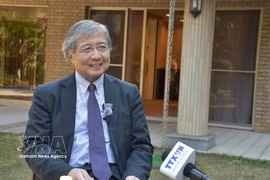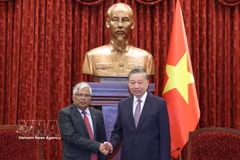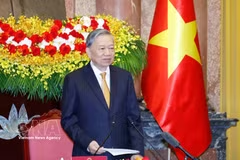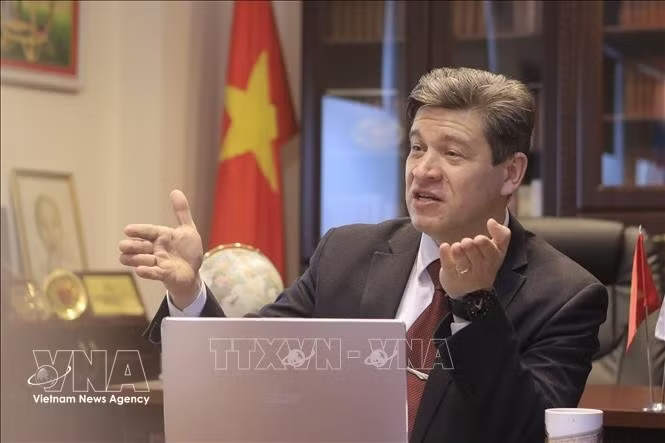
Moscow (VNA) – The four strategic shifts outlined by General Secretary of the Communist Party of Vietnam Central Committee and President To Lam at the third plenum of the 14th Party Central Committee have come at the right time, said Prof. Vladimir Kolotov, Director of the Ho Chi Minh Institute at St. Petersburg State University.
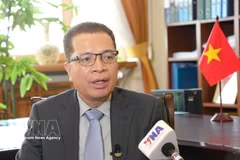
In an interview granted to Vietnam News Agency correspondents in Moscow, the scholar spoke highly of the timing of the top Vietnamese leader’s announcement of the important orientations for Vietnam’s development.
He said the external environment is undergoing significant changes, with the world entering a period of unpredictable and even difficult-to-understand developments. Against this backdrop, Vietnam needs to strengthen its capacity to withstand pressures and gear up for every possible change in both the international political environment and the domestic situation.
As a long-time researcher of Vietnam’s policies, Kolotov applied the SWOT analysis components – strengths, weaknesses, opportunities and threats – to examine General Secretary and President Lam's initiative.
He said the four strategic shifts address both the domestic and external environments. The first concerns the quality and capacity of cadres, while the second relates to Vietnam’s growth space. The third calls for a shift from extensive to intensive growth based on new technologies and the development of human potential. The fourth focuses on safeguarding the Fatherland.
According to the professor, the four shifts constitute a carefully designed system aimed at addressing both internal and external factors and helping Vietnam overcome challenges facing both the country and the world.
He stressed that the first element – strengthening the capacity of the contingent of cadres – is the key to the reform process.
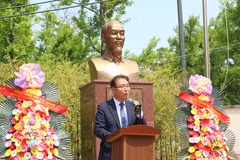
Recalling President Ho Chi Minh’s teaching that personnel are the decisive factor and that reforms cannot be carried out without capable personnel, Kolotov said Vietnam is currently in a favourable position as the leader of the ruling Party also serves as head of state, enabling a more concentrated decision-making process.
All these efforts, he added, ultimately serve the interests of the people as protecting Vietnam means, first and foremost, protecting its people and citizens.
The scholar expressed confidence in Vietnam’s capacity to implement the strategic shifts, saying this capacity has been demonstrated throughout the country’s development history.
He also underscored the importance of a strong and responsible leadership with sound qualities in implementing policies, noting that he believes Vietnam’s current leadership possesses these attributes.
Based on these assessments, the Russian scholar said the upcoming state visit to Russia by General Secretary and President Lam will provide a concrete and substantive contribution to the traditional friendship between the two countries./.