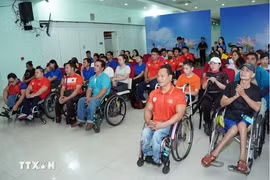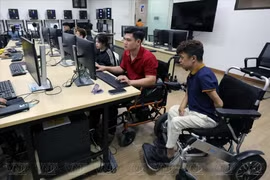
Hanoi (VNA) - Vietnam aims to expand opportunities for people with disabilities to study, work, start a business and participate in social activities, enabling them to develop their capabilities, achieve independence, and contribute to society, under a newly issued plan of the Government.
Deputy Prime Minister Pham Thi Thanh Tra signed Decision No. 2071/QD-TTg on October 30, 2026, promulgating a plan to implement Directive No. 14-CT/TW, dated September 22, 2026, of the Party Central Committee’s Secretariat on strengthening the Party’s leadership over disability-related affairs in the new situation.
By 2030, the plan seeks to ensure social security and improve the quality of life of people with disabilities, with priority given to those facing hardship or unable to support themselves. It also aims to ensure their appropriate participation in elected bodies and enable them to benefit from the country's development achievements.
Social security policies will be improved to better respect the rights of people with disabilities, guarantee minimum living standards, provide health insurance support and promote their capacity development, independence and social inclusion.
Children from birth to six years old will receive screening and early detection of congenital disabilities and developmental disorders, followed by appropriate early intervention. Children and adults with disabilities will have access to orthopaedic surgery, rehabilitation services and suitable assistive devices.
Children with disabilities of preschool and school age will be given opportunities to access inclusive education suited to their needs and support their comprehensive development. Those in need will receive assistance with vocational skills training, job placement, livelihood loans, entrepreneurship and production or business development.
New buildings and renovated or upgraded public facilities must meet accessibility standards and conditions for use by people with disabilities. They will also be supported in accessing public services, information and communications technology services, and free legal aid.
Provinces and cities will develop sports facilities, clubs and movements for disabled persons, facilitate their participation in physical exercise and sports, and create opportunities for them to access and enjoy cultural, artistic, recreational and other social activities.
Towards an inclusive social security system
With a vision to 2045, the plan aims to build an inclusive, equitable and accessible social security system for people with disabilities, improve their quality of life and enable them to live independently, enjoy all socio-economic development achievements, and contribute to national development.
It identifies six key groups of tasks and solutions, focusing on raising public awareness and responsibility among Party committees, authorities, organisations and the public regarding the Party's guidelines and the State's policies on disability affairs. Leadership, inspection and supervision will be strengthened, while efforts will be made to eliminate stigma and discrimination and promote a respectful, equitable and compassionate society.
The plan also seeks to improve laws and policies and ensure the effective implementation of international commitments on the rights of people with disabilities, while expanding access to social security, healthcare, education, rehabilitation, vocational training, employment and legal aid. Science and technology, AI, and digital transformation will be promoted to improve their capabilities and quality of life.
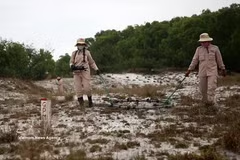
Priority will be given to disability prevention, early detection and intervention, particularly in reducing disabilities caused by traffic and occupational accidents and diseases. Attention will focus on children with disabilities, Agent Orange victims and disadvantaged groups through health counselling and screening programmes.
People will be encouraged to access pre-marital health counselling and check-ups, prenatal and newborn screening, and age-appropriate screening for common diseases and disability risks, especially among children aged up to six.
Accessibility will be integrated into policymaking, planning, construction and public service delivery, alongside investment in public facilities, transport infrastructure and assistive technologies. Investment will prioritise upgrading public facilities, transport and essential infrastructure, while developing an integrated and safe assistive technology ecosystem supported by digital platforms and AI.
The plan also seeks to detect developmental disorders in children early and expand inclusive education, vocational training and specialised support, particularly for autistic children and those with special educational needs.
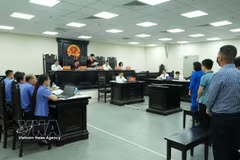
Law enforcement agencies and local authorities are tasked with strengthening measures to prevent and strictly handle violence, abuse, neglect, abandonment, discrimination and the exploitation of people with disabilities for personal gain./.