Textile-garment industry restructures supply chains to meet rules of origin

While domestic yarn production largely meets local demand, fabric weaving, dyeing and finishing remain significant bottlenecks. Sourcing materials from within the CPTPP bloc is also challenging as member economies are not major suppliers.

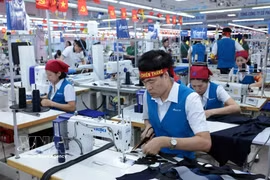
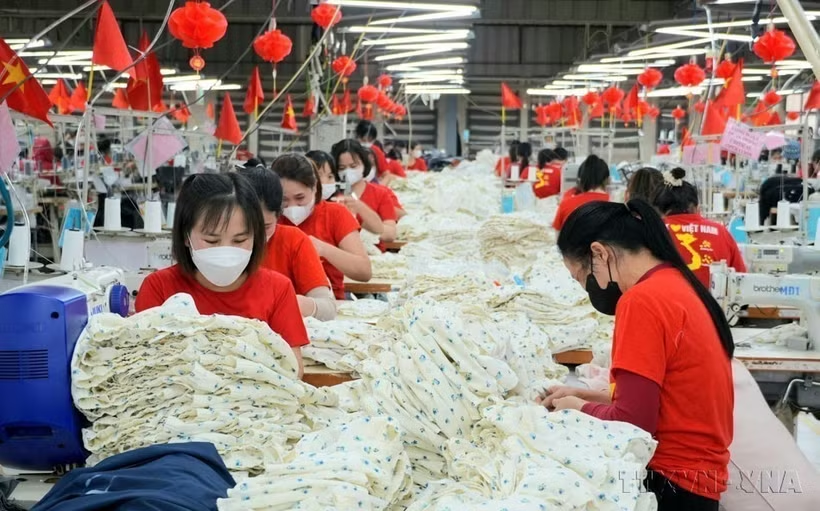
Vietnam’s textile and garment exports to CPTPP markets rise from 6.27 billion USD in 2018 to 8.3 billion USD in 2025. (Photo: VNA)

Hanoi (VNA) – More than seven years after taking effect, the Comprehensive and Progressive Agreement for Trans-Pacific Partnership (CPTPP) has become an important driver of Vietnam’s exports. However, fully capitalising on its tariff preferences requires businesses, particularly those in the textile and garment industry, to address challenges related to rules of origin, supply chain restructuring and value chain reorganisation.

In response to supply challenges, textile and garment enterprises have proactively adopted more flexible supply chain strategies.

Tran Minh Hieu, General Director of TNG Investment and Trading JSC, said that before the CPTPP came into force, the company selected material suppliers mainly based on three criteria: cost, quality and delivery time. However, with the agreement’s “yarn-forward” rule, origin compliance has become a key factor in partner selection.

TNG has reviewed and categorised its entire supplier network, prioritising long-term cooperation with suppliers meeting origin requirements and establishing strategic partnerships with domestic fabric manufacturers. It has additionally developed an in-house software system to manage origin-related data, and use QR codes and ERP codes for each batch of imported materials and accessories, linked to relevant documents, invoices and contracts to ensure transparency and traceability.

According to Truong Van Cam, Vice Chairman and General Secretary of the Vietnam Textile and Apparel Association (VITAS), the CPTPP, which took effect in January 2019, opened access to 12 member markets. Vietnam’s textile and garment exports to these markets rose from 6.27 billion USD in 2018 to 8.3 billion USD in 2025.

Nevertheless, the yarn-forward rule remains a major obstacle. While domestic yarn production largely meets local demand, fabric weaving, dyeing and finishing remain significant bottlenecks. Sourcing materials from within the CPTPP bloc is also challenging as member economies are not major suppliers.

Many Vietnamese garment manufacturers still operate under the cut-make-trim (CMT) model, relying on materials supplied or designated by customers. This limits their ability to shift towards more advanced production arrangements such as free on board (FOB) and original equipment manufacturing (OEM).

Despite expanding market access, Vietnamese goods account for just over 1% of total imports by CPTPP members. The proportion of exports using preferential CPTPP certificates of origin (C/Os) remains below 10%, despite having quadrupled since the agreement took effect. Experts attribute this low utilisation rate mainly to the yarn-forward requirement.

Under this rule, all production stages, from spinning and weaving to dyeing, cutting and sewing, must take place within the CPTPP bloc. Vietnam’s textile and garment industry currently meets only around 50% of its demand for materials and accessories domestically, with local fabric production covering just 36% of demand.

In the first nine months of 2026, the industry spent up to 11.6 billion USD importing fabrics, as compared with 15.2 billion USD in 2025. Meanwhile, imports of materials and accessories from CPTPP members remained virtually unchanged at 1.58-1.59 billion USD annually between 2018 and 2025.

Ngo Chung Khanh, Deputy Director of the Ministry of Industry and Trade’s Department of Foreign Market Development and Multilateral Trade, said Vietnam has implemented 17 free trade agreements (FTAs) with nearly 70 partners worldwide. Businesses should therefore develop supply chain maps, identifying suppliers, alternative sources and potential disruption points to better respond to trade fluctuations.

He stressed that the CPTPP should be viewed not only as an export market but also as an important source of raw materials. Trade promotion should increasingly focus on supply chain connectivity, with rules of origin serving as a tool for designing supply chains from the input stage. Shifting from “Made in Vietnam” to “Made in CPTPP” will help create shared added value and improve overall efficiency.

Experts also recommend that businesses assess their entire supply chains and classify materials according to their potential for immediate domestic or intra-bloc substitution, those requiring further technological development, and those needing new investment. For materials that cannot yet be produced domestically, partnerships and joint ventures with manufacturers from China, Taiwan (China) and the Republic of Korea could help establish production facilities in Vietnam, ensuring domestic origin, stable supplies, cost control and timely delivery./.

VNA
See more

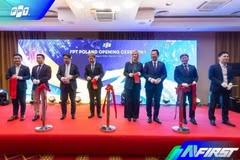
Delegates cut the ribbon at the inauguration ceremony of the FPT Poland office. (VNA published)

Tech giant FPT expands operations in Europe

The opening of the FPT Poland office in Gdansk was not only a milestone in the corporation's development but also demonstrated the technological capabilities and international integration of Vietnamese businesses, said Vietnamese Ambassador to Poland Ha Hoang Hai

Illustrative image (Photo: VNA)

Vietnam sharply cuts petrol prices, except mazut

Following the fresh adjustment, E5RON92 gasoline is now sold at 23,203 VND (0.89 USD) per liter, down 1,020 VND per liter from the previous adjustment, and 28 VND per liter below E10RON95-III, which is set at 23,231 VND per liter, down 928 VND per liter.

Standing Deputy Prime Minister Pham Gia Tuc speaks at the meeting on November 3. (Photo: VNA)

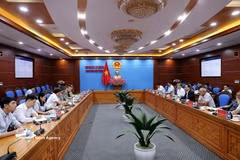
Deputy PM calls for export-import market diversification, better trade governance

The Deputy PM called for timely handling of trade and tariff issues and effective solutions to address trade deficit. He also asked the drafting agency to continue reviewing the scope, title and content of the draft to ensure a balanced approach to trade governance that takes into account both trade surplus and deficit.

An aerial view of VIFC-Da Nang (Photo: VNA)

More room for Vietnam-Russia financial cooperation: Russian think-tank

For Russia, the Vietnam International Financial Centre is seen as a new financial lane alongside trade, energy and industry. Vietnam–Russia trade hit 4.77 billion USD in 2025, up 4%, generating demand for payments, bank guarantees, letters of credit, transport insurance and trade finance. VIFC financial entities can capture that business if they clear legal and commercial hurdles.

University of Economics & Business (UEB) Vice Rector Nguyen Thi Hong Thuy speaks at the forum. (Photo: Published by VNA)

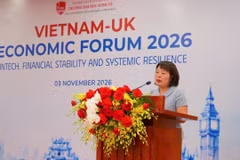
Forum promotes financial innovation alongside systemic safety

UEB Vice Rector Nguyen Thi Hong Thuy said the global financial system is undergoing profound transformation, with fintech, artificial intelligence (AI), big data, cloud computing, digital assets and open finance reshaping the delivery and supervision of financial services.

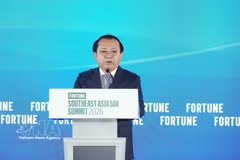
Deputy Minister of Finance Le Tan Can speaks at the event. (Photo: VNA)

Vietnam eyes opportunities amid supply chain shifts in Southeast Asia

Vietnam aims to become a regional hub for artificial intelligence (AI) and data centres, as well as a destination for multinational corporations, international investment funds and financial institutions. To realise this goal, it is focusing on building a new-generation investment ecosystem that connects foreign-invested enterprises with domestic businesses, while developing logistics, data and clean energy infrastructure and a high-quality workforce.

Work at the construction of the Phu Quoc International Airport. (Photo: Pubished by VNA)

APEC 2027: Special legal framework clears bottlenecks at major construction sites

Beyond successfully hosting APEC 2027, An Giang aims to ensure that these investments deliver long-term benefits. Upgraded aviation, urban transport, water supply and drainage, environmental treatment and digital infrastructure are expected to transform Phu Quoc and create fresh momentum for the special zone’s socio-economic development in the decades ahead.

Tax officers of Phu Tho province provide guidance to help residents grasp tax declaration requirements. (Photo: VNA)

Tax relief expected to support stronger business growth

Economic expert Assoc. Prof. and Dr Ngo Tri Long said the tax cuts will improve cash flow and provide small businesses with additional working capital without incurring borrowing costs, particularly as access to affordable credit remains difficult.

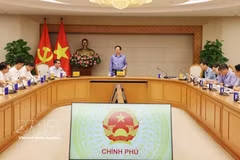
Deputy Prime Minister Ho Quoc Dung speaks at the November 3 meeting to address difficulties in implementing Decree No. 101/2026/ND-CP detailing the Law on Technology Transfer. (Photo: VNA)

Deputy PM calls for ensuring business continuity under technology transfer regulations

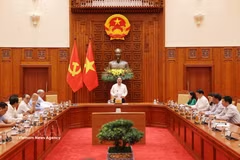
Speaking at a meeting at the Government headquarters on November 3 to address difficulties in implementing Decree No. 101/2026/ND-CP detailing the Law on Technology Transfer, Deputy Prime Minister Ho Quoc Dung stressed that the regulations were designed both to promote technology transfer and strengthen state management through the lists of technologies encouraged, restricted or prohibited from transfer.

Quang Tri Airport is a key, catalytic project for the province to achieve strategic goals in socio-economic development, national defence, and security safeguarding. (Photo: VNA)

Central region steps up investment in aviation infrastructure

Through its airports, ACV therefore hopes to strengthen cooperation with local authorities and airlines to explore appropriate support measures, attract carriers, launch new routes, increase flight frequencies, boost passenger numbers and further expand its presence in promising international markets.

Businesses are stepping up export promotion efforts in the year-end push. (Photo: thanhnien.vn)

Export orders pick up pace towards year-end

Many firms have accepted smaller, lower-priced orders and explored niche markets to offset fluctuations in major export destinations such as the US, Japan and the Middle East.

Consumers shop at CO.OPmart Rach Gia supermarket in Rach Gia ward, An Giang province. (Photo: VNA)

CPI up 4.57% in first 10 months of 2026

Compared with September, prices increased in seven of the 11 main groups of consumer goods and services, while four recorded declines. CPI rose 0.16% in urban areas and 0.25% in rural areas.