Hanoi (VNS/VNA) – The Government has approved a plan on restructuring State capital for the 2026–30 period that will change the ratio of State capital in six enterprises and banks.
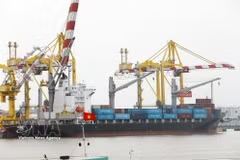
Under Decision 2054/QD-TTg signed by Deputy Prime Minister Nguyen Van Thang, the enterprises and banks slated for capital restructuring are Vietnam Airlines, Vietnam Maritime Corporation, Vietnam Rubber Group, the Joint Stock Commercial Bank for Investment and Development of Vietnam (BIDV), the Joint Stock Commercial Bank for Foreign Trade of Vietnam (Vietcombank), and the Vietnam Joint Stock Commercial Bank for Industry and Trade (Eximbank).
Meanwhile, 15 enterprises will retain their current proportions of State-held capital through 2030. Of these, the Ministry of Finance represents the State’s interest in 14 entities, while one entity falls under the State Bank of Vietnam. Notably, 10 of the enterprises on this list are 100% State-owned.
According to the plan, the Ministry of Finance and the State Bank of Vietnam are tasked with organising divestment for enterprises subject to State capital restructuring. They are authorised to determine the timing and methods of implementation, ensuring compliance with legal regulations and the completion of the plan within the 2026–30 period.
In cases where the State ownership ratio does not meet the prescribed thresholds, or if the plan cannot be completed within the 2026–30 period, the relevant agencies must clarify the causes and the responsibilities of those involved, and report to authorities for review and resolution.
By January 31 each year, the responsible agencies must submit reports on the progress of enterprise reorganisation and restructuring to the Ministry of Finance for monitoring and consolidation.
Should it be necessary to adjust an approved plan, the Ministry of Finance will consolidate proposals from the agencies acting as the owner’s representatives and submit them to the Prime Minister for consideration and decision.
Ministries, ministery-level agencies and the people’s committees of provinces and centrally-run cities will act as the owner’s representatives for agricultural and forestry enterprises.
Enterprises that directly serve national defence and security, as well as those that combine economic activities with national defence and security, are required to develop and submit to authorities for approval a plan for the arrangement and restructuring of State capital for the 2026–30 period.
This process must be completed by the end of the year, in accordance with guidelines set out by the Party, legal regulations and the directives of relevant authorities./.
See more
CPI up 4.57% in first 10 months of 2026
Compared with September, prices increased in seven of the 11 main groups of consumer goods and services, while four recorded declines. CPI rose 0.16% in urban areas and 0.25% in rural areas.
Vietnam’s 10-month FDI inflows post strongest growth since 2009
Combined newly registered and additional capital reached 46.86 billion USD, of which processing and manufacturing accounted for 24.19 billion USD (51.6%), followed by real estate business with 7.08 billion USD (15.1%).
Market diversification, stronger competitiveness needed as trade revenue hits record
The figure for the first 10 months of the year reached 1.01 trillion USD, rising 32.3% from a year earlier and surpassing 1 trillion VND for the first time – setting a new record for the scale of Vietnam’s merchandise trade.
Vietjet posts 41% revenue growth in first nine months of 2026
In the third quarter of 2026, Vietjet operated 39,000 flights and carried 7.3 million passengers. Consolidated revenue reached 22.849 trillion VND (approx. 886 million USD), up 35% year-on-year, while net profit after tax reached 348 billion VND (approx. 13.5 million USD).
Reference exchange rate going down on November 3
With the current trading band of ±5%, the ceiling rate applicable to commercial banks stood at 26,912 VND/USD, while the floor rate was 24,348 VND/USD.
Private sector: From a key driver to a leading force for growth
An open institutional framework and a transparent, stable business environment are essential for encouraging enterprises to make long-term investments. In recent years, the Party, National Assembly and Government have continued to promote administrative reform, address obstacles to investment and business activities, and support new growth drivers.
Vietnam–EU forum to explore green economy, new value chains
By linking policy dialogue with businesses' practical needs, the forum is expected to help translate Vietnam–EU cooperation potential into concrete trade and investment opportunities. It will also provide an opportunity for both sides to make more effective use of the EVFTA, expand markets for Vietnamese goods and businesses, and tap into Europe's capital, technology and management expertise.
Hai Phong port cargo hits 182.4 mln tonnes, puts 2026 plan in sight
To hit the 2026 plan early, Hai Phong’s seaport system is concentrating resources on the two peak months at year-end. The top priority is to keep maritime channels flowing safely and clear large container ships quickly.
Vietnam attracts Chinese tourists with local experiences
Travel trends are shifting from large group tours towards smaller groups, independent travel and tailor-made programmes that prioritise quality and personalised experiences.
Da Nang attracts investment in industrial park infrastructure development
Cumulatively, foreign investment newly registered and adjusted, together with capital contributions and share purchases, reached 803.9 million USD in the first 10 months, up 147.2% year-on-year.
Foreign investors eye new growth opportunities in Ho Chi Minh City
Capital is shifting toward bigger projects with more technology and longer horizons. That reflects not just market advantages but investor expectations for the city’s next phase, a local official said.
Vietnam needs breakthrough policies to boost MICE tourism
Pham Van Bay, Deputy Director of Vietravel Hanoi Branch, said the recovery of international tourism, together with improvements in event organisation and accommodation infrastructure, is creating favourable conditions for the development of Vietnam's MICE sector.
Vietnam targets 14-15% annual growth in retail sales by 2030
Vietnam's e-commerce revenue is projected to grow by 23-25% annually to reach 93-97 billion USD by 2030, accounting for 18-19% of total retail sales of goods and consumer service revenue.
Vietnamese products gain appeal ahead of year-end shopping season
A range of Vietnamese regional specialties is being brought to Ho Chi Minh City through trade promotion, discount and business networking programmes, while retailers and supermarkets are preparing supplies to meet rising demand.
Dong Nai emerges as attractive destination for Korean investors
The RoK is the largest among 51 countries and territories investing in the southern city, with 469 valid projects worth nearly 8.4 billion USD.
Vietnam’s economy posts strong results in 10 months
According to the Ministry of Industry and Trade, total trade value was estimated at 1.01 trillion USD, up 32.3% year on year. Exports reached an estimated 499 billion USD, representing a 27.4% increase.
Railway investment boom must translate into domestic industrial capacity
Several Vietnamese companies have begun investing in capabilities that could support the railway programme.
Businesses urged to diversify funding to build resilience
Exchange rate, interest rate and energy price volatility is putting mounting pressure on businesses' production costs, cash flows and competitiveness, highlighting the need to diversify funding sources, and strengthen financial management to maintain operations and build resilience.
Vietnam cuts fuel tax to zero, petrol prices fall by up to 1,800 VND per litre
Vietnam has cut the special consumption tax on all types of petrol to 0% from November 1, with retail prices falling by more than 1,800 VND per litre following the tax cut, as the Government moves to ease fuel costs and curb inflationary pressures towards the end of the year.
Vietnam cuts average retail electricity price by 2% from November 1
This marks the first time the average electricity price has been adjusted downward in 20 years, excluding the five instances where electricity charges or prices were reduced to support individuals and businesses affected by the devastating COVID-19 pandemic.