Hanoi (VNA) – Vietnam’s economy recorded several important milestones in the first 10 months of 2026, with total trade surpassing 1 trillion USD for the first time, while industrial production and foreign direct investment (FDI) continued to grow.
According to the Ministry of Industry and Trade, total trade value was estimated at 1.01 trillion USD, up 32.3% year on year. Exports reached an estimated 499 billion USD, representing a 27.4% increase.
Commenting on this milestone, Dr. Nguyen Quoc Viet, head of the macroeconomic research group at the University of Economics under Vietnam National University, Hanoi, said it reflected the country's long-term efforts to open up its economy, deepen international integration and strengthen domestic production capacity.
When Vietnam joined the World Trade Organisation (WTO) in 2007, its total trade turnover only exceeded 100 billion USD. Nearly two decades later, the figure has increased tenfold, demonstrating the country's growing role in global production networks and supply chains, he noted.
Foreign investment attraction also remained positive. According to Assoc. Prof. Dr. Bui Quang Tuan, Vice Chairman of the Vietnam Economic Science Association, registered FDI reached 50.36 billion USD, up 76.4%, while disbursed capital totalled 21.07 billion USD, up 12.1% year on year.
FDI inflows continued to support the expansion of production capacity and exports, particularly in processing and manufacturing, electronics and technology, he said.
Alongside these positive macroeconomic developments, domestic businesses have been making efforts to innovate production, expand markets and achieve double-digit growth, contributing to the country's overall economic targets.
Tuan said the global economy in late 2026 and 2027 would continue to face various uncertainties, particularly geopolitical conflicts, oil prices, international financial conditions and the technology investment cycle.
Global economic growth in 2026 is forecast at 3.1%, down from 3.5% in 2025. Inflationary pressures, energy prices and financial costs are also expected to continue affecting production and trade.
For Vietnam, these factors could push up the costs of imported materials, transportation and production, putting pressure on businesses' ability to maintain export orders.
Meanwhile, the average consumer price index (CPI) in the first nine months of 2026 rose 4.52%, highlighting the continued challenge of controlling inflation. This calls for flexible economic management to strike a balance between promoting growth and maintaining macroeconomic stability.
Speaking at a recent economic forum organised by the Vietnam Chamber of Commerce and Industry (VCCI), Dr. Nguyen Duc Hien, Vice Chairman of the Party Central Committee's Commission for Policy and Strategy, stressed the need to maintain macroeconomic stability, control inflation and ensure major economic balances to achieve double-digit growth.
He also called for continued support for production and business activities and more effective mobilisation of resources for development. Growth measures should go hand in hand with improving businesses' ability to respond to fluctuations in exchange rates, interest rates, energy prices and international markets, he said.
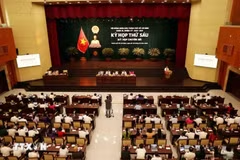
Addressing the second session of the 16th National Assembly on October 31, Deputy Prime Minister Nguyen Van Thang said that to achieve the full-year GDP growth target of 10%, the economy would need to expand by around 12.5% in the fourth quarter.
He described this as a major challenge but said it was not beyond reach, given the economy's remaining growth potential and available resources.
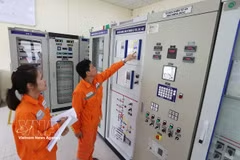
From November 1, 2026, several policies aimed at reducing energy costs officially took effect to support production and business activities and help maintain macroeconomic stability.
Vietnam Electricity (EVN) adjusted its average retail electricity price down by 2% to 2,159.9 VND per kWh, excluding value-added tax (VAT). The Ministry of Industry and Trade also issued Decision No. 2892/QD-BCT on October 31, setting electricity prices applicable from November 1.
From the same date, the special consumption tax rate on petrol was reduced to zero under the Government's Resolution No. 45/2026/NQ-CP, which will remain in effect until March 31, 2027.
In addition, the 2% VAT reduction policy will continue until the end of 2026 for eligible goods and services.
The electricity price adjustment, petrol tax cut and continued VAT reduction are expected to ease production and transportation costs, improve business competitiveness and create more room for companies to expand their operations.
According to Deputy PM Thang, the petrol tax reduction and electricity price adjustments are expected to provide an additional 0.07 percentage points of room for inflation control.
Alongside these cost-cutting measures, the Government will continue addressing obstacles related to institutions, land, investment procedures, capital and markets, while accelerating eligible projects so they can enter production and business operations at an early date, he said.
Public investment disbursement has also been identified as a key priority. Estimates show that full disbursement of the allocated public investment plan could contribute around 2.5 percentage points to fourth-quarter growth and 1.7 percentage points to full-year economic growth, he noted./.