Vietnam eyes stronger foothold in global Halal supply chain

Navigating the global Halal market demands a long-term strategic vision. By aligning standard compliance with targeted product development, Vietnamese enterprises can strengthen their adaptability, build international credibility, and solidify their position in the global Halal food supply chain.

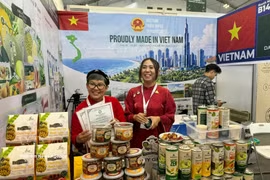
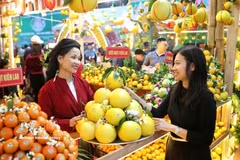
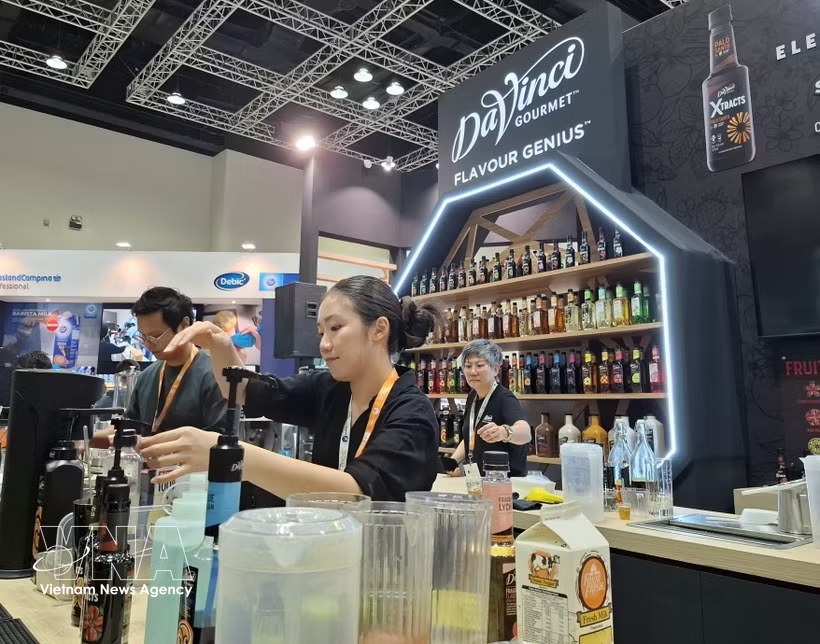
Premium food and beverage companies are seeking to capture the Halal market. (Illustrative photo: VNA)

Hanoi (VNA) – To effectively tap into the multi-trillion-dollar global Halal food market, Vietnamese enterprises must overcome hurdles regarding certification, raw material sourcing, and supply chain organisation while meeting specific technical standards required by each importing nation.

Unlocking multi-trillion-dollar opportunities

India-based Zion Market Research reported that the global Halal food market was valued at over 2.3 trillion USD in 2022 and is projected to surpass 4 trillion USD by 2030, growing at a compound annual rate of 7.7%.

Le Anh Ngoc, head of the quality and conformity assessment division under the National Authority for Agro-Forestry-Fishery Quality, Processing and Market Development (NAFIQPM) at the Ministry of Agriculture and Environment, stated that Vietnam holds strong advantages in this sector, largely due to its geographical proximity to large Muslim-majority markets.

In Southeast Asia alone, he noted, Muslims represent roughly 42% of the population. Furthermore, Vietnamese export staples such as rice, tea, coffee, cashews, pepper, and seafood naturally align with Islamic dietary requirements.

Indonesia and Malaysia remain the prime regional gateways. Indonesia’s Halal market spending reached 330.5 billion USD in 2025, making it the world’s largest consumer of Halal food and beverages. Key Vietnamese goods with high potential include dairy, snacks, dried noodles, and fishery products, said Trade Counsellor Pham The Cuong at the Vietnam Trade Office in Indonesia.

Meanwhile, Malaysia imports over 20 billion USD in Halal food annually, ranking among the top buyers within the Organisation of Islamic Cooperation (OIC).
vnanet-vietnam-eyes-stronger-foothold-in-global-halal-supply-chain-5143.jpg
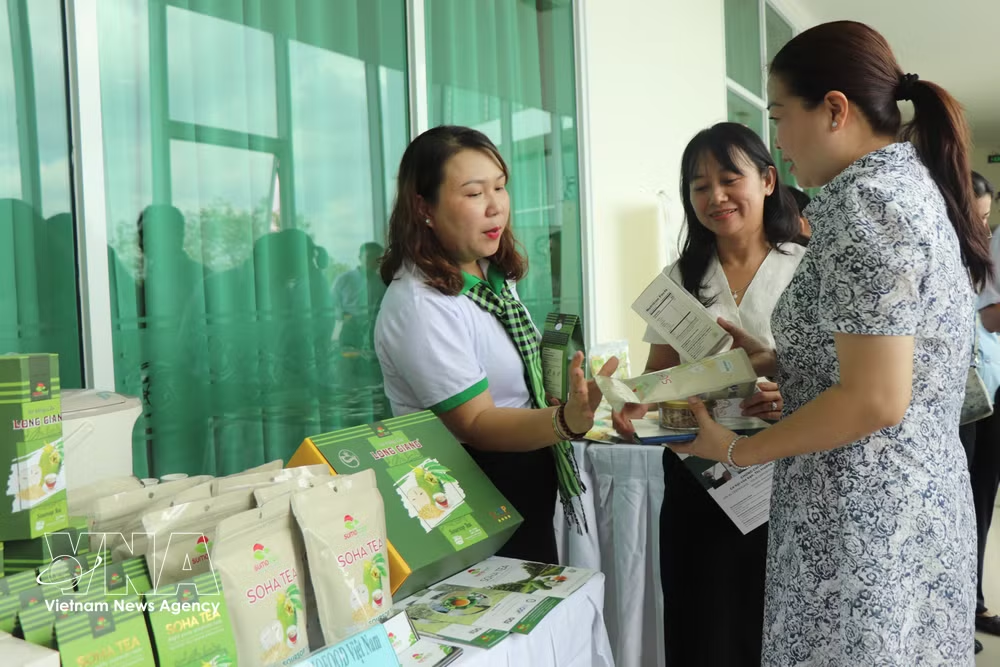
Many businesses in Can Tho city are looking to expand their Halal certification in order to enter more markets. (Photo: VNA)

Beyond Southeast Asia, the Middle East represents another high-value destination. In the United Arab Emirates (UAE), where 80% of agricultural products are imported, agri-food imports topped 16 billion USD in 2025.

With the Vietnam–UAE Comprehensive Economic Partnership Agreement (CEPA) taking effect in February 2026, Vietnamese exporters now enjoy enhanced competitive leverage in the Gulf region as the UAE also serves as a vital logistics gateway for Vietnamese agricultural products to enter other Middle Eastern markets, according to Tran Tan Sy, CEO of the Vietnam Food Pavilion in the UAE.

Overcoming certification and logistics bottlenecks

Despite vast potential, Vietnam’s market share remains modest. NAFIQPM data shows that between 2024 and 2026, only 1,000 to 1,300 Vietnamese businesses held active Halal certificates, representing a mere 0.2% of total active enterprises nationwide.

Industry experts identify certification as the primary bottleneck. There are no universal Halal standards; each importing nation enforces its own accreditation system, explained Ba Thi Nguyet Thu, Director of the HalalViet Promotion and Experience Centre.

Prominent examples include Malaysia’s JAKIM, Indonesia’s BPJPH, Saudi Arabia’s SFDA, and the UAE’s MoIAT/ESMA.

Furthermore, high maintenance fees and extended evaluation periods, lasting from six to 12 months, pose severe challenges to most small and medium-sized enterprises (SMEs).

On top of that, strict Halal regulations regarding cross-contamination risks across harvesting, warehousing, packaging, and transportation, combined with Vietnam’s lack of dedicated Halal logistics infrastructure, escalate the risk of customs rejection at destination ports, Thu pointed out.

To address these challenges, she urged Vietnamese businesses to build closed-loop Halal value chains spanning raw material zones, processing, logistics, and distribution while perfecting traceability systems for Halal products.

It is also essential to bolster bilateral and multilateral cooperation with international Halal organisations to establish mutual recognition agreements on Halal standards and certification, she added.

Ultimately, navigating the global Halal market demands a long-term strategic vision. By aligning standard compliance with targeted product development, Vietnamese enterprises can strengthen their adaptability, build international credibility, and solidify their position in the global Halal food supply chain./.
VNA

See more

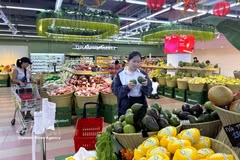
Fruits on sale at the Thao Dien WinMart supermarket in Ho Chi Minh City (Photo: VNA)

Government steps up measures to boost growth, control inflation

To achieve the full-year growth target of 10%, GDP would need to expand by 12.5% in the fourth quarter. Deputy PM Nguyen Van Thang described this as “a major challenge, but not an impossible task”, noting that the economy still has considerable momentum and room for expansion.

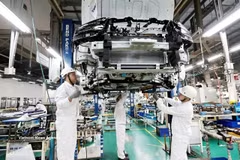
Car production at Honda Vietnam’s factory in Phu Tho province. Vietnam's total sales of vehicles in the January–September period was 495,138, up 20.2% year on year. (Photo: VNA)

Auto market targets 700,000 sales in 2026

If the momentum continues in the fourth quarter, Vietnam’s auto market could surpass the previous record of 604,134 vehicles set in 2025 and approach 700,000 units for the full year.

The success of the premium 100% Fine Robusta coffee line “Ham Rong” in Italy is a vivid testament to the strategic transformation of Vietnam's agricultural sector. (Photo: VNA)

Vietnamese coffee’s journey to finding place in Italy

Within the premium 1895 Coffee Designers by Lavazza range, Ham Rong stands out as the first product for which the legendary Italian roaster has used the name of a specific farm owned by Vinh Hiep Co., Ltd. in Gia Lai as its official product name.

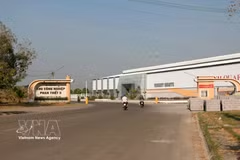
Phan Thiet II Industrial Park in Lam Dong province (Photo: VNA)

Lam Dong pulls in 70 new projects in 10 months

The southern province of Lam Dong attracted 70 new projects with total registered capital of over 176.49 trillion VND (6.78 billion USD) in January-October, 18 more than a year earlier.

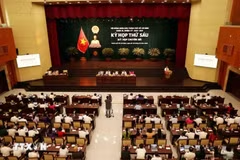
A view of the sixth thematic session of the Ho Chi Minh City People’s Council (Photo: VNA)

Ho Chi Minh City to issue municipal, project bonds through VIFC to fund infrastructure

Beyond raising funds for infrastructure, the mechanism would help develop an international bond market, one of the four strategic product pillars of VIFC-HCMC. It would also connect domestic financing needs with international investors and financial institutions while promoting specialised services such as issuance consultancy, capital arrangement, credit ratings and risk management.

Vietnamese Ambassador to Australia Pham Hung Tam (left) talks to Australian Minister for Resources Madeleine King. (Photo: VNA)

Vietnam, Australia push collaboration in energy, critical minerals

Vietnamese Ambassador to Australia Pham Hung Tam used the International Mining and Resources Conference and Exhibition 2026 (IMARC 2026) in Sydney, held on October 27-29, to meet Australian officials, researchers and companies and push cooperation in energy, critical minerals and mining tech.

Illustrative photo: VNA

New drivers sought for tourism real estate market

Vietnam’s tourism real estate market needs to shift its focus from speculative investment and expectations of price increases towards operational efficiency, revenue generation and sustainable asset value, experts said at a conference in the central province of Gia Lai on October 30.

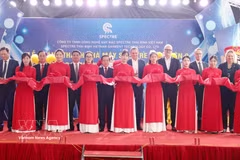
At the ribbon-cutting ceremony to inaugurate Spectre 2 Hung Yen garment factory (Photo: VNA)

Denmark’s Spectre opens fourth Vietnam plant

The factory is built around high technology, energy efficiency and environmental responsibility, and carries LEED Gold certification, a top standard for energy-saving, eco-friendly building design. Solar power and modern design are expected to cut about 1,600 tonnes of CO2 emissions a year versus conventional plants of similar size.

Phu Quoc welcomes an estimated 8.57 million-plus visitors in the first nine months of 2026, up 30.5% year on year, including more than 1.92 million international arrivals, an increase of 60.2%. (Photos: Sun Group)

Tourism powers nearly 40% economic growth in Phu Quoc

In the first nine months of 2026, Phu Quoc welcomed an estimated 8.57 million-plus visitors, up 30.5% year-on-year, with international arrivals exceeding 1.92 million, an increase of 60.2%. Tourism revenue reached approximately 45.976 trillion VND, up 47.7% and exceeding the full-year target by 1%.