Ho Chi Minh City (VNA) – Digital transformation, automation and access to green finance are becoming key factors in helping businesses improve productivity, reduce costs and meet sustainable development requirements.
However, experts say effective transformation requires companies to choose appropriate technologies, standardise data, strengthen management capacity and develop investment roadmaps based on long-term economic benefits.
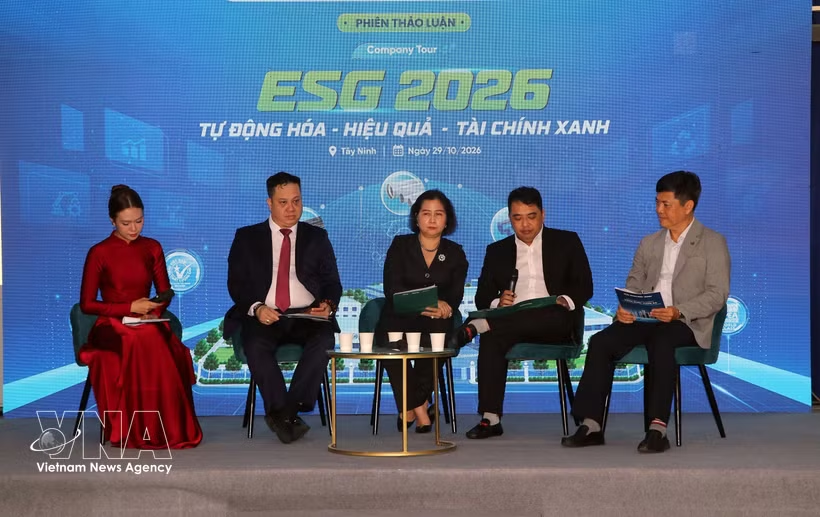
These issues were discussed at the ESG Company Tour 2026, themed “Automation – Efficiency – Green Finance”, held at the Binh Minh Plastics factory in Tay Ninh on October 29 by Thailand's SCG Group, Dan Tri Newspaper and Binh Minh Plastics JSC - a member of SCG.
Automation must deliver operational efficiency
From a manufacturing perspective, Niwat Athiwattananont, Vice Chairman of SCG Vietnam and General Director of Binh Minh Plastics JSC, said green transformation should go hand in hand with investment in new technologies to meet environmental requirements while improving productivity and resource efficiency.
However, the process poses considerable challenges, particularly for small- and medium-sized enterprises (SMEs) facing limitations in finance, technology, expertise and human resources.
Investing in modern equipment does not automatically translate into better production efficiency. If technology exceeds a company's capacity to operate it or fails to address actual bottlenecks, additional costs may arise without delivering corresponding benefits, he said.
Bong Hoa Viet, Sustainability Development Director of Binh Minh Plastics, stressed that automation must be accompanied by streamlined production processes and data-based management.
Businesses should first review their operations and identify sources of wastefulness before deciding on technology investments, rather than simply replacing existing manual tasks without improving overall efficiency.
At Binh Minh Plastics, the automation of raw material supply and mixing through a closed silo pipeline system has helped reduce fine dust emissions, limit the use of diesel-powered forklifts and save labour and energy, he said.
Investment efficiency should be assessed through its combined economic, environmental and occupational safety benefits, rather than focusing solely on short-term payback periods, Viet said.
Chung Tan Cuong, Chairman of the Vietnam Saigon Plastics Association (VSPA), said businesses should examine their entire production processes to identify stages that waste materials, time and resources.
In the plastics industry, solutions such as better control of raw material mixing, recovery of surplus products and automated order picking can bring significant benefits.
The application of robots could shorten operating time by 10-15%, while automated material dosing systems help ensure accurate ingredient ratios, reduce colour deviations and defective products, and improve consistency between production batches, he said.
Green finance access remains a challenge
Alongside technology, access to suitable financing is a key factor determining the pace of green transformation.
To qualify for green credit, however, businesses must present viable investment plans and demonstrate their effectiveness through transparent data, measurable indicators and debt repayment capacity.
Ngo Thi Thu Thuy, Chairwoman of Fujiwa Vietnam, said standards for product quality, production processes and sustainability were becoming increasingly important, particularly in export markets such as the US and Australia.
Meeting these requirements requires investment in technology, automation, workforce training and changes to operating methods.
However, limited financial resources remain a major obstacle. Although her company has been operating for seven years, it remains cautious about bank borrowing due to concerns over interest payments, while investment in equipment, technological upgrades and factory expansion cannot be postponed indefinitely.
Accessing green credit also requires businesses to prepare documents, data and evidence showing that their projects meet environmental criteria, a process that demands time, expertise and resources.
She called for more appropriate support mechanisms from the Government and banking system to help businesses meet the requirements and access financing for green transformation.
Nguyen Duc Trung, Rector of the Ho Chi Minh City University of Banking, identified inadequate data as one of the major barriers to green finance access.
Many businesses have yet to establish standardised indicators to measure energy savings, emissions reductions and the efficiency of technology applications.
This makes it difficult to demonstrate project benefits to lenders.
A shortage of dedicated environmental, social and governance (ESG) personnel also means that sustainability initiatives in some companies remain fragmented and are not closely linked to long-term strategies.
Trung said businesses should integrate ESG into their development strategies, improve workforce training, ensure data transparency and engage with banks from the early stages of investment planning.
Standardised data not only supports ESG reporting but also enables businesses to assess their current performance, identify financing needs and develop plans to improve production efficiency.
With clear evidence of environmental benefits and project feasibility, businesses will be better positioned to secure green financing and advance their transformation./.