Vietnam targets growth of at least 10% in 2027 while safeguarding macroeconomic stability

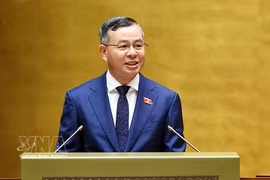
Vietnam is targeting economic growth of at least 10% in 2027 while maintaining macroeconomic stability and controlling inflation, heard a plenary sitting on October 30 as part of the 16th National Assembly’s second session.

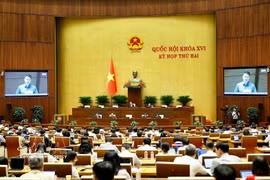
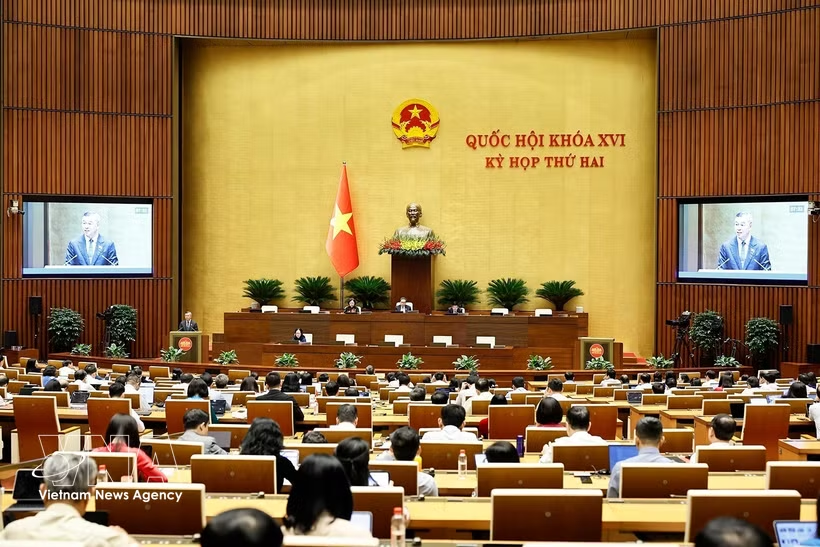
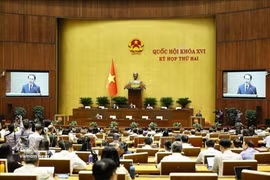
A plenary discussion of the 16th National Assembly’s second session on October 29. (Photo: VNA)

Hanoi (VNA) – Vietnam is targeting economic growth of at least 10% in 2027 while maintaining macroeconomic stability and controlling inflation, heard a plenary sitting on October 30 as part of the 16th National Assembly’s second session.

In the morning session, lawmakers discussed two draft laws: the amended Law on Real Estate Business and the amended Law on the Implementation of Grassroots Democracy.

In the afternoon, the legislature is scheduled to debate the implementation of the 2026 socio-economic development plan and the proposed plan for 2027, as well as the implementation of the 2026 state budget, the 2027 state budget estimates and the proposed allocation of the central budget for next year.

Other items on the agenda include the implementation of the 2026 public investment plan and the proposed public investment plan for 2027, the 2025 state budget final accounts, a review of the implementation of National Assembly Resolution No. 66/2013/QH13, dated November 29, 2013, and the completion of investment and construction of the two-lane Ho Chi Minh Road project.

The session is being broadcast live on television and radio to enable voters and the public to follow the proceedings.

According to a Government report, Vietnam's socio-economic performance in 2026 has achieved important and relatively comprehensive results despite complex developments in the international and regional environment, supported by concerted and decisive efforts across the political system. The country is expected to meet or exceed 14 of its 15 key socio-economic targets.

However, the Government acknowledged that macroeconomic management and inflation control remain under considerable pressure, while deposit and lending interest rates are still high. Small and medium-sized enterprises (SMEs) also continue to face difficulties in accessing land and credit.

For the remaining months of 2026, the Government will focus on achieving the highest possible results against the targets set, particularly the goal of double-digit economic growth while maintaining macroeconomic stability and keeping inflation under control.

The Government has identified 2027 as a year of acceleration and breakthrough, aimed at building the momentum, position and capacity needed to successfully implement the Resolution of the 14th National Party Congress.

Its overarching objective is to achieve economic growth of at least 10% while maintaining macroeconomic stability, controlling inflation and safeguarding major economic balances. The Government also aims to lay the foundations for a new national development model, with science and technology, innovation and digital transformation serving as the primary drivers of growth.

To achieve these goals, the Government will prioritise boosting economic growth in tandem with maintaining macroeconomic stability. It aims to increase state budget revenue by approximately 9.1%, strictly economise on recurrent expenditure and ensure the disbursement of 100% of allocated public investment capital.

Further priorities include completing the institutional and legal framework, comprehensively streamlining administrative procedures, ensuring the effective operation of the two-tier local administration system and improving the quality of the civil service. Officials who shirk responsibility, avoid difficult tasks or display a reluctance to take responsibility will be promptly replaced.

The Government will also accelerate economic restructuring and reform the growth model, promote the development of the private sector and attract foreign investment selectively, with an emphasis on technology transfer.

The development of strategic infrastructure will be another key priority, with efforts focused on building a coordinated and modern infrastructure network, completing the expressway system and advancing major national railway projects.

The Government will also pursue breakthroughs in science and technology, innovation and digital transformation, while ensuring the effective operation of the National Data Centre, expanding 5G coverage nationwide and piloting 6G technology.

In education and human resource development, the focus will be on making substantive improvements in education and training quality and developing a highly skilled workforce.

The Government will ensure that sufficient textbooks are available before the 2027-2028 academic year and complete the second phase of multi-level boarding schools for general education by August 30, 2027.

Alongside economic development, the Government will prioritise culture, social affairs and healthcare, while strengthening social welfare and security.

It will also consolidate national defence and security, step up foreign affairs and international integration, and make thorough preparations for the successful organisation of APEC Year 2027.

The Government will further strengthen implementation capacity and enhance the accountability of heads of agencies and organisations, ensuring that every policy translates into tangible and measurable improvements in practice./.

VNA
See more

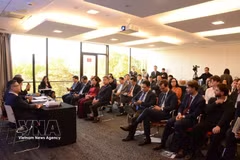
At the Paris conference between Vietnamese and French companies (Photo: VNA)

Vietnam, France expand cooperation in industry, clean energy, hi-tech

In industry, Phu Tho wants hi-tech, supporting industries, electronics components, precision mechanics, automation, new materials and semiconductors, tied to R&D, technology transfer and domestic suppliers. In infrastructure and green growth, it seeks industrial park, logistics, modern management, energy efficiency and wastewater reuse projects, aiming at eco-industrial parks.

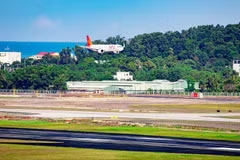
The first commercial flight lands on the new runway at the Phu Quoc International Airport (Photo: nhandan.vn)

Phu Quoc airport opens second runway after eight-month sprint

The new second runway of Phu Quoc International Airport, measuring 3,300 metres in length and 45 metres in width, meets the International Civil Aviation Organisation (ICAO) Code E standards, enabling it to accommodate wide-body aircraft such as the Boeing 787, Airbus A350 and Boeing 777, thereby enhancing Phu Quoc’s international air connectivity.

At an orchard in Bac Ninh city (Photo: VNA)

Bac Ninh hunts buyers for 118,000 tonne fruit crop

Bac Ninh Authorities are leaning on growing area codes for traceability and market access. As of October 16, 2026, the city had 91 codes covering 1,764.9 ha, including 80 for export, 11 for domestic sales.

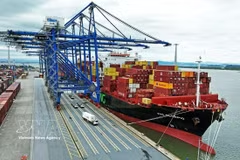
Import and export goods at Lach Huyen Port in Hai Phong city. Photo: VNA

Vietnam’s trade surpasses 1 trillion USD in 10 months

Vietnam recorded a trade surplus of an estimated 6.8 billion USD in October, marking the second consecutive month of surplus and narrowing the cumulative trade deficit for the first 10 months to around 12.7 billion USD.

Vietnamese Trade Counsellor in Mexico Nguyen Thi Trang introduces Vietnam’s pavilion at the 32nd Mexican Foreign Trade Congress. (Photo: VNA)

Vietnam, Mexico step up trade connectivity

At the 32nd Mexican Foreign Trade Congress (Congreso COMCE 32), many Mexican businesses expressed interest in Vietnam as a potential sourcing market and sought information on its production capacity, product ranges and opportunities to connect with suppliers.

Delegates discuss potential Vietnam-China cooperation in supply chains at the seminar. (Photo: VNA)

AEF 2026: Vietnam, China step up supply chain cooperation

With Vietnam-China trade reaching USD 256.4 billion in 2025 and the two economies having complementary strengths, the two countries' businesses have ample opportunities to become more deeply involved in regional and global production networks.

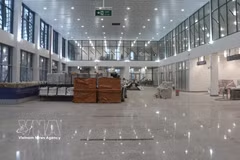
The passenger terminal at Ca Mau Airport is nearing completion. (Photo: VNA)

Ca Mau, Vietjet prepare Hanoi route with three weekly flights

Vietjet is set to launch the route with at least three weekly flights on Mondays, Wednesdays, and Fridays, using A320/A321 aircraft that can seat 180–186 passengers. The service will cater to both domestic and international travellers heading to Vietnam’s southernmost tip.

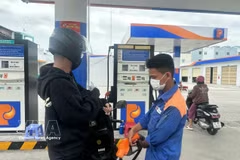
A motorcyclist has his vehicle refilled at a petrol station in Tay Ninh province. (Photo: VNA)

Fuel prices rise from 3pm on October 29

Under the latest adjustment, the retail price of E5RON92 petrol was capped at 26,027 VND (1.01 USD) per litre, up 666 VND per litre from the previous ceiling price.

Participants pose for a group photo at a session of the Autumn Economic Forum 2026. (Photo: VNA)

Vietnam, UK seek stronger investment ties to build high-value economy

Ho Chi Minh City hopes to work with British financial institutions, credit rating agencies and businesses to develop capital markets and the International Financial Centre, an official said, adding that British expertise in market standards, risk management and international fundraising could help connect Vietnam with global capital flows.

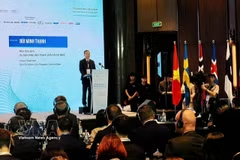
Vice Chairman of the Ho Chi Minh City People’s Committee Bui Minh Thanh addresses the Nordic - Vietnam Business Forum on October 29, 2026. (Photo: baoquocte.vn)

Vietnam, Nordics push to turn new frameworks into business deals

Chairman of the Nordic Chamber of Commerce in Vietnam (NordCham Vietnam) Thue Quist Thomasen said bilateral ties are gaining momentum through new agreements covering sci-tech and innovation cooperation, the Vietnam–Norway Green Strategic Partnership, and the newly-signed Vietnam–Europian Free Trade Association (EFTA) Free Trade Agreement (FTA).

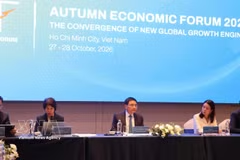
Speakers at the discussion held on October 28 as part of the Autumn Economic Forum (AEF) 2026 in Ho Chi Minh City (Photo: VNA)

Autumn Economic Forum 2026 seeks to establish new growth poles

Vietnam has built an impressive growth model, becoming a major manufacturing hub, an investment destination and an increasingly interconnected economy. It now needs to move beyond simply building connections and become a smartly connected economy.