Ho Chi Minh City (VNA) - Growing demand for infrastructure development, manufacturing upgrades and energy transition is creating opportunities for Vietnam to attract technology, capital and management expertise from Nordic countries.
The presence of technology companies, new investments and emerging cooperation frameworks is laying the foundation for deeper bilateral ties. To capitalise on these opportunities, Vietnam needs to better connect available resources, strengthen domestic technological capabilities and prepare to meet the requirements of high-standard markets, according to Nordic countries' ambassadors to Vietnam.
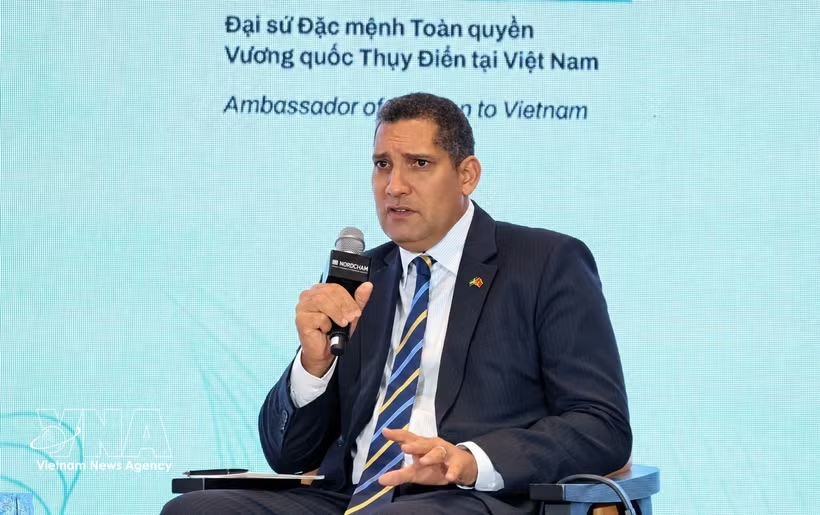
Swedish Ambassador Johan Ndisi: Growth opportunities go hand in hand with emissions reduction
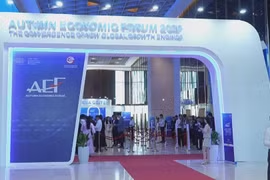
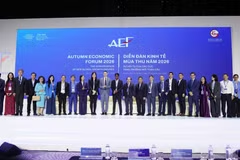
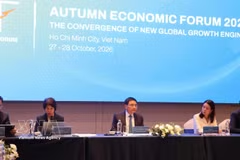
Speaking on the sidelines of the Autumn Economic Forum 2026 (AEF 2026) in Ho Chi Minh City, Swedish Ambassador to Vietnam Johan Ndisi said that Vietnam's ambition to achieve double-digit economic growth while fulfilling its commitment to net-zero emissions by 2050 poses an important challenge: decoupling economic growth from rising carbon emissions. This is also an area in which Sweden and other Nordic countries can share experience and accompany Vietnam in its development efforts. According to the diplomat, innovation should be understood as practical solutions to real-world problems. Sweden's development experience demonstrates that technology and innovation can help meet two objectives simultaneously: sustaining economic growth and reducing environmental impacts.
He noted that the technological cooperation between the two countries already has a substantial presence in Vietnam's manufacturing sector. Many companies provide equipment and solutions for factories and infrastructure projects, although their names may not be familiar to ordinary consumers.
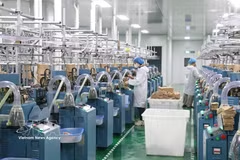
As an example, Ndisi cited the VinFast factory in Hai Phong city, which uses around 1,000 industrial robots supplied by Asea Brown Boveri (ABB), a Swedish-Swiss technology corporation. Swedish bearing manufacturer SKF is also present in Vietnam's urban railway sector, while Atlas Copco supplies industrial machinery and equipment. Many of these companies focus on smart manufacturing solutions to reduce costs and emissions. Therefore, cooperation opportunities with Vietnam are directly linked to the need to improve production efficiency, rather than merely expanding equipment sales.
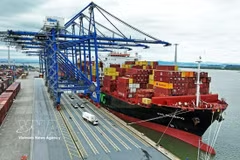
The diplomat particularly emphasised the importance of integrating different technologies into comprehensive solutions. Renewable energy development, for instance, requires an adequate power grid for transmission. In this connection, he highlighted Hitachi Energy's high-voltage direct current (HVDC) transmission technology. Similarly, modernising seaports requires the combination of electrification with network infrastructure, monitoring systems and transport solutions.
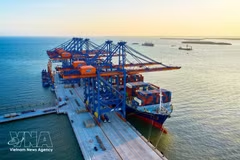
With this approach, Sweden is developing what it calls “Swedish solution packages” and stands ready to build broader Nordic solution packages. During engagements with Hai Phong Port, companies were introduced based on their complementary capabilities, ranging from electricity solutions to network connectivity provided by Ericsson and systems supporting port operations.
Ndisi also pointed out that many investments in Vietnam are managed from Singapore, where multinational corporations maintain their regional headquarters. Investment connectivity should therefore take into account companies' international operating networks. Alongside technology and capital, he stressed the need to develop a workforce proficient in English language and capable of participating in global supply chains. This is an important condition for Vietnam to make greater use of the presence of international corporations.
Finnish Ambassador Pekka Voutilainen: Cooperation to strengthen strategic autonomy
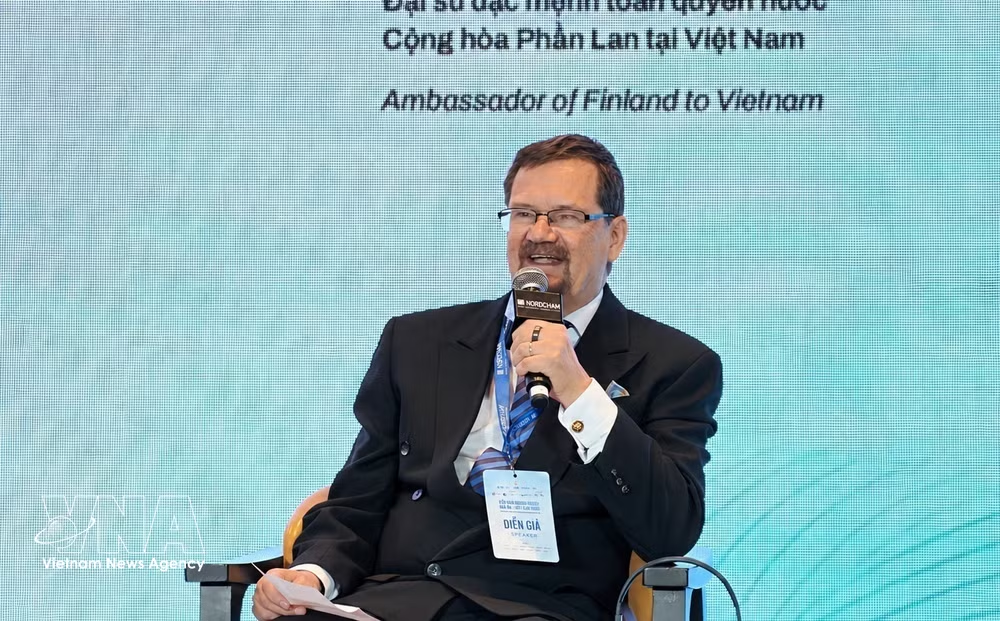
Finnish Ambassador to Vietnam Pekka Voutilainen said developing domestic technological and energy capabilities is essential to Vietnam's goal of strategic autonomy, enabling the economy to reduce external dependence in challenging circumstances. Finland stands ready to support Vietnam through reliable partnerships, he affirmed.
Describing bilateral relations as being at their best ever, Voutilainen noted that 18 Vietnamese delegations have visited Finland since July 2026, reflecting growing engagement between government agencies and business communities. Vietnam is Finland's largest trading partner in Southeast Asia, while Finnish private funds have invested about 1.3 billion EUR (1.45 billion USD) in the country.
He highlighted Finnfund's 15-million-USD investment in partnership with EVF General Finance Joint Stock Company to provide long-term capital, improve financing access for small- and medium-sized enterprises, particularly women-owned businesses, and support Vietnam's green transition. Another 15-million-USD investment, in cooperation with August Energy, aims to develop an “energy-as-a-service” model.
In the green transition, the ambassador highlighted an EU-funded circular economy project for industrial parks, led by Finland. The initiative plans to select 10 industrial parks to implement circular economy models, with the Finnish Innovation Fund Sitra contributing policy expertise and businesses undertaking practical implementation, particularly in waste treatment and resource reuse.
Finland also sees cooperation potential in cost-efficient construction technologies, data centres, fibre-optic cables and telecommunications infrastructure. Voutilainen stressed the importance of connecting universities, businesses and investors to support startups, citing Aalto University and the Slush startup event as examples. Around 600 Vietnamese students are studying at Aalto, out of approximately 3,000 in Finland, forming an important bridge between the two countries' business communities.
Norwegian Ambassador Stein Iversen: Proactively seizing opportunities in high-standard markets
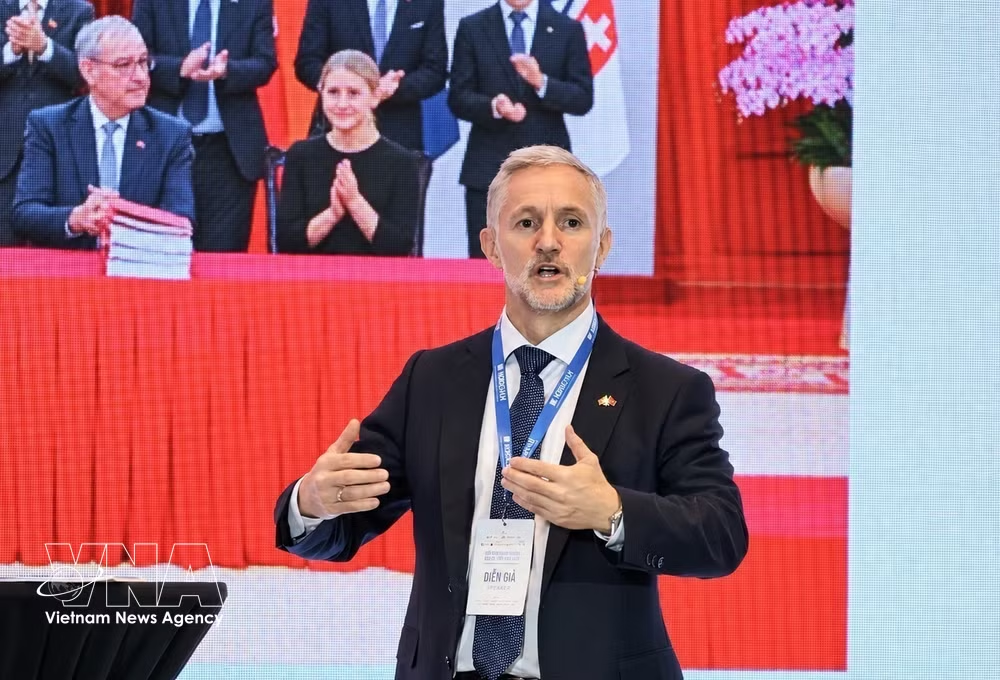
Norwegian Ambassador to Vietnam Stein Iversen said the Vietnam-European Free Trade Association (EFTA) Free Trade Agreement and the Vietnam-Norway Green Strategic Partnership provide complementary frameworks for cooperation. While the former promotes trade and investment, the latter reflects the two governments' commitment to sustainable marine economy, marine spatial planning and renewable energy.
He noted that businesses and investors should proactively seize the opportunities. Norwegian enterprises can expand their markets, while Vietnamese businesses and investors can gain better access to EFTA markets, which place strong emphasis on high standards. Stability and predictability are particularly important for long-term investment and may be as significant as, or even more important than, tariff reductions.
Promising cooperation areas include aquatic products and aquaculture, maritime industries, the circular economy and energy. Norwegian companies are already involved in various stages of Vietnam's aquaculture value chain, creating opportunities for cooperation beyond conventional trade.
Iversen recommended businesses to thoroughly study the agreement, including tariff schedules, rules of origin and relevant product documentation and seek support from the Norwegian Embassy, Innovation Norway and the EFTA Secretariat; prepare for the agreement's implementation rather than wait until it takes effect; and identify and meet market standards, viewing them as a pathway to stronger competitiveness and access to high-quality markets.
The ambassador added that diversifying trade and partners serves Vietnam's interests amid mounting pressures on the global trading system and helps reinforce the multilateral framework.
Ultimately, Vietnam's opportunities in technology and green investment depend not only on attracting external resources but also on strengthening domestic capabilities, improving product quality and proactively engaging in long-term economic partnerships./.