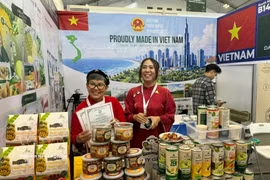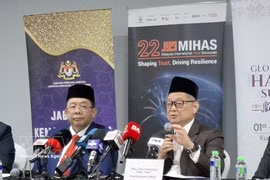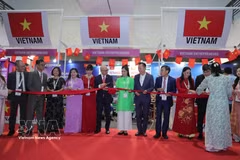
Hanoi (VNA) – Vietnam is seeking to tap the multi-trillion-dollar global Halal market, but turning potential into export growth will require businesses to bridge gaps in certification, deep processing, supply chains and market-specific requirements.
With around 2 billion Muslims across more than 110 countries, the Halal market is expanding beyond food into cosmetics, pharmaceuticals, fashion, logistics, finance and tourism.
Vu Ba Phu, Director of the Vietnam Trade Promotion Agency under the Ministry of Industry and Trade, said the global Halal economy was currently worth around 2.5-3 trillion USD a year and could reach 10 trillion USD by 2028.
Vietnam's Halal exports, however, remain modest at around 900 million USD a year, accounting for less than 1% of the global market. Most exports are still raw agricultural and seafood products. Only around 1,000–1,300 Vietnamese businesses obtained or maintained Halal certification during 2024–2026.
Vietnamese Trade Counsellor in Indonesia Pham The Cuong said Indonesia's Halal consumption reached 330.5 billion USD in 2025, with food and beverages projected at 360.5 billion USD in 2026. Vietnamese milk, confectionery, processed foods, noodles, processed fruit and seafood are among products with export potential.
In Malaysia, where Muslims account for 60.4% of the population, Vietnamese Trade Counsellor Phung Van Thanh said Vietnamese businesses had yet to fully tap the country's Halal food market, estimated at around 50 billion USD annually.
Vietnam's biggest challenge is moving beyond raw products, according to industry experts.
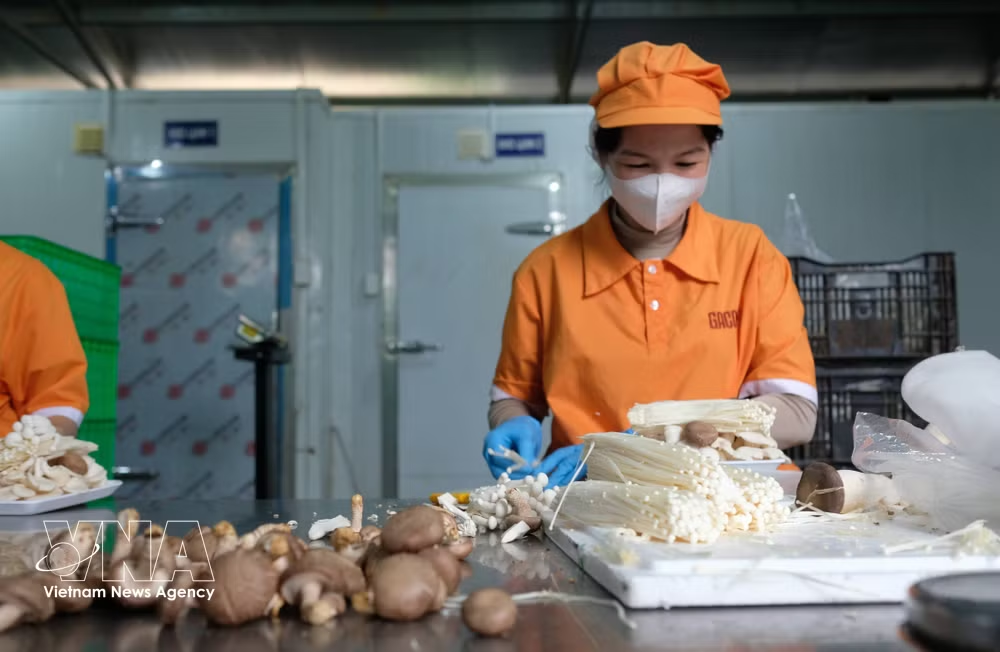
Ba Thi Nguyet Thu, Director of the HalalViet Promotion and Experience Centre, said deeply processed products remained limited, partly because Halal requirements cover ingredients, additives, flavourings and the entire production process.
Nguyen Tuan Anh, Acting Director of the Vietnam Certification Centre (QUACERT), said Halal certification was essential for entering Muslim markets but was not enough on its own. Requirements extend across production, storage, transport, labelling and traceability.
Businesses also face differences between national certification systems. Le Anh Ngoc, Head of the Ministry of Agriculture and Environment's National Authority of Agro-Forestry-Fishery Quality, Processing and Market Development, said certification recognised in Indonesia might not be accepted in Malaysia, while Malaysian certification might not meet requirements in GCC or UAE markets. Such differences raise compliance costs and complicate market access.
Experts said Vietnam needs to build integrated Halal value chains, from raw materials and processing to logistics and distribution, while investing more in deep processing and digital traceability.
Vu Thi Thanh Huyen, General Director of Nha Xanh Toan Cau Cooperative, said businesses also need clearer information on the requirements of individual markets, product compliance and supply capacity.
For Indonesia, Cuong recommended that Vietnamese exporters obtain local Halal certification, work with reputable importers, review labels and documentation, and expand online sales. Partnerships with established Halal businesses could also help build cross-border supply chains.
In Malaysia, businesses need to adapt products to local cultural and consumer preferences, while JAKIM certification remains an important requirement for access to the retail system.
The Ministry of Agriculture and Environment has called for stronger standards and greater mutual recognition among international certification systems, alongside enhanced market intelligence, business matchmaking and exporter support by trade-promotion agencies and Vietnamese Trade Offices abroad./.