Vietnam-Malaysia trade eyes 20 billion USD milestone

Malaysia remains one of Vietnam’s key trading partners in ASEAN and globally. However, Vietnam’s exports have lagged behind imports, resulting in a trade deficit of 5.67 billion USD with Malaysia in 2025 and nearly 4 billion USD in the first six months of 2026.

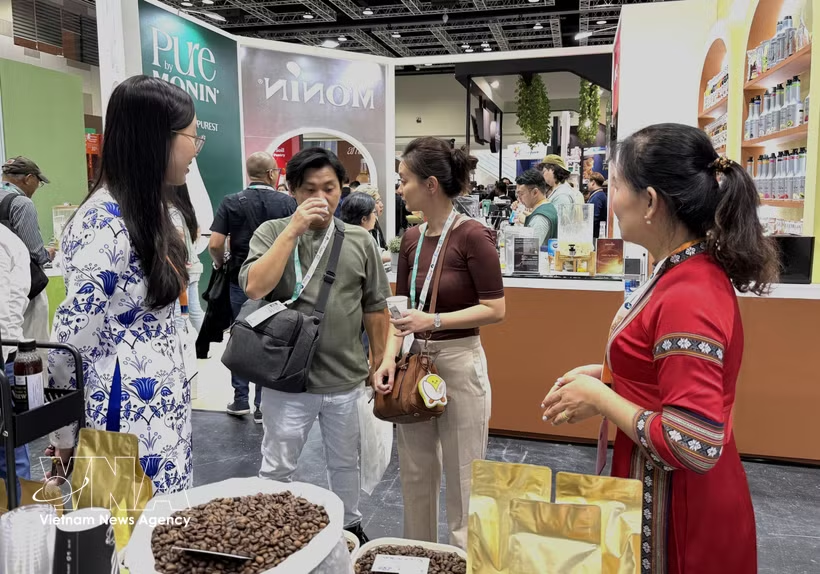
Malaysian customers sample Vietnamese coffee. (Photo: VNA)

Hanoi (VNA) – Vietnam-Malaysia trade is on track to top 18 billion USD in 2026, putting the 20-billion-USD milestone within reach as both sides seek to unlock new export opportunities, particularly in the Halal market.

Two-way trade more than doubled from 7.4 billion USD in 2015 to 16.33 billion USD in 2025. In the first half of 2026, it reached 10.8 billion USD, including 3.4 billion USD of Vietnamese exports and 7.4 billion USD of imports.

Phung Van Thanh, Vietnamese Trade Counsellor in Malaysia, said Malaysia remains one of Vietnam’s key trading partners in ASEAN and globally. However, Vietnam’s exports have lagged behind imports, resulting in a trade deficit of 5.67 billion USD with Malaysia in 2025 and nearly 4 billion USD in the first six months of 2026.

Vietnamese exports to Malaysia grew by an average 3.89% annually between 2015 and 2025, reaching 5.33 billion USD last year. Key products include machinery, electrical equipment, mechanical products and production materials. No Vietnamese export item has yet reached 1 billion USD in annual turnover in Malaysia.

By contrast, imports from Malaysia grew 11.48% annually on average during the same period, reaching 11 billion USD in 2025, mainly comprising machinery, equipment, petroleum products, computers, electronics and components.

Thanh identified Halal certification as a major hurdle but also a significant opportunity for Vietnamese exporters. Malaysia, with a population of about 34.2 million and a Muslim population of 60.4%, is a major Halal food market and one of the five largest Halal food importers among Organisation of Islamic Cooperation (OIC) members, with annual imports exceeding 20 billion USD.

Malaysia’s domestic Halal food market is estimated at 50 billion USD, while its Halal Industry Master Plan targets domestic Halal consumption of 113 billion USD by 2030 and seeks to position the country as a global Islamic economy hub.

Vietnam has strong potential to tap this market, with the country ranking among the world’s top 10 exporters of key agricultural products such as rice, coffee, cashew nuts, pepper and medicinal herbs. More than 80% of Vietnam’s plant-based agricultural products inherently meet basic Halal requirements.

Thanh said developing Halal-compliant products could help Vietnamese businesses overcome export barriers and contribute to achieving the 20-billion-USD bilateral trade target, with 25 billion USD a year as a longer-term goal.

However, businesses still face challenges in obtaining certification due to limited experience, a shortage of specialised consultancy services and differing requirements among Muslim markets.

In Malaysia, the Department of Islamic Development Malaysia (JAKIM) applies stringent certification procedures, including document reviews, on-site inspections of production facilities and supply chains, dedicated Halal compliance personnel and staff training. Foreign businesses must also cover inspection teams’ travel and accommodation costs, adding to certification expenses.

Strengthening Halal certification capacity and helping Vietnamese businesses meet international standards could therefore be key to narrowing the trade gap and unlocking greater export potential in the Malaysian market./.​

VNA

See more

Farmers in Ca Mau apply mechanisation in harvesting the summer-autumn rice crop. (Illustrative photo published by VNA)

Deputy PM calls for shift from output-driven to quality-based growth

The development of the agriculture, forestry and fisheries sectors should not focus solely on increasing export value, but must be linked to comprehensive restructuring of agriculture towards modern, ecological, high-value-added and sustainable development, said Standing Deputy Prime Minister Pham Gia Tuc.

Vietnam seeks to attract more Canadian investment

Vietnam seeks to attract more Canadian investment

Vietnam is seeking to strengthen financial cooperation with Canada and attract more long-term capital to support its economic growth and sustainable development, said Minister of Finance Ngo Van Tuan.

Danny Green JSC showcases unique products made from high-quality Vietnamese agricultural ingredients. (Photo: VNA)

Vietnam showcases diverse halal products at Indonesia trade fair

As Indonesia continues to expand and develop its halal industry ecosystem, Halal Indo 2026 provides Vietnamese businesses with an opportunity to promote their products, seek partners and better prepare to enter one of the world’s major halal markets

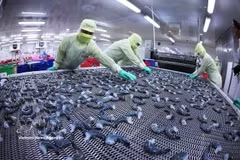
Shrimp products are frozen using IQF technology at the Minh Phu Seafood Group factory in Ly Van Lam ward, Ca Mau province. (Photo: VNA)

Shrimp exports reach 3.3 billion USD in eight months

According to data from the Vietnam Customs cited by the Vietnam Association of Seafood Exporters and Producers (VASEP), shrimp exports reached 478.5 million USD in August, up 4.2% from the same month last year. The eight-month total stood at 3.3 billion USD, representing a year-on-year increase of 12%.

A rubber plantation of Dau Tieng Rubber One-Member Co., Ltd. in Thanh An commune, Ho Chi Minh City, enters the harvesting season. (Photo: VNA)

Vietnam seeks to raise value of agro-forestry exports by leveraging supply chains

Vietnam has developed a relatively comprehensive supply chain, covering forest plantations, raw materials, processing, design, manufacturing and logistics, creating jobs for about one million workers, Nguyen Quoc Khanh, Chairman of the Vietnam Timber and Forest Product Association (VIFOREST) and Chairman of the Board of Directors of AA Corporation, said.

Students of Vietnam Maritime University in Hai Phong receive training that combines theory with practical experience. (Photo: VNA)

Hai Phong seeks to develop elite, skilled maritime workforce

Hai Phong is a key marine economic hub of Vietnam, thanks to its strong shipbuilding capacity and high-quality maritime training system. Alongside its capacity for new shipbuilding and ship repair, the city is also a leading provider of maritime workers for domestic and international businesses.

Imported pork on sale at a supermarket. (Photo VNA)

Meat import value surpasses 2 billion USD

The import value of meat and meat products hit 2.04 billion USD as of mid-September, of which pork products accounted for nearly 376 million USD, according to Vietnam Customs.

Representatives of the Permanent Mission of Vietnam in Geneva attend the seminar (Photo: VNA)

Vietnam promotes digitalisation, facilitates international trade

Under the theme “Enhancing international trade facilitation in practice: Digitalisation and the reduction of procedural trade barriers,” the seminar provided FTU lecturers and students with deeper insights into the WTO’s Trade Facilitation Agreement (TFA) and practical issues arising during its implementation.