Minister pledges higher capital efficiency, sufficient resources for growth

Minister of Finance Ngo Van Tuan said that the double-digit growth target for 2026–2030 requires total investment across society to reach around 40% of GDP, while the incremental capital-output ratio (ICOR) must be brought down to 4.5–4.8.

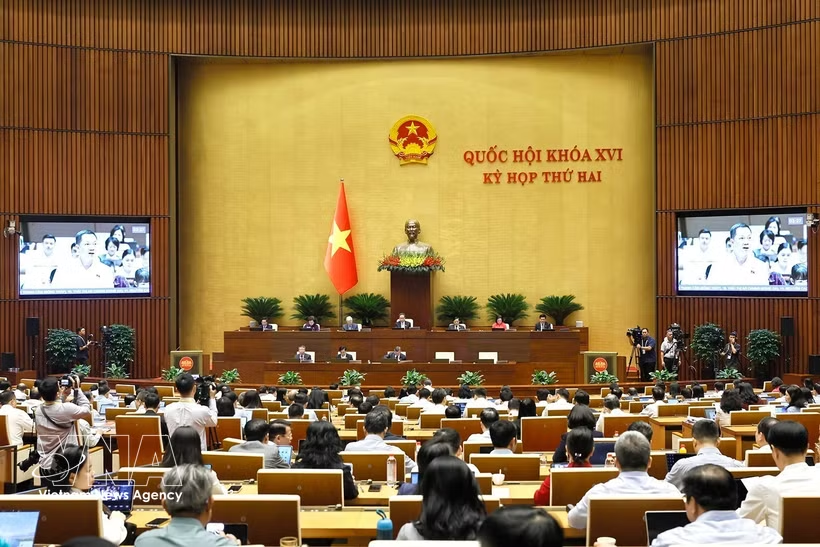
An overview of a discussion during the second session of the 16th National Assembly (Photo: VNA)

Hanoi (VNA) – Minister of Finance Ngo Van Tuan clarified measures to improve capital efficiency and secure resources for achieving the double-digit growth target for 2026 while addressing the second session of the 16th National Assembly on October 31.

Replying to lawmakers' questions about how to obtain annual growth of more than 10% during 2026–2030, particularly given the economy’s heavy reliance on credit, Tuan said that target requires total investment across society to reach around 40% of GDP, while the incremental capital-output ratio (ICOR) must be brought down to 4.5–4.8.

Capital mobilisation needs during 2026–2030 are expected to be 2.21 times those of the 2021–2025 period.

With regard to the excessive dependence on the credit market, he said the Government has gradually introduced measures to broaden access to capital through its stock market development strategy, with initial results already achieved.

The minister cited data as showing that capital raised on the market in the first nine months of 2026 increased 15% year on year. Notably, public share offerings rose 60% while private share placements climbed 80%. Since late 2025, 10 companies have conducted initial public offerings (IPOs), raising more than 60 trillion VND (2.32 billion USD), nine times the total amount mobilised throughout the 2021–2025 period.

The stock market development strategy sets a target of bringing total stock market capitalisation to 120% of GDP by 2030. Currently, the market capitalisation of listed shares is equivalent to around 90% of GDP, while the bond market accounts for approximately 50% and the derivatives market for around 20–30%.
vnanet_potal-quoc-hoi-tiep-tuc-thao-luan-ve-tinh-hinh-thuc-hien-ke-hoach-phat-trien-kinh-te-xa-hoi-nam-2026-9123547-1.jpg
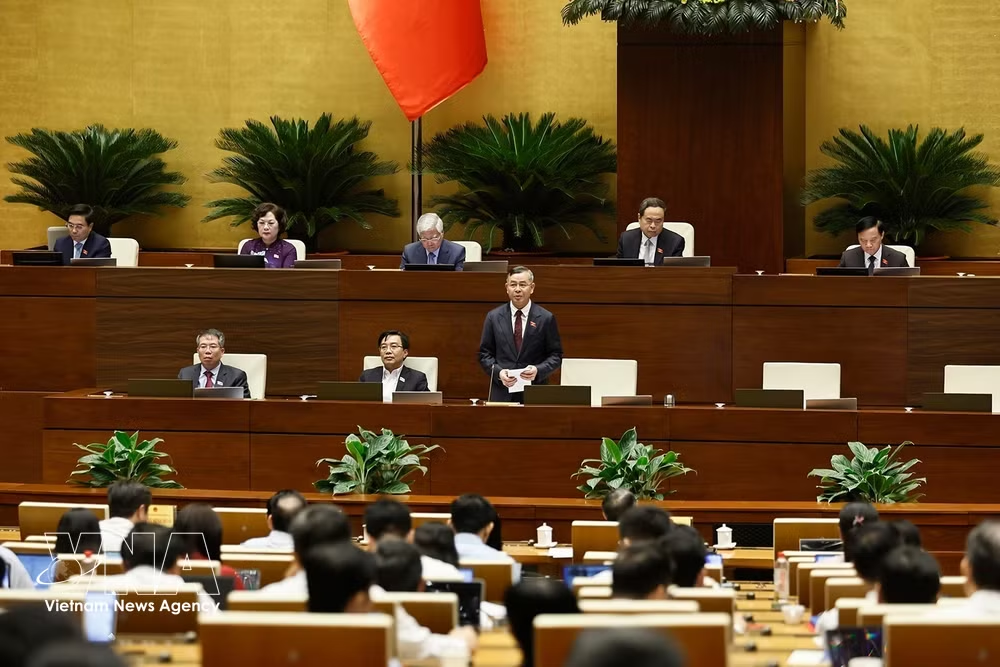
Minister of Finance Ngo Van Tuan speaks at the second session of the 16th National Assembly. (Photo: VNA)

To achieve these targets, he said the legal framework must be further strengthened and transparency ensured to make the market more attractive to investors. Other priorities include accelerating the equitisation of State-owned enterprises, preventing excessive concentration, attracting more foreign investors and developing professional investment institutions.

Regarding inflation control, the minister said keeping inflation at 4.52% during the first nine months represents a major effort amid continued global economic volatility and mounting price and supply pressures. Alongside flexible and prudent monetary policy to stabilise exchange rates and interest rates, large-scale fiscal measures have been rolled out to support people and businesses.

Over state budget management, deputies raised concerns about the quality of budget estimates, the carryover of funds and advance payments. Tuan acknowledged that estimates have not always accurately reflected actual implementation, adding the Ministry of Finance is working to address this shortcoming.

In 2025, actual state budget revenue was 36% higher than the estimate and 34% above the 2024 figure. One reason, he said, is the limited capacity for analysis and forecasting. Greater application of information technology is therefore needed to improve forecasts and ensure that budget estimates reflect actual conditions more accurately.

The official stressed that improving project preparation and implementation is crucial to accelerating progress and reducing the volume of carryover funds and outstanding advances.

Also on October 31, Governor of the State Bank of Vietnam (SBV) Pham Duc An clarified a number of issues pointed out by deputies.

He said that several banking indicators, including the credit-to-GDP ratio, the structure of short-term deposits and medium- and long-term lending, and liquidity, have been raised by economic experts and representatives of the World Bank (WB) and International Monetary Fund (IMF) during their meetings with the SBV.
vnanet_potal-quoc-hoi-tiep-tuc-thao-luan-ve-tinh-hinh-thuc-hien-ke-hoach-phat-trien-kinh-te-xa-hoi-nam-2026-9123546-1.jpg
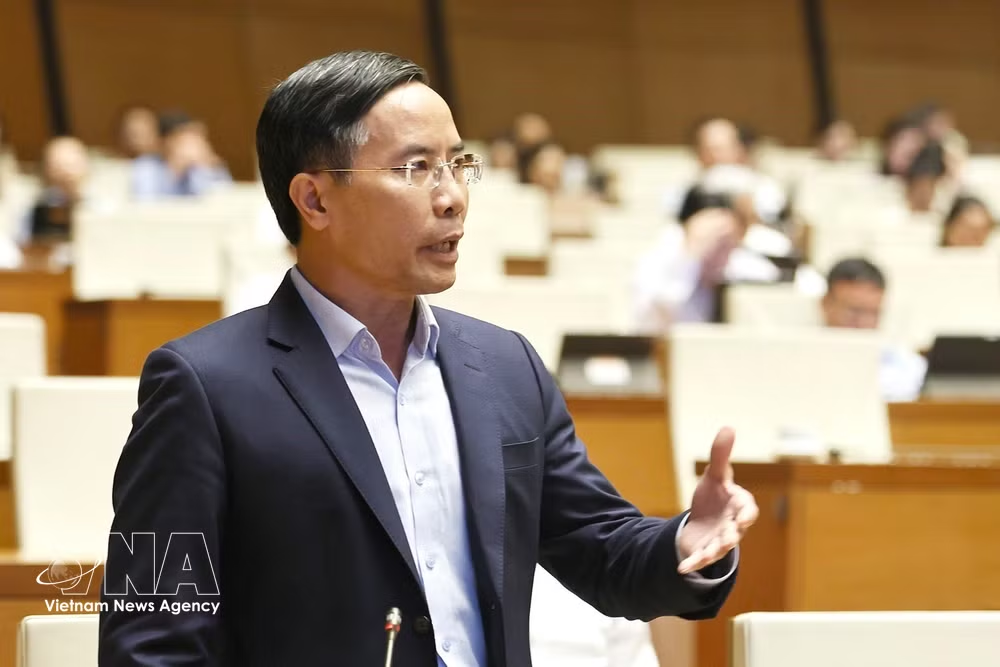
Governor of the State Bank of Vietnam (SBV) Pham Duc An addresses the discussion.
(Photo: VNA)

An stressed that the central bank remains committed to maintaining macroeconomic stability, curbing inflation and managing exchange rates to contribute to economic growth. Balancing these objectives requires a flexible, practical approach rather than a fixed formula.

Regarding lending and credit, the governor said the SBV will continue to manage credit growth, which currently stands at around 12.27%. Interest rates will be managed in a way that controls the cost of capital and supports production and business activities.

Specifically, deposit interest rates have risen by 1.42%, while lending rates have increased by only 0.99%, indicating a narrowing gap between the two. For real estate credit, the central bank is maintaining close control, with growth currently at around 9.84%, below the overall credit growth rate of the economy.

On access to finance for small- and medium-sized enterprises (SMEs), An said the SBV has worked with the Vietnam Association of SMEs to seek ways to lower interest rates and facilitate access to capital, with a focus on cash-flow-based lending.

He affirmed that the SBV will continue encouraging credit institutions to expand lending to SMEs while improving the legal framework to give lenders greater confidence in extending credit./.


VNA

See more

Fruits on sale at the Thao Dien WinMart supermarket in Ho Chi Minh City (Photo: VNA)

Government steps up measures to boost growth, control inflation

To achieve the full-year growth target of 10%, GDP would need to expand by 12.5% in the fourth quarter. Deputy PM Nguyen Van Thang described this as “a major challenge, but not an impossible task”, noting that the economy still has considerable momentum and room for expansion.

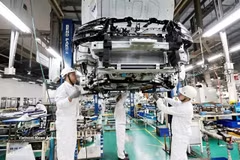
Car production at Honda Vietnam’s factory in Phu Tho province. Vietnam's total sales of vehicles in the January–September period was 495,138, up 20.2% year on year. (Photo: VNA)

Auto market targets 700,000 sales in 2026

If the momentum continues in the fourth quarter, Vietnam’s auto market could surpass the previous record of 604,134 vehicles set in 2025 and approach 700,000 units for the full year.

The success of the premium 100% Fine Robusta coffee line “Ham Rong” in Italy is a vivid testament to the strategic transformation of Vietnam's agricultural sector. (Photo: VNA)

Vietnamese coffee’s journey to finding place in Italy

Within the premium 1895 Coffee Designers by Lavazza range, Ham Rong stands out as the first product for which the legendary Italian roaster has used the name of a specific farm owned by Vinh Hiep Co., Ltd. in Gia Lai as its official product name.

Phan Thiet II Industrial Park in Lam Dong province (Photo: VNA)

Lam Dong pulls in 70 new projects in 10 months

The southern province of Lam Dong attracted 70 new projects with total registered capital of over 176.49 trillion VND (6.78 billion USD) in January-October, 18 more than a year earlier.

A view of the sixth thematic session of the Ho Chi Minh City People’s Council (Photo: VNA)

Ho Chi Minh City to issue municipal, project bonds through VIFC to fund infrastructure

Beyond raising funds for infrastructure, the mechanism would help develop an international bond market, one of the four strategic product pillars of VIFC-HCMC. It would also connect domestic financing needs with international investors and financial institutions while promoting specialised services such as issuance consultancy, capital arrangement, credit ratings and risk management.

Vietnamese Ambassador to Australia Pham Hung Tam (left) talks to Australian Minister for Resources Madeleine King. (Photo: VNA)

Vietnam, Australia push collaboration in energy, critical minerals

Vietnamese Ambassador to Australia Pham Hung Tam used the International Mining and Resources Conference and Exhibition 2026 (IMARC 2026) in Sydney, held on October 27-29, to meet Australian officials, researchers and companies and push cooperation in energy, critical minerals and mining tech.

At the ribbon-cutting ceremony to inaugurate Spectre 2 Hung Yen garment factory (Photo: VNA)

Denmark’s Spectre opens fourth Vietnam plant

The factory is built around high technology, energy efficiency and environmental responsibility, and carries LEED Gold certification, a top standard for energy-saving, eco-friendly building design. Solar power and modern design are expected to cut about 1,600 tonnes of CO2 emissions a year versus conventional plants of similar size.

Phu Quoc welcomes an estimated 8.57 million-plus visitors in the first nine months of 2026, up 30.5% year on year, including more than 1.92 million international arrivals, an increase of 60.2%. (Photos: Sun Group)

Tourism powers nearly 40% economic growth in Phu Quoc

In the first nine months of 2026, Phu Quoc welcomed an estimated 8.57 million-plus visitors, up 30.5% year-on-year, with international arrivals exceeding 1.92 million, an increase of 60.2%. Tourism revenue reached approximately 45.976 trillion VND, up 47.7% and exceeding the full-year target by 1%.

At the Paris conference between Vietnamese and French companies (Photo: VNA)

Vietnam, France expand cooperation in industry, clean energy, hi-tech

In industry, Phu Tho wants hi-tech, supporting industries, electronics components, precision mechanics, automation, new materials and semiconductors, tied to R&D, technology transfer and domestic suppliers. In infrastructure and green growth, it seeks industrial park, logistics, modern management, energy efficiency and wastewater reuse projects, aiming at eco-industrial parks.

The first commercial flight lands on the new runway at the Phu Quoc International Airport (Photo: nhandan.vn)

Phu Quoc airport opens second runway after eight-month sprint

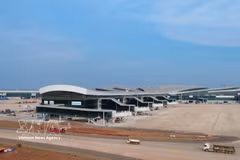
The new second runway of Phu Quoc International Airport, measuring 3,300 metres in length and 45 metres in width, meets the International Civil Aviation Organisation (ICAO) Code E standards, enabling it to accommodate wide-body aircraft such as the Boeing 787, Airbus A350 and Boeing 777, thereby enhancing Phu Quoc’s international air connectivity.