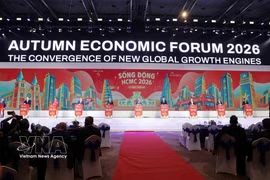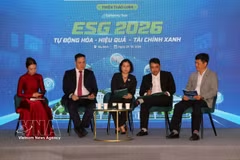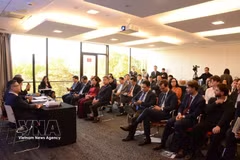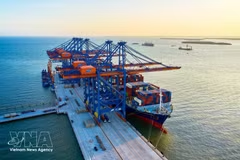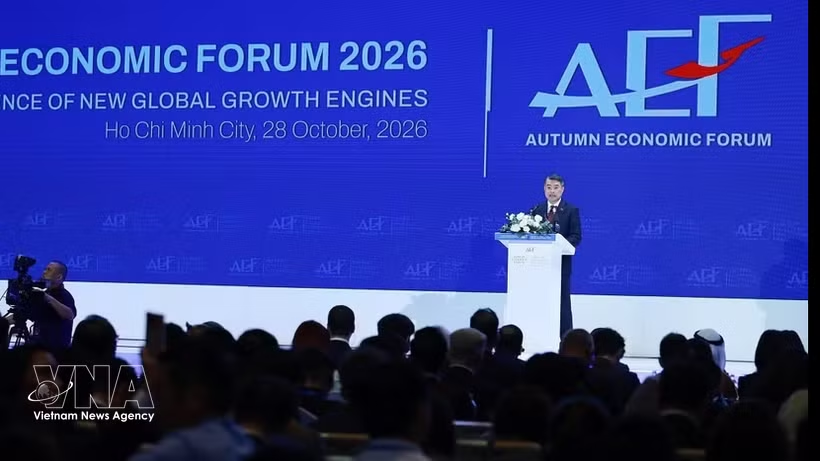
Ho Chi Minh City (VNA) – The Autumn Economic Forum (AEF) 2026 has brought together international resources, investment opportunities and policy commitments, highlighting the need for coordinated action to turn these connections into concrete projects and outcomes in support of Vietnam’s double-digit growth target.
Connecting resources, expanding investment opportunities
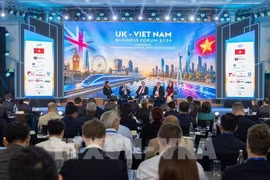
The four-day forum gathered more than 1,500 participants from 60 countries and territories, with over 250 speakers participating in more than 20 in-depth sessions on institutional frameworks, finance, artificial intelligence, strategic technologies, advanced manufacturing and urban governance. Discussions focused on connecting capital and technology with the capacity to implement development initiatives.
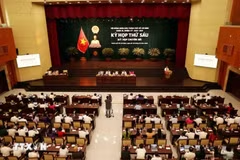
One standout moment was the conversation with Prime Minister Le Minh Hung on the theme “Positioning Vietnam in the Global Future.” In discussions with World Economic Forum leaders, PM Hung outlined Vietnam’s key development priorities, including improving institutions, investing in infrastructure, and boosting business capabilities. These priorities also aimed to address investor concerns when they choose destinations for making long-term commitments to.
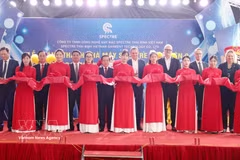
At the forum, Ho Chi Minh City announced 12 major investment projects with a combined capital mobilisation target of 13 billion USD, covering seaports, logistics, urban development, industrial manufacturing and high technology. The projects reflect the city’s demand for resources to upgrade infrastructure, production capacity and connectivity.
The announcement of the first 10 official members of the Vietnam International Financial Centre in Ho Chi Minh City (VIFC-HCM) marked another step in building its membership community, raising expectations for investment structures, connections with international capital markets and concrete transactions.
Pham Nang Dung, CEO of Son Kim Capital, highly valued opportunities to work with authorities and other members of VIFC-HCM to develop policies and legal frameworks that can attract international capital and meet investor requirements.
In the energy sector, Nguyen Ngoc Nhat Hanh, Investment Director of REE Energy Finance, expressed her hope that VIFC-HCM will become a bridge between Vietnamese businesses and international capital markets, particularly financial institutions interested in green energy. She said that REE Energy Finance pledged to mobilise 200 million USD for renewable energy projects.
Joseph Low, Chief Representative of Keppel in Vietnam, said the company wishes to work with Government agencies and partners to develop investment platforms and mobilise capital to support businesses. He also highlighted the potential to connect Vietnamese small- and medium-sized enterprises with global networks, enabling them to participate more deeply in the financial and investment ecosystem.
Meanwhile, Nguyen Thi Huynh Linh, founder and CEO of RovelaPay, expressed the hope to provide international visitors with convenient and transparent payment services. Its solution allows tourists to use cards and accounts in their home countries to pay via VietQR, with the converted amount, exchange rate and fees displayed in advance.
From international insights to implementation
Discussions at the forum highlighted that the twin green and digital transitions require coordinated efforts in policymaking, technology, finance and business capacity. Access to advanced solutions must go hand in hand with their practical application across industries and production facilities.
Dr Yasuhiko Hotta, Chairman of the Asia-Pacific Roundtable for Sustainable Consumption and Production (APRSCP), stressed the need to move towards a circular economy and society, net-zero emissions and nature-friendly development. He highlighted policy support, capacity building, social model testing and innovation within the business community as key areas of action.
Drawing on Norway’s experience, Prof. Gopalakrishman Kumar from the University of Stavanger said Vietnam’s rapidly developing aquaculture sector could reduce carbon emissions through advanced Norwegian technologies. He noted that cooperation will also provide opportunities for experience sharing and technology transfer, with a focus on practical solutions for the sector.
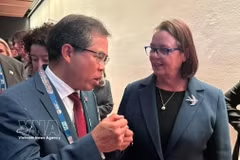
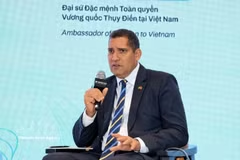
Swedish Ambassador to Vietnam Johan Ndisi underlined the importance of bringing different stakeholders together to develop comprehensive solutions drawing on the strengths of Sweden and the wider Nordic region. Amid global changes in tariff policies, he reaffirmed the commitment to promoting international cooperation.
According to Finnish Ambassador to Vietnam Pekka Voutilainen, there are around 600 Vietnamese students at Aalto University while 3,000 are enrolled at universities across Finland, and the Vietnamese community in the country numbers approximately 16,000.
These connections provide a foundation for greater understanding of the Nordic business environment, he said, adding that closer links between education, startups and investment could help Vietnam strengthen its capacity to absorb and develop technology.
Building on these international perspectives, PM Hung emphasised the need to strengthen domestic capacity. He said that Vietnam will prioritise institutional, legal, and regulatory reform to align with international standards, enhancing national governance to facilitate development.
The Government will also focus on strategic infrastructure breakthroughs, particularly in transport, seaports, energy and other essential infrastructure. Promoting science and technology, gradually mastering technologies and enabling businesses to improve their competitiveness are also key priorities, the PM noted.
Meanwhile, Chairman of the Ho Chi Minh City People’s Committee Nguyen Van Duoc pledged that the city will resolutely translate initiatives and connections established at the forum into specific cooperation programmes and projects./.