Deputy PM calls for ensuring business continuity under technology transfer regulations

Speaking at a meeting at the Government headquarters on November 3 to address difficulties in implementing Decree No. 101/2026/ND-CP detailing the Law on Technology Transfer, Deputy Prime Minister Ho Quoc Dung stressed that the regulations were designed both to promote technology transfer and strengthen state management through the lists of technologies encouraged, restricted or prohibited from transfer.

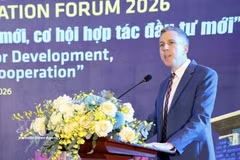
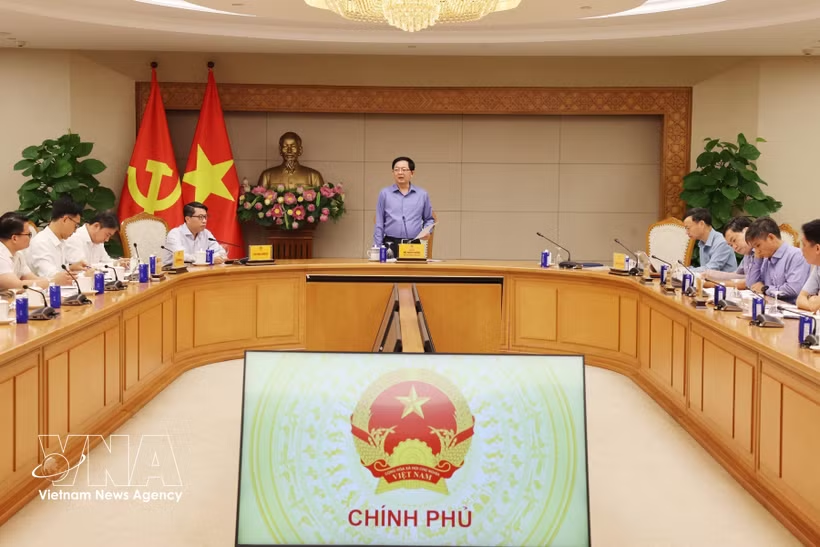
Deputy Prime Minister Ho Quoc Dung speaks at the November 3 meeting to address difficulties in implementing Decree No. 101/2026/ND-CP detailing the Law on Technology Transfer. (Photo: VNA)

Hanoi (VNA) – Deputy Prime Minister Ho Quoc Dung on November 3 called for ensuring the legitimate rights and production and business activities of enterprises while implementing regulations on technology transfer, particularly those concerning restricted and prohibited technologies.

Speaking at a meeting at the Government headquarters on November 3 to address difficulties in implementing Decree No. 101/2026/ND-CP detailing the Law on Technology Transfer, Dung stressed that the regulations were designed both to promote technology transfer and strengthen state management through the lists of technologies encouraged, restricted or prohibited from transfer.

He noted that the lists were consistent with the Party’s policies on promoting the transfer, application and mastery of advanced, modern, high-tech and strategic technologies, particularly those that are environmentally friendly, energy-efficient and resource-efficient.

The regulations also aim to prevent the import and use of outdated technologies that cause environmental pollution, waste resources and deliver low efficiency.

The Deputy PM agreed with the Ministry of Science and Technology and other relevant agencies that transfers of technologies on the restricted list must comply with current regulations. However, to protect enterprises’ legitimate interests and ensure business continuity, he outlined three key principles.

First, enterprises may continue implementing technology transfer contracts signed before April 1, 2026, when the decree took effect.

Second, businesses operating production lines and factories using technologies on the restricted or prohibited lists may continue production with their existing equipment and technologies.

Third, enterprises are allowed to develop new products based on their existing technologies.

Dung assigned the Ministry of Science and Technology to continue monitoring the implementation of the decree and coordinate with relevant ministries and agencies to receive and address emerging concerns and proposals from associations, organisations and businesses.

Responses to enterprises’ recommendations must be clear and consistent, with difficulties resolved thoroughly, he said, stressing that implementation must comply with the law, international practices and Vietnam’s commitments while taking current practical conditions into account.

The meeting also reviewed concerns raised by domestic and foreign business associations, particularly regarding technology transfers for vehicles and engines with lower emission standards, as well as contracts signed before the decree took effect.

The ministry reported that most issues had been clarified or resolved, with the remaining key concern involving technology transfers for producing vehicles that meet lower emission standards exclusively for export markets./.

VNA
See more

Tax officers of Phu Tho province provide guidance to help residents grasp tax declaration requirements. (Photo: VNA)

Tax relief expected to support stronger business growth

Economic expert Assoc. Prof. and Dr Ngo Tri Long said the tax cuts will improve cash flow and provide small businesses with additional working capital without incurring borrowing costs, particularly as access to affordable credit remains difficult.

Quang Tri Airport is a key, catalytic project for the province to achieve strategic goals in socio-economic development, national defence, and security safeguarding. (Photo: VNA)

Central region steps up investment in aviation infrastructure

Through its airports, ACV therefore hopes to strengthen cooperation with local authorities and airlines to explore appropriate support measures, attract carriers, launch new routes, increase flight frequencies, boost passenger numbers and further expand its presence in promising international markets.

Businesses are stepping up export promotion efforts in the year-end push. (Photo: thanhnien.vn)

Export orders pick up pace towards year-end

Many firms have accepted smaller, lower-priced orders and explored niche markets to offset fluctuations in major export destinations such as the US, Japan and the Middle East.

Consumers shop at CO.OPmart Rach Gia supermarket in Rach Gia ward, An Giang province. (Photo: VNA)

CPI up 4.57% in first 10 months of 2026

Compared with September, prices increased in seven of the 11 main groups of consumer goods and services, while four recorded declines. CPI rose 0.16% in urban areas and 0.25% in rural areas.

In the third quarter of 2026, Vietjet operates 39,000 flights and carries 7.3 million passengers. (Photo: Vietjet)

Vietjet posts 41% revenue growth in first nine months of 2026

In the third quarter of 2026, Vietjet operated 39,000 flights and carried 7.3 million passengers. Consolidated revenue reached 22.849 trillion VND (approx. 886 million USD), up 35% year-on-year, while net profit after tax reached 348 billion VND (approx. 13.5 million USD).

Private sector: From a key driver to a leading force for growth

Private sector: From a key driver to a leading force for growth

An open institutional framework and a transparent, stable business environment are essential for encouraging enterprises to make long-term investments. In recent years, the Party, National Assembly and Government have continued to promote administrative reform, address obstacles to investment and business activities, and support new growth drivers.

Trung Nguyen Instant Coffee Joint Stock Company in Bac Ninh city exports its products to numerous countries. (Illustrative photo: VNA)

Vietnam–EU forum to explore green economy, new value chains

By linking policy dialogue with businesses' practical needs, the forum is expected to help translate Vietnam–EU cooperation potential into concrete trade and investment opportunities. It will also provide an opportunity for both sides to make more effective use of the EVFTA, expand markets for Vietnamese goods and businesses, and tap into Europe's capital, technology and management expertise.

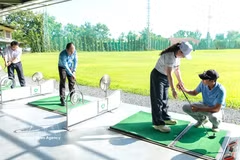
MICE guests experience services at Song Be Golf Resort, Ho Chi Minh City. (Photo: VNA)

Vietnam needs breakthrough policies to boost MICE tourism

Pham Van Bay, Deputy Director of Vietravel Hanoi Branch, said the recovery of international tourism, together with improvements in event organisation and accommodation infrastructure, is creating favourable conditions for the development of Vietnam's MICE sector.