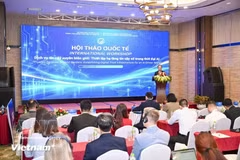
Hanoi (VNA) – Vietnam needs to strengthen research capacity, develop markets for locally designed chips, align research with practical demand and expand international cooperation to master semiconductor technologies and improve the competitiveness of its domestic industry, said insiders.
Focusing on specialised chip development
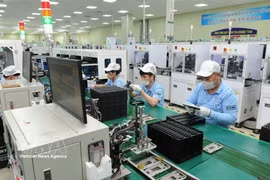
According to the Ministry of Science and Technology, Vietnam’s semiconductor industry has made notable progress. In 2025, it generated more than 21 billion USD in revenue and attracted over 14 billion USD in foreign investment through more than 240 projects. The country is now home to around 60 chip design companies and over 7,000 semiconductor design engineers.
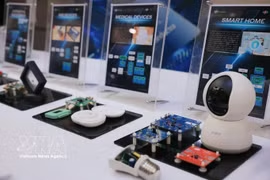
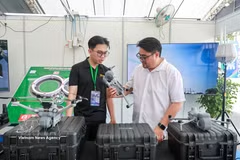
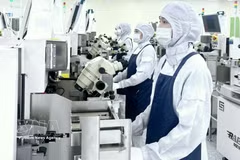
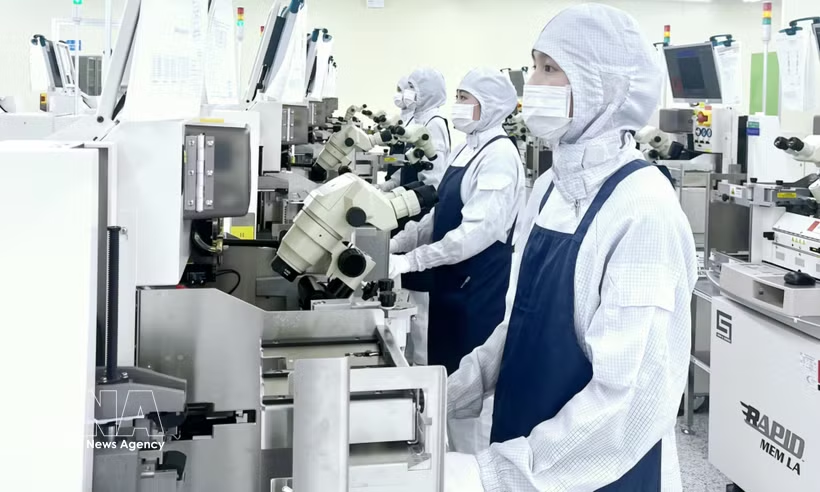
The country is gradually participating in key stages of the global value chain, from chip design, packaging and testing to R&D and specialised chip production. Specialised chips are particularly important as they address specific requirements of end products and industries. For example, AI chips used in edge cameras must process images quickly, consume little power, protect data and operate reliably despite unstable connectivity. Chips for UAVs and robots require real-time processing and high reliability, while security chips must establish hardware-based roots of trust.
However, each stage faces challenges related to technology, markets, investment and ecosystem development.
Nguyen Anh Tuan, Director of the national centre for pilot semiconductor chip manufacturing support under the Ministry of Science and Technology, said high R&D costs and an incomplete domestic production chain remained major obstacles. Small-order firms also struggle to access affordable international packaging and testing services. Moreover, turning chip prototypes into commercial products requires further investment in software, circuit boards, reliability testing, and product integration, increasing costs and development time.
A mismatch between technological development and market demand further complicates the process. Businesses hesitate to invest without initial customers, while customers are reluctant to order products that have not been tested in practice. Without support for trials, procurement and initial applications, many chip products risk remaining at the research stage, Tuan said.
Experts therefore call for an integrated specialised-chip ecosystem, rather than fragmented support for individual businesses. The Ministry of Science and Technology said it is finalising a proposal to submit to the Prime Minister on specialised chips to be prioritised for State procurement in selected sectors.
The draft list comprises 20 chip groups, identified based on demand from ministries, agencies, businesses, research institutes, universities and experts. They cover AI and edge computing; next-generation telecommunications and wireless technologies; sensors, autonomous systems and the Internet of Things; energy and power electronics; and hardware security and encryption. The list is expected to orient research, signal market demand and focus resources on products with development potential.
The national centre for pilot semiconductor chip manufacturing support will provide shared infrastructure, including design tools, laboratories, prototyping, testing and measurement services. It will connect chip designers with end-product manufacturers to reduce costs, risks and time to market.
Expanding international cooperation
Vietnam also needs to deepen international cooperation by tapping the capabilities of global technology corporations in specialised-chip research and practical applications. R&D centres in Vietnam and Qualcomm are expanding cooperation in four areas: AI, semiconductors, software and systems engineering. Besides, developing markets for domestically designed chips is equally important.
Domestic firms are also advancing production plans. Geleximco Group is completing investment procedures for a chip manufacturing plant in Hung Yen province, with construction scheduled to start in November 2026 and commercial production expected in early 2028. The group plans to prioritise testing and integrating Vietnamese-designed control chips, sensors, and power chips into its electric vehicles and industrial ecosystem, helping create initial demand for locally designed products.
Stronger policy coordination and international cooperation are also helping universities and research institutes access advanced technologies and build research capacity. In 2026, the National Foundation for Science and Technology Development selected five Vietnam-Japan joint semiconductor research projects for funding.
Assoc. Prof. Dr. Nguyen Thi Thuy of Hanoi National University of Education, one of the participating institutions, said high-level diplomatic engagement through State management agencies had created opportunities for Vietnamese scientists to work with leading global technology partners, including Japanese institutions.
Building on this mission, the research team at Hanoi National University of Education aims to train and develop a pool of elite semiconductor talent through annual Vietnam-Japan cooperation programmes, reputable scientific forums and international seminars in the semiconductor field, Thuy said./.
See more
Vietnam, China see potential for cooperation in humanoid robotics: Expert
Vietnam and China have significant potential to cooperate in humanoid robotics, spanning research, supply chains, practical applications, and human resources training, according to Assoc. Prof. Wang Xinsong from Beijing Normal University.
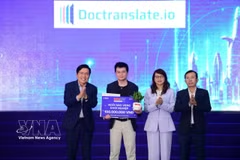
AI-powered translation platform wins Golden Startup Star award
Doctranslate.io offers contextual translation, audio recording, transcription and content summarisation services for communication, meetings and international events. Supporting 80 languages, the platform aims to add more less widely spoken languages.
Vietnam, RoK promote AI cooperation
Vietnam attaches importance to international cooperation while building its own technological capabilities, gaining greater mastery of key technologies and strengthening its participation in global AI value chains, and the RoK is its important partner in this process.
Vietnam promotes cross-border digital trust in AI era
As AI becomes increasingly involved in digital transactions, digital content's origin and integrity must be verified proactively, rather than merely detecting false information after it emerges, an official has said.
Quang Ninh, China’s Guangxi seek stronger cooperation in digital economy, AI
The city leader expressed his hope that the delegation would engage in professional exchanges with Quang Ninh’s departments and agencies to translate into concrete initiatives the cooperation areas in science and technology, artificial intelligence (AI) and the digital economy agreed upon by senior leaders of the two sides.
Vietnam, China explore greater scope for high-tech cooperation
Vietnam is attracting growing interest from Chinese businesses, not only in trade and traditional manufacturing but also in high-tech sectors such as artificial intelligence (AI), the digital economy, the low-altitude economy and smart agriculture, Chinese businesses and associations told Vietnam News Agency correspondents in China.
Vietnam joins Artemis Accords on space exploration
Vietnam views space science and technology as a strategic sector that can lift national science-technology capacity and support sustainable growth. The country wants to work with member nations on peaceful, safe, equitable, transparent and sustainable space exploration under international law, with tangible benefits for people and the planet.
Vietnam sets strategic course for comprehensive national transformation through AI: minister
Vietnam remains committed to developing AI for everyone and is ready to cooperate with partners based on equality, trust, practicality and mutual benefit, to build a safe, reliable, inclusive and sustainable AI ecosystem.
Vietnam to develop unmanned systems industry through training and infrastructure partnership
Saigon Telecommunication & Technologies Corporation (SAIGONTEL) and the US’s Pickaxe Technologies have signed a memorandum of understanding (MoU) to cooperate in manufacturing, testing, evaluation and training for unmanned and autonomous systems for civilian and commercial applications in Vietnam.
Experts discuss promotion of cybersecurity readiness in quantum era
Cuong said data safety and security in the quantum era is vital to the sustainable development of cities in the digital age. Ho Chi Minh City’s proactive approach aligns with the government’s strategic direction, which identifies quantum technology as a core technology requiring priority investment to enhance national technological self-reliance, he emphasised.
Strategic cooperation initiative aims develop robotics ecosystem
The initiative seeks to realise a plan to develop a localised platform for robot trading and operation in Vietnam. The partners will establish an industrial cooperation framework to promote robot sales, services and deployment tailored to the domestic market.
Vietnam seeks deeper role in global semiconductor value chain
As global semiconductor supply chains are restructured, experts said Vietnam’s opportunity lies not only in attracting projects but also in accumulating knowledge, technology and management expertise to move into higher-value activities.
Deputy PM requests fundamental reform of science, technology R&D
During 2021-2025, Vietnamese businesses led 181 of the 1,451 national-level science and technology tasks, accounting for 12.5% of the total number and 25.7% of the overall funding.
Solutions proposed to harness overseas Vietnamese expertise
Assoc. Prof. Vu Viet Hung, President of the Canadian Vietnamese Scientists and Experts Association (CVSEA), said the effectiveness of OV intellectuals’ contributions depends on programme design, resource allocation and stakeholder coordination.
Vietnam Digital Week to drive international cooperation in AI, strategic technologies
Under the theme “Intelligent Connectivity: AI Governance, Shaping AI Transformation,” the event, slated for October 28-30 in Quang Ninh city, aims to deepen policy dialogue, forge international partnerships and accelerate technology research, development, transfer and commercialisation, particularly in strategic and emerging technologies.
Vietnam moves to standardise digital economy measurement
The digital economy is a strategic priority for Vietnam, which aims to raise its share of GDP to at least 30% by 2030, in line with the Politburo’s Resolution No. 57-NQ/TW on breakthroughs in science and technology, innovation and national digital transformation.
Vietnam seeks to develop dedicated 5G network for high-speed rail safety
The Ministry of Construction approved two research and development projects in September, proposed by Viettel Group and Vietnam Posts and Telecommunications Group (VNPT).
Deputy PM calls for urgent action on strategic technology development
Deputy Prime Minister Ho Quoc Dung chaired a meeting at the Government headquarters on the morning of October 20 to review progress in implementing tasks for strategic technology development.
Asia-Pacific ocean radar conference held in Vietnam for first time
Launched in 2012, ORCA has held five previous editions in China and the Republic of Korea. The 2026 conference marks its first Vietnam edition and a further step in academic cooperation on ocean radar across the Asia-Pacific region.
Concentrated digital technology parks to drive growth
As the nucleus of the southeastern region, Ho Chi Minh City is well positioned to lead the transition towards a growth model driven by science, technology and innovation. The city has approved a plan to develop 17 new concentrated digital technology parks covering a total area of 750-1,000 hectares.