Vietnam, China see potential for cooperation in humanoid robotics: Expert

Vietnam and China have significant potential to cooperate in humanoid robotics, spanning research, supply chains, practical applications, and human resources training, according to Assoc. Prof. Wang Xinsong from Beijing Normal University.

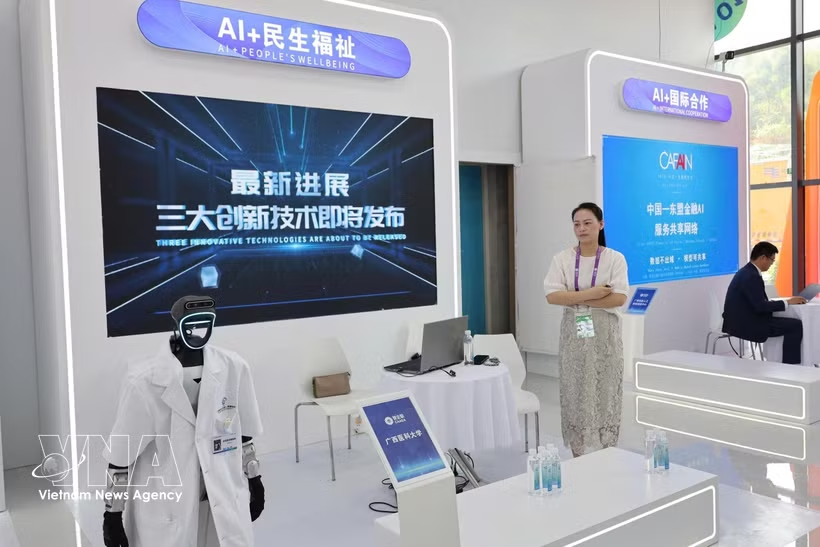
A Chinese robot product used in the healthcare sector. (Photo: VNA)

Beijing (VNA) – Vietnam and China have significant potential to cooperate in humanoid robotics, spanning research, supply chains, practical applications, and human resources training, according to Assoc. Prof. Wang Xinsong from Beijing Normal University.

In an interview with the Vietnam News Agency (VNA) correspondents in China, Wang, who is also a commentator for China Global Television Network (CGTN), said integrating embodied intelligence and humanoid robots into future industries could create new growth drivers, transform manufacturing through AI and advanced technologies, and help address population ageing and labour market changes.

Wang highlighted complementary strengths of the two countries to boost cooperation, saying that China has advantages in robotics research, manufacturing and supporting industries, while Vietnam has a rapidly growing manufacturing sector, an increasingly skilled technology workforce and strong links to global supply chains.

He proposed bilateral cooperation in joint research and testing, component manufacturing, robot assembly and system integration, saying that Vietnam could also pilot humanoid robots in electronics, auto component and logistics facilities, while universities, research institutes and businesses strengthen joint research, engineering training and personnel exchanges.

For Vietnam, Wang Xinsong proposed leveraging its manufacturing and processing base to promote AI applications in industry and gradually master system integration, industrial software and smart control technologies. He also stressed the need to capitalise on international cooperation to strengthen independent research and development capabilities, support science and technology enterprises, and gradually build an embodied intelligence ecosystem suited to the country’s strengths.

As humanoid robotics remains at an early stage globally, cooperation in research, manufacturing, application and training could open up opportunities for new industries and promote the transformation of manufacturing sectors towards greater intelligence and higher added value in both nations, and the wider region, he said.

According to the expert, China has gradually developed policies to support the sector. In 2023, its Ministry of Industry and Information Technology issued guidelines targeting a secure and controllable industrial and supply chain by 2027. The country’s 15th Five-Year Plan in 2026-2030 also identifies embodied intelligence as a priority future industry.

China had more than 140 humanoid robot manufacturers offering over 330 products in 2025. Data from the International Data Corporation (IDC) shows that more than 19,000 humanoid robots were shipped in China in the first half of 2026, accounting for about 78% of global shipments.

Wang attributed China's advantages to its manufacturing capacity and experience in robotics, automobiles, electronics and new energy, as well as relatively comprehensive supply chains for key components such as motors, reducers, sensors and batteries.

However, the expert said large-scale commercialisation remains challenging. Most humanoid robots are still used in research, education, demonstrations and data collection. Stable long-term operation and the ability to perform complex tasks at competitive costs remain major hurdles. He noted that further progress will depend on advances in embodied intelligence and robots' ability to operate in real-world environments.

Over the next three to five years, the industry is expected to focus more on robots' ability to perform tasks autonomously and make independent decisions. Commercial applications will initially expand in automobile manufacturing, electronics assembly and logistics, while competition will increasingly extend to technology ecosystems, including components, software, training data and technical standards, he went on./.


VNA

See more

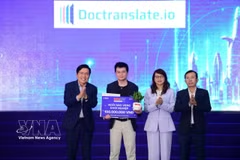
The Golden Startup Star award, worth 100 million VND, is presented to the Doctranslate.io project (Photo: VNA)

AI-powered translation platform wins Golden Startup Star award

Doctranslate.io offers contextual translation, audio recording, transcription and content summarisation services for communication, meetings and international events. Supporting 80 languages, the platform aims to add more less widely spoken languages.

Participants at the Vietnam–RoK AI and Digital Technology Forum 2026. (Photo: VNA)

Vietnam, RoK promote AI cooperation

Vietnam attaches importance to international cooperation while building its own technological capabilities, gaining greater mastery of key technologies and strengthening its participation in global AI value chains, and the RoK is its important partner in this process.

Deputy Minister of Science and Technology Pham Duc Long speaks at the international seminar entitled “Trusted Services Beyond Borders: Establishing Digital Trust Infrastructure for an AI-Driven World” on October 29, 2026. (Photo: VNA)

Vietnam promotes cross-border digital trust in AI era

As AI becomes increasingly involved in digital transactions, digital content's origin and integrity must be verified proactively, rather than merely detecting false information after it emerges, an official has said.

An overview of the reception (Photo: Quang Ninh Newspaper)

Quang Ninh, China’s Guangxi seek stronger cooperation in digital economy, AI

The city leader expressed his hope that the delegation would engage in professional exchanges with Quang Ninh’s departments and agencies to translate into concrete initiatives the cooperation areas in science and technology, artificial intelligence (AI) and the digital economy agreed upon by senior leaders of the two sides.

Minister of Science and Technology Vu Hai Quan (R) receives the Artemis Accords from US Ambassador to Vietnam Jennifer Wicks (Photo: Ministry of Science and Technology)

Vietnam joins Artemis Accords on space exploration

Vietnam views space science and technology as a strategic sector that can lift national science-technology capacity and support sustainable growth. The country wants to work with member nations on peaceful, safe, equitable, transparent and sustainable space exploration under international law, with tangible benefits for people and the planet.

Speakers at the discussion (Photo: VNA)

Experts discuss promotion of cybersecurity readiness in quantum era

Cuong said data safety and security in the quantum era is vital to the sustainable development of cities in the digital age. Ho Chi Minh City’s proactive approach aligns with the government’s strategic direction, which identifies quantum technology as a core technology requiring priority investment to enhance national technological self-reliance, he emphasised.

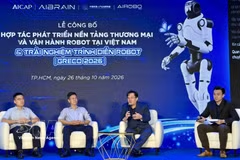
A roundtable on developing a localised platform for robot trading and operation in Vietnam held at the initiative launch on October 26. (Photo: VNA)

Strategic cooperation initiative aims develop robotics ecosystem

The initiative seeks to realise a plan to develop a localised platform for robot trading and operation in Vietnam. The partners will establish an industrial cooperation framework to promote robot sales, services and deployment tailored to the domestic market.

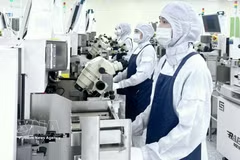
A modern production line of Hana Micron Vina Co., Ltd in Bac Ninh city (Photo: VNA)

Vietnam seeks deeper role in global semiconductor value chain

As global semiconductor supply chains are restructured, experts said Vietnam’s opportunity lies not only in attracting projects but also in accumulating knowledge, technology and management expertise to move into higher-value activities.

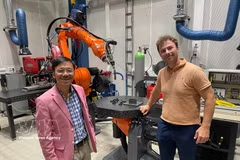
Associate Professor Vu Viet Hung (left) visits a 3D-printed space built by robots (Photo: VNA)

Solutions proposed to harness overseas Vietnamese expertise

Assoc. Prof. Vu Viet Hung, President of the Canadian Vietnamese Scientists and Experts Association (CVSEA), said the effectiveness of OV intellectuals’ contributions depends on programme design, resource allocation and stakeholder coordination.

Vietnam International Digital Week 2026 (VIDW 2026) will take place in Quang Ninh from October 28 to 30.

Vietnam Digital Week to drive international cooperation in AI, strategic technologies

Under the theme “Intelligent Connectivity: AI Governance, Shaping AI Transformation,” the event, slated for October 28-30 in Quang Ninh city, aims to deepen policy dialogue, forge international partnerships and accelerate technology research, development, transfer and commercialisation, particularly in strategic and emerging technologies.

Deputy Prime Minister Ho Quoc Dung speaks at the meeting the Ministry of Science and Technology (MOST) and the Ministry of Finance (MOF) on October 21. (Photo: VNA)

Vietnam moves to standardise digital economy measurement

The digital economy is a strategic priority for Vietnam, which aims to raise its share of GDP to at least 30% by 2030, in line with the Politburo’s Resolution No. 57-NQ/TW on breakthroughs in science and technology, innovation and national digital transformation.

With well-developed infrastructure, the Saigon Hi-Tech Park in Ho Chi Minh City has attracted investment from numerous technology corporations. (Photo: VNA)

Concentrated digital technology parks to drive growth

As the nucleus of the southeastern region, Ho Chi Minh City is well positioned to lead the transition towards a growth model driven by science, technology and innovation. The city has approved a plan to develop 17 new concentrated digital technology parks covering a total area of 750-1,000 hectares.

Vietnam is stepping up the development of the semiconductor industry. (Illustrative photo: VNA)

Vietnam should look to EU experience to develop national quantum technology capacity

Quang said Vietnam should first develop high-quality human resources through interdisciplinary training programmes in quantum technology, photonics, microchips and artificial intelligence at leading universities. Scholarships, internships at European quantum labs, and strategies to bring Vietnamese experts from abroad could help speed up progress.

Ten Make in Vietnam and Australia digital technology products on display at the Vietnam–Australia forum on investment and development cooperation in digital technology and AI. (Photo: VNA)

Creating value through technological cooperation, digital transformation

From expanding international cooperation to develop core technologies and helping Vietnamese businesses to participate in global value chains to improving public services through digital solutions, these efforts are gradually turning technological advances into a driver of development and a source of tangible social benefits.