Ho Chi Minh City (VNA) – As quantum computing is advancing rapidly, current encryption methods could be compromised, creating risks for financial systems, banking, and vital digital infrastructure. Experts stressed the need to start preparing for post-quantum cryptography now, rather than waiting for these threats to materialise.
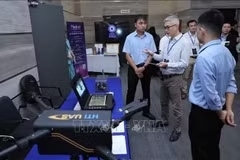
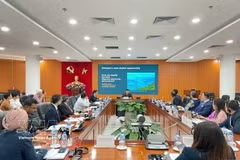
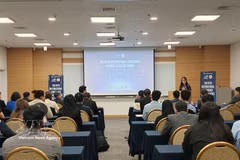
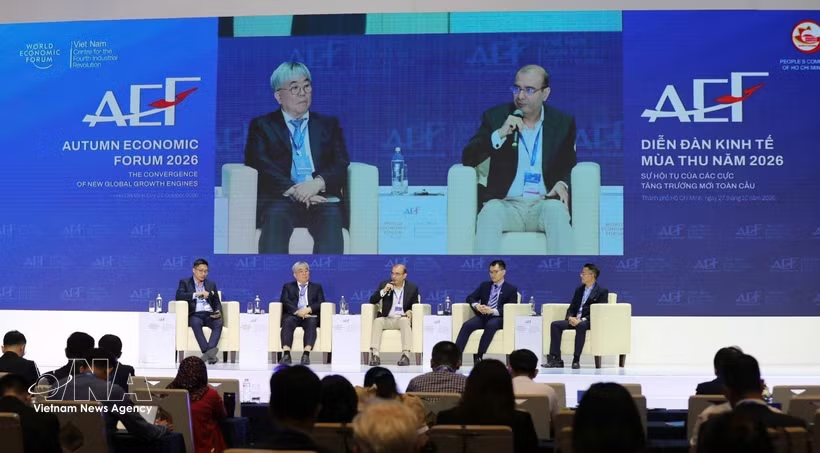
At a thematic discussion entitled “Data safety and security in the quantum era”, held on October 27 as part of the Autumn Economic Forum (AEF) 2026, they said Vietnam, particularly Ho Chi Minh City, needs to build cybersecurity capabilities across critical systems and entire business supply chains. This will provide a secure foundation for digital transformation, strengthen technological self-reliance and reinforce confidence in the digital economy in the quantum era.
Le Quoc Cuong, a member of the Subcommittee for Science and Technology, Innovation and Digital Transformation under the Ho Chi Minh City Development Council, said the city has organised numerous scientific seminars and connected with academic communities and leading laboratories worldwide to discuss the potential and development orientations of quantum technology, as well as the establishment of a local quantum ecosystem.
Cuong said data safety and security in the quantum era is vital to the sustainable development of cities in the digital age. Ho Chi Minh City’s proactive approach aligns with the government’s strategic direction, which identifies quantum technology as a core technology requiring priority investment to enhance national technological self-reliance, he emphasised.
With a population of more than 14 million, Ho Chi Minh City is becoming a megacity and serves as the country’s economic, financial and innovation hub. Its operations increasingly rely on big data, artificial intelligence (AI) and digital platforms to support the development of the digital and circular economies, while raising requirements for system safety and security, Cuong said.
However, sufficiently powerful quantum computers could eventually break current encryption methods, challenging financial and banking systems, public services and critical digital infrastructure. Meanwhile, the practice of collecting data now for decryption in the future has become a global concern, he said.
These risks could affect security and defence systems, public administration, healthcare, transport and energy, particularly banking transaction systems and the Vietnam International Financial Centre in Ho Chi Minh City. The transition to post-quantum cryptography is therefore no longer merely a matter of preparing for the future, but an urgent task to safeguard national digital sovereignty and system security, Cuong stressed.
He added that the city needs to establish priorities and adopt an appropriate approach to transitioning to a post-quantum environment, based on the importance of each system, infrastructure component and economic sector.
In this context, moving to post-quantum cryptography (PQC) is seen as an important step forward. However, it involves more than replacing encryption algorithms. Organisations must also review their systems, manage digital certificates, assess risks and develop transition roadmaps tailored to their needs.
From an implementation perspective, Stephen Oh, Vice President and Chief Technology Officer of Korea Quantum Computing (KQC), highlighted three priorities for the transition to post-quantum cryptography.
He said mechanisms are needed to manage costs and resources so businesses can estimate expenses, plan and allocate budgets for the transition. At the same time, small and medium-sized enterprises should be given access to appropriate security solutions. These businesses play a crucial role in supply chains, and if they can’t effectively safeguard their systems, ensuring the security of the whole chain will be challenging. Pilot programmes will also help businesses test solutions and build confidence across supply chains. Models such as centralised key management, shared digital signature services and cryptographic migration solutions should be tested and assessed for effectiveness before being scaled up, he said.
On domestic technology research and development, Vo Van Tuan, Director of the Quantum Laboratory at FPT Group’s Institute of Quantum, Artificial Intelligence and Cybersecurity, said the unit aimes to master core technologies.
He said the newly-established Quantum AI and Cyber Security Research Institute (QACI), which brings together laboratories specialising in quantum technology, cybersecurity and AI within a single system, is intended to facilitate research into and testing of new technologies. These include AI in cybersecurity and security solutions for technological infrastructure.
For post-quantum cryptography, FPT is taking a proactive approach to risk assessment based on the assumption that future quantum algorithms could break some existing cryptographic mechanisms. Research and preparations for countermeasures should therefore be undertaken before these threats become urgent, Tuan said.
In addition to the transition to post-quantum cryptography, the institute is exploring other approaches, such as quantum key distribution (QKD), while conducting research and international cooperation to build capacity in the field.
Experts said cybersecurity in the quantum era is not merely a technological challenge, but also involves transition costs, implementation capacity and coordination among economic stakeholders.
For Ho Chi Minh City, early preparations will be crucial to protecting digital infrastructure, strengthening confidence in financial services and establishing a secure foundation for the development of the international financial centre./.
See more
Strategic cooperation initiative aims develop robotics ecosystem
The initiative seeks to realise a plan to develop a localised platform for robot trading and operation in Vietnam. The partners will establish an industrial cooperation framework to promote robot sales, services and deployment tailored to the domestic market.
Vietnam seeks deeper role in global semiconductor value chain
As global semiconductor supply chains are restructured, experts said Vietnam’s opportunity lies not only in attracting projects but also in accumulating knowledge, technology and management expertise to move into higher-value activities.
Deputy PM requests fundamental reform of science, technology R&D
During 2021-2025, Vietnamese businesses led 181 of the 1,451 national-level science and technology tasks, accounting for 12.5% of the total number and 25.7% of the overall funding.
Solutions proposed to harness overseas Vietnamese expertise
Assoc. Prof. Vu Viet Hung, President of the Canadian Vietnamese Scientists and Experts Association (CVSEA), said the effectiveness of OV intellectuals’ contributions depends on programme design, resource allocation and stakeholder coordination.
Vietnam Digital Week to drive international cooperation in AI, strategic technologies
Under the theme “Intelligent Connectivity: AI Governance, Shaping AI Transformation,” the event, slated for October 28-30 in Quang Ninh city, aims to deepen policy dialogue, forge international partnerships and accelerate technology research, development, transfer and commercialisation, particularly in strategic and emerging technologies.
Vietnam moves to standardise digital economy measurement
The digital economy is a strategic priority for Vietnam, which aims to raise its share of GDP to at least 30% by 2030, in line with the Politburo’s Resolution No. 57-NQ/TW on breakthroughs in science and technology, innovation and national digital transformation.
Vietnam seeks to develop dedicated 5G network for high-speed rail safety
The Ministry of Construction approved two research and development projects in September, proposed by Viettel Group and Vietnam Posts and Telecommunications Group (VNPT).
Deputy PM calls for urgent action on strategic technology development
Deputy Prime Minister Ho Quoc Dung chaired a meeting at the Government headquarters on the morning of October 20 to review progress in implementing tasks for strategic technology development.
Asia-Pacific ocean radar conference held in Vietnam for first time
Launched in 2012, ORCA has held five previous editions in China and the Republic of Korea. The 2026 conference marks its first Vietnam edition and a further step in academic cooperation on ocean radar across the Asia-Pacific region.
Concentrated digital technology parks to drive growth
As the nucleus of the southeastern region, Ho Chi Minh City is well positioned to lead the transition towards a growth model driven by science, technology and innovation. The city has approved a plan to develop 17 new concentrated digital technology parks covering a total area of 750-1,000 hectares.
Vietnam should look to EU experience to develop national quantum technology capacity
Quang said Vietnam should first develop high-quality human resources through interdisciplinary training programmes in quantum technology, photonics, microchips and artificial intelligence at leading universities. Scholarships, internships at European quantum labs, and strategies to bring Vietnamese experts from abroad could help speed up progress.
Creating value through technological cooperation, digital transformation
From expanding international cooperation to develop core technologies and helping Vietnamese businesses to participate in global value chains to improving public services through digital solutions, these efforts are gradually turning technological advances into a driver of development and a source of tangible social benefits.
AI platform launched to help businesses build brands
Addressing the event, experts and business representatives stressed that harnessing digital technologies requires businesses to adopt a new mindset, use data in decision-making, and maintain brand identity and consumer trust.
Forum calls for stronger digital connectivity among Global South countries
The Asia-Africa International Forum 2026, themed “Promoting Digital Connectivity among Global South Countries,” was held in Hanoi to discuss opportunities to strengthen digital cooperation among developing countries.
AI opens up opportunities for people with disabilities
Amid the rapid development of the Fourth Industrial Revolution, artificial intelligence (AI) is changing the way people learn, work and communicate. For persons with disabilities (PwDs), AI is opening up new opportunities to overcome barriers once considered insurmountable, narrow the digital divide, and promote an inclusive society where no one is left behind.
Vietnam promotes international academic cooperation at ICIT 2026
Focusing on the Intelligence of Things, artificial intelligence (AI), intelligent interconnected systems and cybersecurity, ICIT 2026 aims to advance technological innovation, comprehensive digital transformation and sustainable development.
PM’s dialogue with youth: Greater opportunities for youth startups, tech innovation
Vietnamese young people are hoped to build not only successful businesses but also competitive, large-scale enterprises that create jobs, contribute to national development and expand into regional and global markets.
Vietnam Digital Awards 2026 honours 56 organisations, products and solutions
The 2026 awards place greater emphasis on practical effectiveness, applicability and the ability of digital transformation models to generate wider impact. They recognise not only technological innovations but also the benefits these technologies bring to people and society. Beyond acknowledging achievements, the awards also encourage initiatives capable of shaping the future.
Digital heritage opens new avenues for cultural preservation, public access
The Southern Women’s Museum has so far digitised 1,113 artefacts, but only 113 are currently accessible to the public. According to deputy director of the museum Pham Thi Dieu, thousands of other artefacts are awaiting an exhibition system under an expansion project. The museum hopes to complete the system in 2027, enabling online visitors to explore the digitised collections.
Vietnam should focus quantum push on security, talent: US-based scientist
Over the next three to five years, Vietnam could develop products and services, including post-quantum cryptography migration services, quantum random number generator (QRNG) devices and, potentially, subsurface surveys of transport infrastructure using quantum sensors.