Deputy PM calls for export-import market diversification, better trade governance

The Deputy PM called for timely handling of trade and tariff issues and effective solutions to address trade deficit. He also asked the drafting agency to continue reviewing the scope, title and content of the draft to ensure a balanced approach to trade governance that takes into account both trade surplus and deficit.

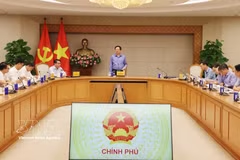
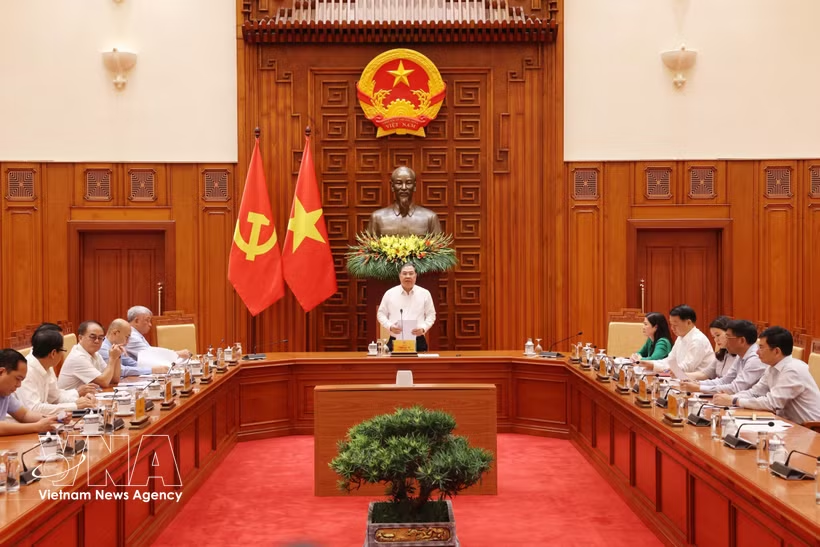
Standing Deputy Prime Minister Pham Gia Tuc speaks at the meeting on November 3. (Photo: VNA)

Hanoi (VNA) – Standing Deputy Prime Minister Pham Gia Tuc has called for the diversification of export-import markets, more effective trade governance and stronger measures to prevent trade fraud and violations in cross-border commerce while drafting a government resolution on balanced trade promotion.

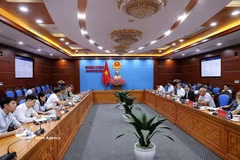
Chairing a meeting with ministries and agencies on November 3 to discuss the draft resolution, Tuc stressed the need for the document to address key and urgent issues, with practical and effective solutions that can be implemented immediately after its issuance.

He said the resolution must closely follow resolutions and conclusions of the Party Central Committee and the Politburo, as well as directives from competent authorities.

In particular, Conclusion No. 106-KL/TW dated October 15, 2026, issued by the 14th Party Central Committee on socio-economic development and State budget performance in 2026 and plans for 2027, calls for diversifying export and import markets while increasing added value, engaging more deeply in regional and global supply chains, and reducing dependence on a small number of markets.

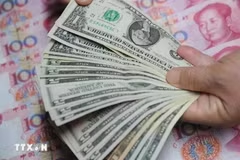
The Deputy PM called for timely handling of trade and tariff issues and effective solutions to address trade deficit. He also asked the drafting agency to continue reviewing the scope, title and content of the draft to ensure a balanced approach to trade governance that takes into account both trade surplus and deficit.

Tasks and solutions must be feasible, effective and substantive, contributing to market diversification, improved trade governance, proactive risk prevention and the prevention of fraud and legal violations in import-export activities, he said.

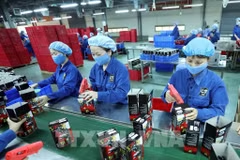
According to Deputy Minister of Industry and Trade Luong Hoang Thai, the ministry has worked with relevant agencies to prepare a draft government resolution on a master plan to promote balanced trade, prevent risks of excess capacity, combat trade circumvention and illegal transshipment, and control goods produced using forced labour. The plan aims to improve the management of import-export activities, proactively prevent trade risks and diversify markets.

The draft sets targets for export growth management, a reasonable trade balance, market diversification, stronger control over goods origin and the prevention of trade fraud. It outlines seven groups of key tasks and solutions, including tighter review and management of foreign investment projects that may pose risks of trade fraud, more effective inspection and verification of goods origin, and promotion of sustainable trade. It also proposes facilitating imports of goods, machinery, equipment and technology in line with the plan's objectives and the economy's development needs.

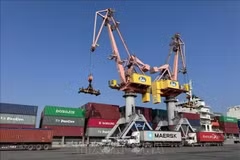
Other measures include expanding export markets, making better use of signed free trade agreements and exploring new markets; strengthening information provision and early warnings; and helping businesses comply with international trade regulations and respond proactively to trade defence measures.

The draft also emphasises improving State management capacity, strengthening coordination and data sharing among relevant agencies, and reviewing and refining legal regulations on investment, trade and related fields.

At the meeting, representatives of ministries and agencies broadly agreed on the need for the resolution, while recommending further review of its targets and task assignments to ensure they match the functions and authority of each agency and are practical to implement. They stressed that stronger controls should go hand in hand with facilitating legitimate production and business activities.

Participants also called for better inter-agency coordination in handling trade defence issues, closer alignment of labour policies with international standards, improved international cooperation and data sharing on imports and exports, and more effective monitoring of cross-border supply chains and goods traceability.

They stressed the need to clarify definitions of trade defence circumvention and illegal transshipment to distinguish such violations from legitimate transport and transit activities./.
VNA

See more

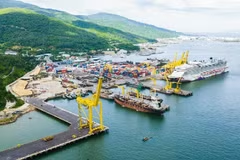
An aerial view of VIFC-Da Nang (Photo: VNA)

More room for Vietnam-Russia financial cooperation: Russian think-tank

For Russia, the Vietnam International Financial Centre is seen as a new financial lane alongside trade, energy and industry. Vietnam–Russia trade hit 4.77 billion USD in 2025, up 4%, generating demand for payments, bank guarantees, letters of credit, transport insurance and trade finance. VIFC financial entities can capture that business if they clear legal and commercial hurdles.

University of Economics & Business (UEB) Vice Rector Nguyen Thi Hong Thuy speaks at the forum. (Photo: Published by VNA)

Forum promotes financial innovation alongside systemic safety

UEB Vice Rector Nguyen Thi Hong Thuy said the global financial system is undergoing profound transformation, with fintech, artificial intelligence (AI), big data, cloud computing, digital assets and open finance reshaping the delivery and supervision of financial services.

Deputy Minister of Finance Le Tan Can speaks at the event. (Photo: VNA)

Vietnam eyes opportunities amid supply chain shifts in Southeast Asia

Vietnam aims to become a regional hub for artificial intelligence (AI) and data centres, as well as a destination for multinational corporations, international investment funds and financial institutions. To realise this goal, it is focusing on building a new-generation investment ecosystem that connects foreign-invested enterprises with domestic businesses, while developing logistics, data and clean energy infrastructure and a high-quality workforce.

Work at the construction of the Phu Quoc International Airport. (Photo: Pubished by VNA)

APEC 2027: Special legal framework clears bottlenecks at major construction sites

Beyond successfully hosting APEC 2027, An Giang aims to ensure that these investments deliver long-term benefits. Upgraded aviation, urban transport, water supply and drainage, environmental treatment and digital infrastructure are expected to transform Phu Quoc and create fresh momentum for the special zone’s socio-economic development in the decades ahead.

Tax officers of Phu Tho province provide guidance to help residents grasp tax declaration requirements. (Photo: VNA)

Tax relief expected to support stronger business growth

Economic expert Assoc. Prof. and Dr Ngo Tri Long said the tax cuts will improve cash flow and provide small businesses with additional working capital without incurring borrowing costs, particularly as access to affordable credit remains difficult.

Deputy Prime Minister Ho Quoc Dung speaks at the November 3 meeting to address difficulties in implementing Decree No. 101/2026/ND-CP detailing the Law on Technology Transfer. (Photo: VNA)

Deputy PM calls for ensuring business continuity under technology transfer regulations

Speaking at a meeting at the Government headquarters on November 3 to address difficulties in implementing Decree No. 101/2026/ND-CP detailing the Law on Technology Transfer, Deputy Prime Minister Ho Quoc Dung stressed that the regulations were designed both to promote technology transfer and strengthen state management through the lists of technologies encouraged, restricted or prohibited from transfer.

Quang Tri Airport is a key, catalytic project for the province to achieve strategic goals in socio-economic development, national defence, and security safeguarding. (Photo: VNA)

Central region steps up investment in aviation infrastructure

Through its airports, ACV therefore hopes to strengthen cooperation with local authorities and airlines to explore appropriate support measures, attract carriers, launch new routes, increase flight frequencies, boost passenger numbers and further expand its presence in promising international markets.

Businesses are stepping up export promotion efforts in the year-end push. (Photo: thanhnien.vn)

Export orders pick up pace towards year-end

Many firms have accepted smaller, lower-priced orders and explored niche markets to offset fluctuations in major export destinations such as the US, Japan and the Middle East.

Consumers shop at CO.OPmart Rach Gia supermarket in Rach Gia ward, An Giang province. (Photo: VNA)

CPI up 4.57% in first 10 months of 2026

Compared with September, prices increased in seven of the 11 main groups of consumer goods and services, while four recorded declines. CPI rose 0.16% in urban areas and 0.25% in rural areas.

In the third quarter of 2026, Vietjet operates 39,000 flights and carries 7.3 million passengers. (Photo: Vietjet)

Vietjet posts 41% revenue growth in first nine months of 2026

In the third quarter of 2026, Vietjet operated 39,000 flights and carried 7.3 million passengers. Consolidated revenue reached 22.849 trillion VND (approx. 886 million USD), up 35% year-on-year, while net profit after tax reached 348 billion VND (approx. 13.5 million USD).

Private sector: From a key driver to a leading force for growth

Private sector: From a key driver to a leading force for growth

An open institutional framework and a transparent, stable business environment are essential for encouraging enterprises to make long-term investments. In recent years, the Party, National Assembly and Government have continued to promote administrative reform, address obstacles to investment and business activities, and support new growth drivers.

Trung Nguyen Instant Coffee Joint Stock Company in Bac Ninh city exports its products to numerous countries. (Illustrative photo: VNA)

Vietnam–EU forum to explore green economy, new value chains

By linking policy dialogue with businesses' practical needs, the forum is expected to help translate Vietnam–EU cooperation potential into concrete trade and investment opportunities. It will also provide an opportunity for both sides to make more effective use of the EVFTA, expand markets for Vietnamese goods and businesses, and tap into Europe's capital, technology and management expertise.