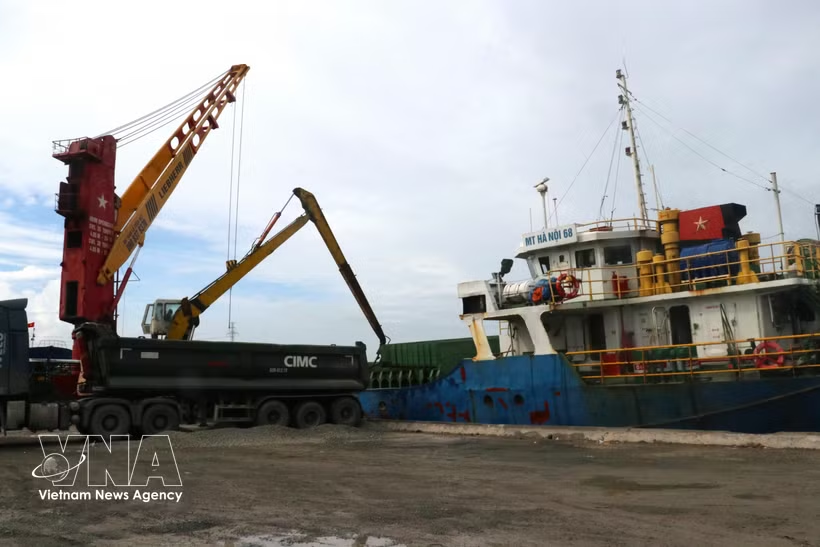
Hanoi (VNA) - Vietnam needs seamless logistics, effective links from production areas to seaports and international markets, and faster fixes to bottlenecks in planning, infrastructure, mechanisms and data if export growth is to be sustainable.
Data from the Ministry of Finance’s National Statistics Office show that Vietnam spent more than 34.3 billion USD on the import of services in the first nine months of 2026, up 15% annually, with transport services alone at 16.4 billion USD. Logistics costs are estimated at 16–17% of GDP. The target of pushing it below 12% by 2030, plus 5–6 modern international-standard logistics centres means moving from isolated infrastructure projects to a unified, efficient national logistics network.
Bui Ba Nghiem, senior expert at the Ministry of Industry and Trade (MOIT)’s Agency for Foreign Trade, said the main snag is planning. Industrial parks, raw material areas, logistics centres and seaports are not connected synchronously; planning is fragmented by administrative boundaries while cargo moves across regions. Priority should go to routes and hubs with real transport demand and exploiting existing capacity before new investment. That is also the requirement for the national logistics centre network the ministry is planning. Accordingly, centres must sit on economic corridors, production areas and trade gateways, with clear functions, and avoid scattered, overlapping investment without cargo.
Bac Ninh and Hung Yen show the potential. Bac Ninh aims to link logistics with waterways, railways and aviation, and Hung Yen plans 14 inland container depots (ICDs) and 16 logistics centres. But road transport still dominates, while waterway, railway, bonded warehouse and transshipment links remain limited.
Alongside planning, Vietnam needs breakthroughs in multimodal transport and infrastructure for each export group. With road transport dominant, cost and congestion will persist unless inland waterways, railways and coastal shipping are used at scale. Rail links to industrial parks and seaports, ICDs, warehouses, cargo collection centres and waterway capacity must be developed together, not mode by mode.
Truong Van Cam from the Vietnam Textile and Apparel Association said domestic logistics costs are about 9–10% while margins are usually only 3–5%. The association recommends widening the customs priority regime, increasing waterway, rail and sea transport, and reviewing seaport infrastructure fees to cut the burden.
Nguyen Duy Dat, expert at the Institute of International Business and Logistics under Thuongmai University and Vice Chairman of the Hanoi Logistics Association, said enterprise management systems need Open API links to customs, and e-port platforms must be standardised so data flows among firms, ports and regulators. It will work better with a national logistics database tracking cargo flows, transport capacity, warehouses and costs in real time.
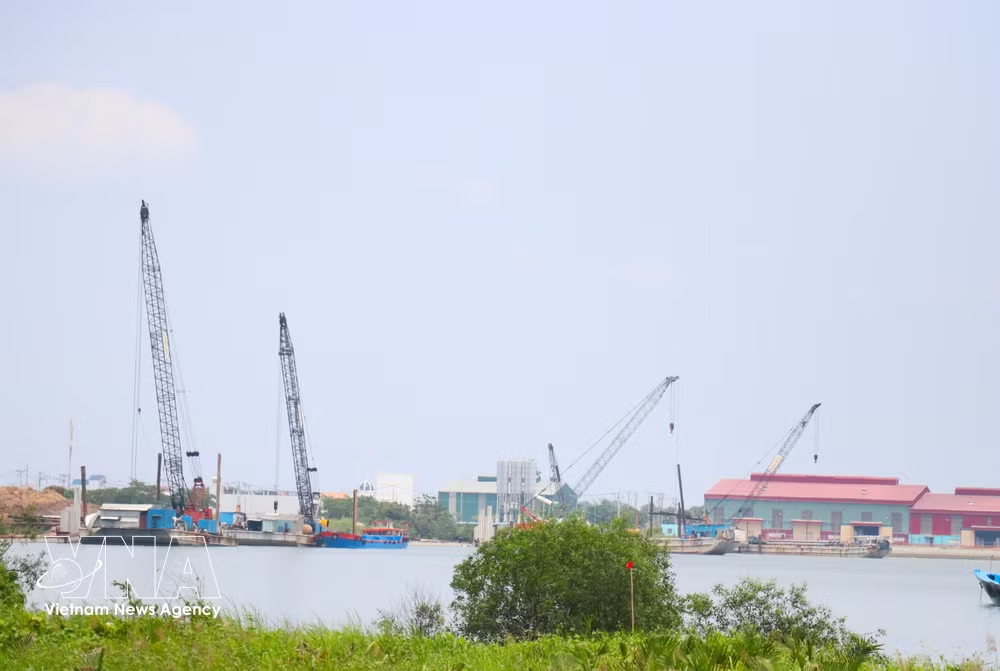
Tran Thanh Hai, Deputy Director of the Agency for Foreign Trade, said logistics is a key part of the draft export-import strategy to 2030, with vision to 2045. The draft aims to develop a national fleet suited to key export-import cargo, study medium- and long-term credit mechanisms and create stable demand for domestic shipping firms. It also targets inter-regional industry–logistics–trade corridors linking industrial parks with seaports, airports, border gates and distribution networks.
On mechanisms, the MOIT is drafting a decree to replace Decree 163/2017/ND-CP on logistics services and studying a longer-term Logistics Law. Rule-making must come with coordination among sectors and localities and less overlap in transport, customs, tax and insurance management. Vietnam also needs a national logistics database and more AI, big data and automation to optimise transport and warehousing and cut waiting time and operating costs.
Trade experts said export-import turnover via e-commerce platforms in 2025 was only about 4.4 billion USD out of 930 billion USD in total. Long-haul transport costs and procedures still limit access to distant markets. Online export growth therefore needs order fulfillment, international delivery, data infrastructure and support for firms building storefronts on major e-commerce platforms./.