Hanoi (VNA) - Vietnam’s strong production and export recovery, powered by the artificial intelligence (AI) wave, record FDI inflows and a safe fiscal base, is a bright spot in global analysts’ assessments. But sustaining momentum still means clearing several obstacles.
Breakthrough drivers
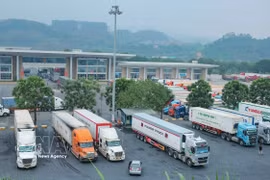
S&P Global Ratings said Vietnam’s exports to ASEAN members and India rose more than 12% in the first eight months of 2026, a solid buffer against weaker demand in traditional European and North American markets. The recovery pushed the current-account surplus to an estimated 2.8% of GDP and lifted foreign exchange reserves to more than five months of imports, the highest in three years.
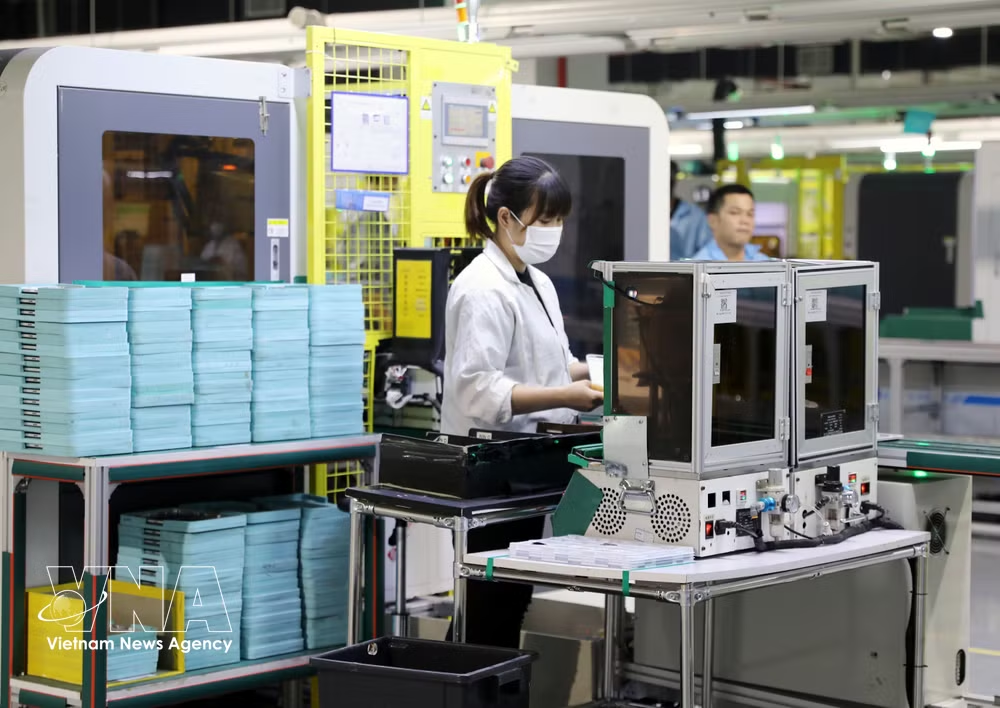
A World Bank (WB) report showed AI-related goods contributed more than 70% of Vietnam’s export growth. The lender said Vietnam and Malaysia are leading Southeast Asia in capturing global investment flows into the AI value chain.
FDI is another major driver. The United Overseas Bank (UOB) data for January-September showed total registered FDI into Vietnam at more than 50.36 billion USD, up 76.4% annually, while disbursed FDI hit 21.07 billion USD, up 12.1%, a sign of international investors’ long-term strategic confidence.
The International Monetary Fund (IMF)’s World Economic Outlook noted Vietnam and Taiwan (China) as Asia’s two positive exceptions after successfully cutting public debt sharply relative to GDP. Vietnam’s general government debt fell from 41.3% of GDP in 2020 to 30.5% in 2025. The low debt ratio gives Vietnam more fiscal room to absorb economic shocks.
Rating & Investment Information, Inc. (R&I), meanwhile, agreed that Vietnam’s public debt-to-GDP ratio is relatively low, leaving room to raise development investment. Although the budget deficit and public debt ratio are forecast to rise, it sees no debt-sustainability concern because expanded public investment should support future growth while the Government controls recurrent spending.
With those drivers in place, major financial institutions and rating agencies have raised Vietnam’s 2026 GDP growth forecasts, putting it among Southeast Asia’s fastest-growing economies. Standard Chartered sees 9.5% growth in 2026 and 11.0% in 2027. UOB raised its 2026 forecast to 9.2% from 8.5% and its 2027 forecast to 8.8% from 8.4%, after third-quarter growth beat expectations and first-half data were revised up. S&P Global Ratings raised Vietnam’s growth forecast to 8%. This month, R&I upgraded Vietnam’s foreign-currency issuer rating from BB+ with positive outlook to BBB- with stable outlook, putting Vietnam in "Investment Grade" for the first time.
Macro challenges
Alongside the bright spots, international bodies flagged risks Vietnam must identify and address.
The ASEAN +3 Macroeconomic Research Office (AMRO) said the export-and FDI-led growth model lifted Vietnam into the upper-middle-income group but now faces challenges as traditional drivers weaken. Vietnam still has solid medium-term growth potential, but it needs higher productivity to sustain momentum.
S&P Global Ratings warned that heavy reliance on the FDI enterprise sector, which accounts for about 70% of total export value, makes the economy vulnerable to global supply-chain shifts. Domestic firms remain smaller and less integrated into international production networks, limiting spillovers from FDI.
AMRO noted that Vietnam’s incremental capital-output ratio (ICOR) remains relatively high, averaging about 6.43 in 2021-2025, versus 4.5 for Malaysia and 6.6 for Indonesia. Vietnam needs more capital for the same unit of output, underscoring the need to improve investment efficiency as well as scale.
On the technology value chain, the WB warned that Vietnam’s export growth depends heavily on AI-related goods, which makes up more than 70% of export growth. If major central banks tighten financial conditions or investment flows outrun actual market demand, tech-goods growth could correct, hitting Vietnam’s exports directly.
UOB said Vietnam’s September CPI edged up 5.08% year on year, pushing its full-year 2026 average inflation forecast to 4.7%, above the Government’s 4.5% target. The pressure comes from energy costs, domestic demand and high credit growth. That makes monetary policy management more challenging for the State Bank of Vietnam, as inflation exceeds the target, credit growth outpaces deposit growth, and the economy approaches double-digit growth. Pressure rises further with UOB forecasting the US Federal Reserve to keep raising rates.
Standard Chartered raised its 2026 headline inflation forecast for Vietnam from 4.4% to 4.7%. Its experts said a relatively loose monetary policy will remain a short-term priority to support recovery.
Despite global AI-bubble risk, heavy FDI dependence and inflation pressure, Vietnam still has solid macro drivers. If it proactively clears internal bottlenecks, it has enough position and strength to weather short-term volatility and hit its double-digit growth target in the coming time./.