Improving FDI quality to strengthen growth momentum

Rapid growth in registered capital is encouraging, but unless these commitments are promptly converted into implemented projects and productive capacity, their contribution to economic growth will remain constrained.

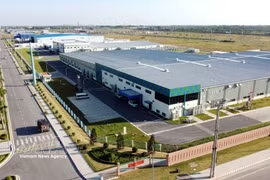
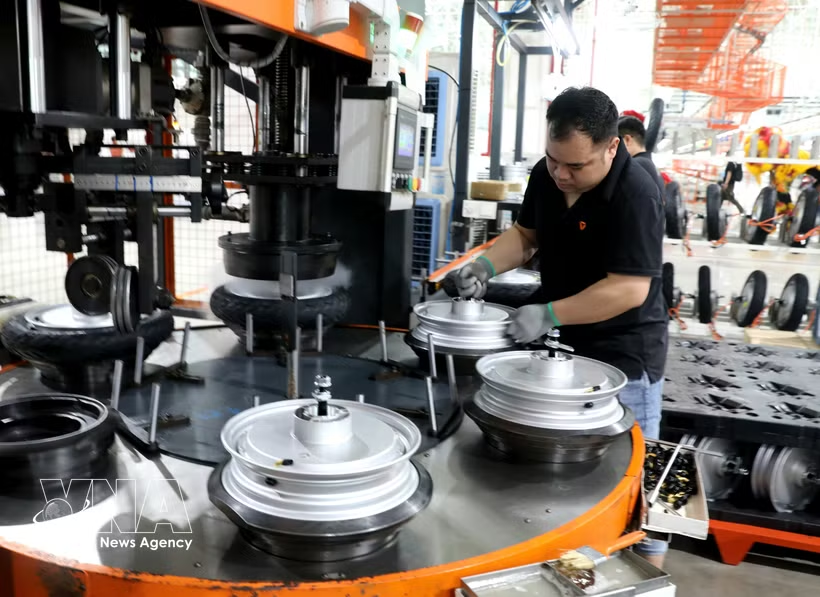
A production line at Yadea Vietnam’s smart manufacturing plant, which has an investment of more than 100 million USD, in Tan Hung Industrial Park, Bac Ninh city (Photo: VNA)

Hanoi (VNA) – Vietnam has recorded positive developments in attracting foreign direct investment (FDI), with major commitments highlighting the country’s growing appeal to international investors.

At the recent Autumn Economic Forum 2026, Ho Chi Minh City announced 12 projects with combined registered capital of 13 billion USD. They included a 2.29-billion-USD smart complex in Functional Zone 2A of Thu Thiem New Urban Area, developed by a joint venture between Lotte Properties HCMC Co. Ltd. and Phat Dat Real Estate Development Corporation.

Other major projects include the 770-million-USD Gemalink Port project by Cai Mep Gemadept-Terminal Link and the Swift Logistics project by Singapore’s Tokgistic Pte. Ltd., with registered capital of about 987.4 million USD.

The Vietnam International Financial Centre in Ho Chi Minh City also announced its first 10 members, including foreign investors like VinaCapital International Partners Co. Ltd.

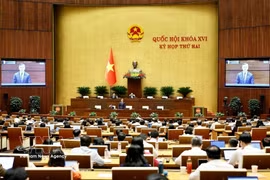
Reporting to the National Assembly, Prime Minister Le Minh Hung said Vietnam attracted more than 50.36 billion USD in FDI in the first nine months of 2026, up 76.4% year-on-year. Investment was concentrated in processing and manufacturing, high technology, electronics and semiconductors.

Major investors include Samsung, with more than 24 billion USD in investment; LG, 10.6 billion USD; Foxconn, 5 billion USD; Intel, 4.1 billion USD; and Amkor, 1.6 billion USD. Other technology groups, including NVIDIA, Qualcomm, Marvell, Synopsys and Bosch, have also established or expanded operations in Vietnam.

The Ministry of Finance reported that disbursed capital totalled nearly 21.2 billion USD during the period, while full-year disbursement is estimated at around 31 billion USD.

Focusing on investment quality

Strong inflows reaffirm Vietnam’s attractiveness to international investors. However, beyond record figures, a key question is how effectively the FDI sector contributes to the domestic economy.

FDI plays an important role in expanding production capacity, developing infrastructure and generating more than 70% of Vietnam's export turnover. As the country targets annual growth of at least 10% during 2026-2030, Minister of Finance Ngo Van Tuan stressed that FDI attraction should not be measured solely by capital volumes.

Investment, he said, must generate greater domestic value added, facilitate technology transfer and enable Vietnamese enterprises to participate more deeply in global supply chains.

National Assembly deputies have also called for a shift from growth driven by scale to a model based on productivity, technology and domestic value creation.

Deputy Le Huu Tri of Khanh Hoa said greater attention should be paid to strengthening domestic enterprises, developing supporting industries, improving localisation rates, promoting technology transfer and upgrading the workforce. Investment performance, he argued, should not be assessed solely on registered or disbursed capital.

Deputy Tran Thi Hong Thanh of Ninh Binh noted that localisation rates in several key industries remain at around 40%, urging the Government to link FDI incentives with measurable commitments in technology transfer, workforce training, the use of Vietnamese suppliers and higher domestic value added.

The Ministry of Finance has also pointed to limited spillover effects from the FDI sector. Links between foreign-invested and domestic enterprises remain weak, while Vietnamese firms have yet to participate deeply in FDI supply chains. Localisation rates in FDI production chains stand at only 20-25%, and technology transfer remains limited.

The extent to which registered capital is translated into actual investment and new production capacity also warrants closer scrutiny.

Rapid growth in registered capital is encouraging, but unless these commitments are promptly converted into implemented projects and productive capacity, their contribution to economic growth will remain constrained.

In its latest report, the Foreign Investment Agency under the Ministry of Finance noted that registered FDI is growing considerably faster than disbursed capital. This highlights the need to accelerate the implementation of licensed projects, particularly large-scale investments, to ensure that FDI delivers a stronger contribution to Vietnam's ambition of achieving double-digit economic growth./.

VNA
See more

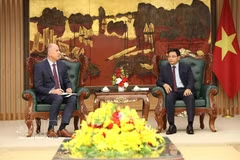
Deputy Prime Minister Nguyen Van Thang meets with Martin Sommer, head of the IMF’s Article IV consultation mission team to Vietnam, in Hanoi on November 13, 2026. (Photo: VNA)

IMF sees positive growth prospects for Vietnam, urges cautious monetary policy

Martin Sommer, head of the IMF’s Article IV consultation mission team to Vietnam, noted that inflation risks in Vietnam remain under control, but several factors could add to price pressures. He therefore called for cautious monetary policy management and readiness to respond promptly if inflationary pressures increased.

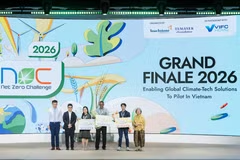
Representatives of the three first-prize-winning startups receive their awards at the event. (Photo: SGGP)

Seven green-tech startups secure 770,000 USD at Net Zero Challenge 2026

In its fourth year, the competition attracted more than 1,100 applications from 80 countries and territories, making it the most competitive edition since its launch in 2023. Nine finalists presented solutions in three categories, namely renewable energy and carbon removal; food systems and sustainable agriculture; and circular economy and waste management.

Vietnamese and Malaysian businesses connect at the event (Photo: VNA)

Vietnam, Malaysia connect businesses to boost bilateral trade cooperation

It centred on a business-to-business (B2B) matchmaking session, bringing Vietnamese and Malaysian companies together to discuss import-export needs, seek partners and explore cooperation. Vietnamese businesses aimed to connect with Malaysian importers, distributors and retailers, while expanding access for their products to Malaysia and other markets.

Visitors browse traditional Southern Vietnamese checked scarves on display at the Vietnam-Cambodia Trade Fair. (Photo: VNA)

Vietnam-Cambodia trade fair opens in An Giang

The fair features 150 booths representing 200 businesses, cooperatives, household businesses and production and trading establishments from both countries. The exhibition space is arranged into 10 zones showcasing products from Vietnamese localities and three zones featuring Cambodian products, creating opportunities for businesses from the two countries to promote their products, seek partners and expand markets.

An overview of the press conference to announce the organisation of the second Vietnam International Rice Festival - Can Tho 2026. (Photo: VNA)

Festival to chart new course for rice industry

The second Vietnam International Rice Festival - Can Tho 2026 will take place from November 22 to 25, showcasing the achievements and potential of Vietnam’s rice industry while promoting Can Tho’s image, cultural identity and people, as well as the distinctive river culture of the Mekong Delta.

Japanese business representatives review Ho Chi Minh City’s investment project portfolio at the conference. (Photo: VNA)

Vietnam remains attractive destination for Japanese businesses

Fukai Akihiko, President and Representative Director at Gunma Bank and head of a business delegation from Japan’s Gunma prefecture, said cooperation between Gunma and Vietnam has continued to expand in recent years. Around 15,000 Vietnamese people currently live in Gunma, forming the largest foreign community in the prefecture.

A panoramic view of the site designated for the Ninh Thuan 1 nuclear power plant in Phuoc Dinh commune, Khanh Hoa province. (Photo published by VNA)

Vietnam to access MBIR reactor research capabilities, gradually master nuclear technology

As Vietnam develops its nuclear science and technology and prepares the necessary conditions in terms of human resources, research capacity, safety systems and technical infrastructure, participation in international research programmes and access to MBIR will enable the country to conduct experiments supporting its programme for the peaceful use of atomic energy.