Vietnam, EU shape future of green economy, new value chains

In his remarks Deputy Minister of Industry and Trade Luong Hoang Thai said the ninth edition of the forum serves as an effective channel for regular exchanges between government agencies and business communities on policies, market development, trade connectivity and investment.

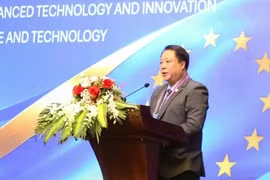
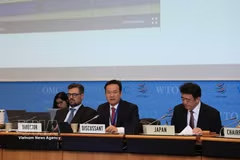
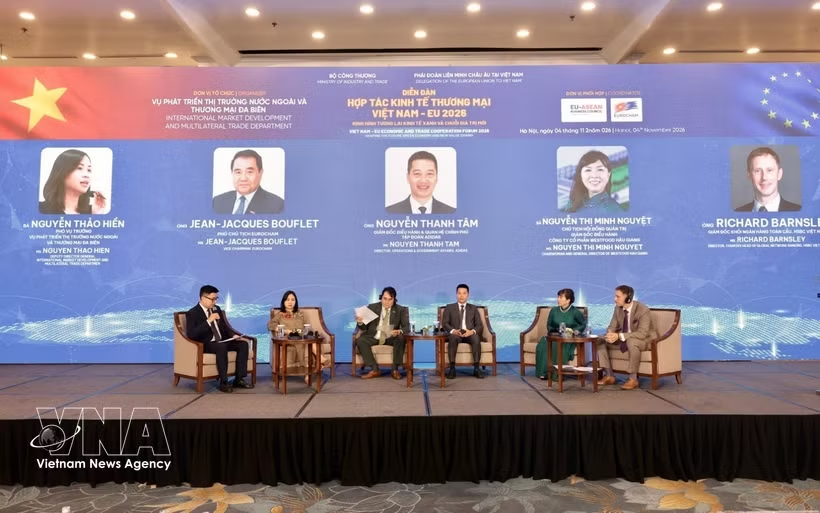
Speakers at a discussion on prospects for cooperation in developing new value chains in the context of a changing global landscape (Photo: VNA)

Hanoi (VNA) – The Vietnam-EU Economic and Trade Cooperation Forum 2026 was held in Hanoi on November 4, aiming to strengthen policy dialogue and promote bilateral economic ties.

The forum, themed “Shaping the Future Green Economy & New Value Chains”, was jointly organised by the Ministry of Industry and Trade, the EU Delegation to Vietnam, the EU-ASEAN Business Council (EU-ABC) and the European Chamber of Commerce in Vietnam (EuroCham).

In his remarks Deputy Minister of Industry and Trade Luong Hoang Thai said the ninth edition of the forum serves as an effective channel for regular exchanges between government agencies and business communities on policies, market development, trade connectivity and investment.

Vietnam is pursuing major strategic economic goals, including maintaining macroeconomic stability, achieving average annual GDP growth of at least 10% during 2026-2030 and becoming one of the world's 30 largest economies by 2030, he noted.

The year 2026 marks a new chapter in Vietnam-EU relations following their elevation of bilateral ties to a Comprehensive Strategic Partnership. Together with the Vietnam-EU Free Trade Agreement (EVFTA), the upgraded ties provide a solid foundation for more substantive and effective trade and investment cooperation.

More than six years after the EVFTA took effect, bilateral trade has maintained positive growth. Two-way trade surpassed 65 billion USD in the first nine months of 2026, up nearly 20% year on year.

The EU is Vietnam's fourth-largest trading partner, third-largest export market and sixth-largest import market, while Vietnam is the EU's largest trading partner in ASEAN and its ninth-largest goods supplier.

Thai said Vietnam hopes the EU will remain a key export market and become a strategic partner in trade upgrading, industrial linkages, economic autonomy and the adoption of higher sustainability standards.

He added that Vietnam seeks to increase exports of technology-intensive, deeply processed and high-value-added products while importing advanced machinery, equipment, materials, green technologies and circular energy solutions from Europe.

Given the EU's technological strengths, management expertise and financial resources, Vietnam called on European partners to expand technical assistance, technology transfer and investment in green, digital and energy transitions and circular economy projects. It also expects the EU to translate commitments under the Just Energy Transition Partnership (JETP) into concrete financial and technological support.

EU Ambassador to Vietnam Julien Guerrier reaffirmed that Vietnam is a strategic partner of the bloc, saying the upgraded relationship has generated fresh political momentum.

He stressed that the full and effective implementation of the EVFTA is essential to unlocking cooperation potential, particularly through fair market access and a stable, transparent and predictable business environment.

The EU supports Vietnam's efforts to improve law enforcement, shift from pre-inspection controls towards risk-based management, and ensure more consistent implementation of regulations across localities, he said. Such reforms would strengthen investor confidence, reduce costs and attract high-quality European investment.

Guerrier highlighted cooperation opportunities in renewable energy, circular economy, sustainable manufacturing, aerospace, seaports, airports, logistics, semiconductors, digital transformation, strategic minerals, healthcare, biotechnology and high-tech agriculture.

Noel Clehane, Vice Chairman of the EU-ABC, said Vietnam is well positioned to attract a greater share of EU investment, manufacturing, technology and business partnerships in ASEAN, but should focus on high-quality, long-term investment that generates greater added value.

European investment could bring advanced technologies, expertise, workforce development and stronger links with Vietnamese enterprises, helping the country integrate more deeply into regional and global value chains, he said.

Participants also highlighted cooperation in the energy sector. Trinh Quoc Vu, Deputy Director of the Electricity Authority of Vietnam under the Ministry of Industry and Trade, said Vietnam's net-zero target by 2050 and ambitious economic growth goals are placing greater demands on energy security.

He called on European businesses to participate more actively in implementing the revised Power Development Plan VIII through investment in power generation and grid infrastructure, technology provision, technical solutions and international financing.

Vietnam also hopes to work with European partners to develop renewable energy supply chains, particularly for offshore wind power, to meet domestic demand and serve export markets, he added./.

VNA
See more

Ho Chi Minh City hosts five international industrial exhibitions (Photo: VNA)

Five industrial exhibitions open in Ho Chi Minh City

The five exhibitions comprise the 17th International Water Supply, Sanitation, Water Resources and Purification Exhibition and Conference (Vietwater 2026); Vietnam Energy Week; an international exhibition on refrigeration, air conditioning and smart buildings; Vietnam Supporting Industry Fair (VSIF); and the Vietnam Data Centre & Cloud Confex.

State Bank of Vietnam (SBV) Deputy Governor Pham Thanh Ha speaks at the Government’s regular press briefing in Hanoi on November 4. Photo: VNA

Commercial banks cut listed deposit rates by 0.5 percentage points

In October, the State Bank of Vietnam directed credit institutions to mobilise all available resources, cut operating costs, share profits and step up efforts to lower interest rates. Under its directive, banks were required to cut listed deposit rates and rates on newly mobilised deposits by 0.5 percentage points per year for tenors of six months or longer, while reducing lending rates by 1.5-2 percentage points per year for production, business activities and priority sectors.

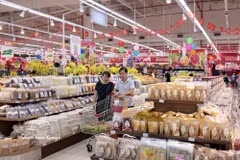
OCOP items are on display at Go!Hanoi supermarket (Photo: VNA)

Vietnam’s AI-led export boom meets FDI dependence, inflation test

Despite global AI-bubble risk, heavy FDI dependence and inflation pressure, Vietnam still has solid macro drivers. If it proactively clears internal bottlenecks, it has enough position and strength to weather short-term volatility and hit its double-digit growth target in the coming time.

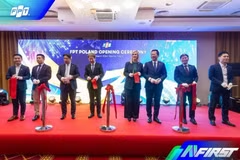
Delegates cut the ribbon at the inauguration ceremony of the FPT Poland office. (VNA published)

Tech giant FPT expands operations in Europe

The opening of the FPT Poland office in Gdansk was not only a milestone in the corporation's development but also demonstrated the technological capabilities and international integration of Vietnamese businesses, said Vietnamese Ambassador to Poland Ha Hoang Hai

Illustrative image (Photo: VNA)

Vietnam sharply cuts petrol prices, except mazut

Following the fresh adjustment, E5RON92 gasoline is now sold at 23,203 VND (0.89 USD) per liter, down 1,020 VND per liter from the previous adjustment, and 28 VND per liter below E10RON95-III, which is set at 23,231 VND per liter, down 928 VND per liter.

Standing Deputy Prime Minister Pham Gia Tuc speaks at the meeting on November 3. (Photo: VNA)

Deputy PM calls for export-import market diversification, better trade governance

The Deputy PM called for timely handling of trade and tariff issues and effective solutions to address trade deficit. He also asked the drafting agency to continue reviewing the scope, title and content of the draft to ensure a balanced approach to trade governance that takes into account both trade surplus and deficit.

An aerial view of VIFC-Da Nang (Photo: VNA)

More room for Vietnam-Russia financial cooperation: Russian think-tank

For Russia, the Vietnam International Financial Centre is seen as a new financial lane alongside trade, energy and industry. Vietnam–Russia trade hit 4.77 billion USD in 2025, up 4%, generating demand for payments, bank guarantees, letters of credit, transport insurance and trade finance. VIFC financial entities can capture that business if they clear legal and commercial hurdles.

University of Economics & Business (UEB) Vice Rector Nguyen Thi Hong Thuy speaks at the forum. (Photo: Published by VNA)

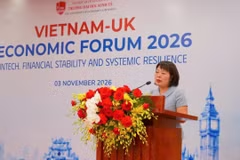
Forum promotes financial innovation alongside systemic safety

UEB Vice Rector Nguyen Thi Hong Thuy said the global financial system is undergoing profound transformation, with fintech, artificial intelligence (AI), big data, cloud computing, digital assets and open finance reshaping the delivery and supervision of financial services.

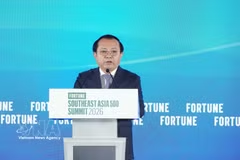
Deputy Minister of Finance Le Tan Can speaks at the event. (Photo: VNA)

Vietnam eyes opportunities amid supply chain shifts in Southeast Asia

Vietnam aims to become a regional hub for artificial intelligence (AI) and data centres, as well as a destination for multinational corporations, international investment funds and financial institutions. To realise this goal, it is focusing on building a new-generation investment ecosystem that connects foreign-invested enterprises with domestic businesses, while developing logistics, data and clean energy infrastructure and a high-quality workforce.

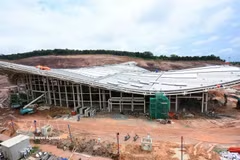
Work at the construction of the Phu Quoc International Airport. (Photo: Pubished by VNA)

APEC 2027: Special legal framework clears bottlenecks at major construction sites

Beyond successfully hosting APEC 2027, An Giang aims to ensure that these investments deliver long-term benefits. Upgraded aviation, urban transport, water supply and drainage, environmental treatment and digital infrastructure are expected to transform Phu Quoc and create fresh momentum for the special zone’s socio-economic development in the decades ahead.