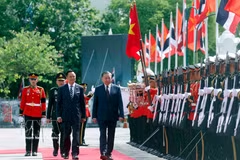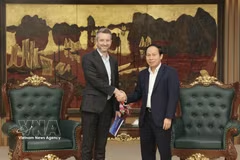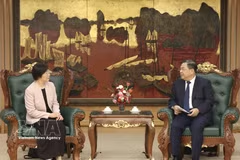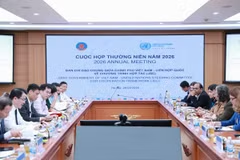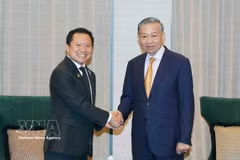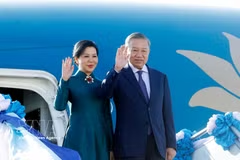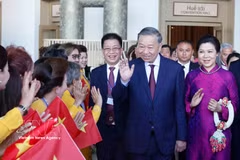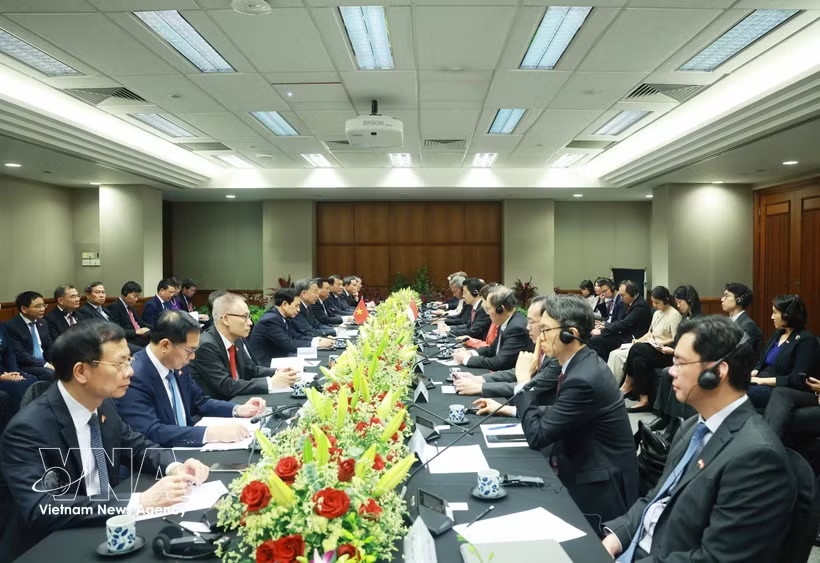
Hanoi (VNA) - General Secretary of the Communist Party of Vietnam (CPV) Central Committee and State President To Lam’s state visit to Singapore from May 29–31 is expected to inject fresh momentum into the newly-established Comprehensive Strategic Partnership between the two countries while further highlighting Vietnam’s rising role and position in the region and the world.
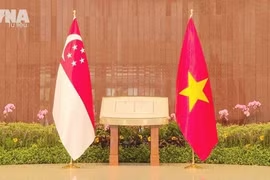
The visit, made at the invitation of Singaporean President Tharman Shanmugaratnam, comes just more than a year after the top Vietnamese leader’s official visit to Singapore and Singaporean Prime Minister Lawrence Wong’s official visit to Vietnam in March 2025. This demonstrates the mutual respect and strong commitment of the two countries’ leaders to effectively advancing the substance of the Vietnam-Singapore Comprehensive Strategic Partnership in the time to come.
During his stay, the Vietnamese leader will also attend and deliver a keynote address at the opening session of the Shangri-La Dialogue on May 29 at the invitation of Bastian Giegerich, Director-General of the International Institute for Strategic Studies (IISS).
Vietnam–Singapore Comprehensive Strategic Partnership delivers tangible results
As fellow members of the Association of Southeast Asian Nations (ASEAN) in the dynamic Asia-Pacific region, with close geographical proximity, cultural similarities, and many shared interests, while jointly adapting to major regional and global changes, Vietnam and Singapore have continued to strengthen their relationship in a substantive, practical, and effective manner.
Singapore was among the first countries to establish diplomatic relations with Vietnam following the signing of the Paris Peace Accords in 1973. More notably, Singapore was one of the first ASEAN countries with which Vietnam established a Strategic Partnership 13 years ago. It was also the first country to establish the Green - Digital Economic Partnership with Vietnam in 2023.
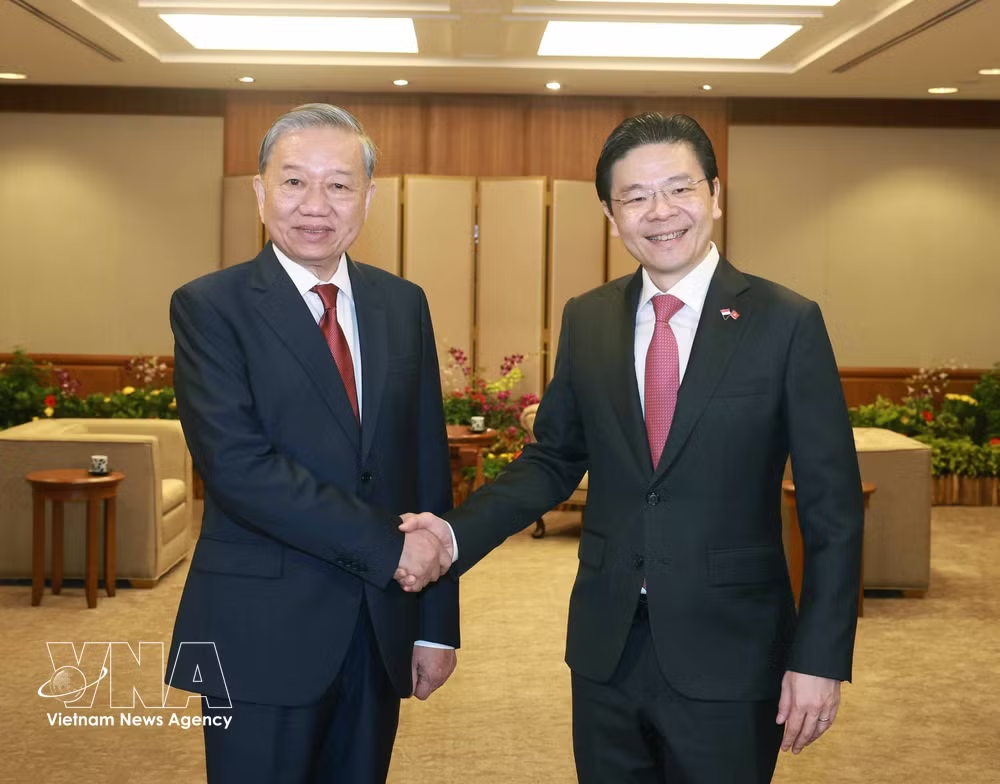
Over the past five decades, the bilateral ties have continued to deepen and deliver tangible results across all areas of cooperation. This is clearly reflected in the frequent exchanges of all-level visits, as well as the effective operation of bilateral cooperation mechanisms.
The relationship reached a new milestone during the top Vietnamese leader’s official visit to Singapore in March 2025, when the two countries upgraded ties to a Comprehensive Strategic Partnership, creating fresh momentum for cooperation across all fields. This significant upgrade reflected the high level of political trust, increasingly intertwined interests, and the shared strategic vision of the two countries in the new context.
Just over a week later, Singaporean PM Lawrence Wong paid an official visit to Vietnam from March 25–26, underscoring Singapore’s strong commitment to and high regard for its partnership with Vietnam.
During the visit, the two sides signed a series of cooperation agreements, covering offshore wind power trade, cross-border QR code payments, digital development and innovation, and people-to-people exchanges. They also agreed to deepen political trust, and boost more substantive defence and security cooperation, more effective economic connectivity, closer people-to-people ties, more breakthrough collaboration in science, technology and innovation, and stronger coordination on regional and international issues.
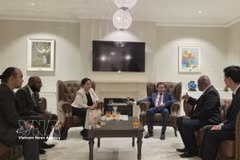
Most recently, at a bilateral meeting on the sidelines of the 48th ASEAN Summit in May, Vietnamese PM Le Minh Hung and his Singaporean counterpart Wong reaffirmed their commitments to implement the Action Programme for the Comprehensive Strategic Partnership in the 2025–2030 period, and agreed to maintain close coordination and consultation at regional and international multilateral forums, while strengthening ASEAN’s unity and central role.
Beyond bilateral cooperation, the two countries have worked closely within ASEAN, the United Nations, and other international mechanisms, sharing similar views on many regional and global issues while supporting ASEAN’s central role in the evolving regional security architecture.
Economic cooperation remains cornerstone of bilateral relations
As members of the Comprehensive and Progressive Agreement for Trans-Pacific Partnership (CPTPP) and the Regional Comprehensive Economic Partnership (RCEP), Vietnam and Singapore have effectively utilised the benefits of next-generation free trade agreements, contributing to the post-COVID pandemic economic recovery in each country as well as the region.
Singapore is one of Vietnam’s most important economic partners in investment, trade, and connectivity, while also providing strong support for Vietnam in human resource development. It has also been at the forefront of cooperation with Vietnam in emerging fields such as science and technology, innovation, digital transformation, and green transition.
Two-way trade has increased steadily over the years, reaching 8.3 billion USD in 2021, 10.3 billion USD in 2024, and over 31.3 billion USD in 2025. In the first four months of 2026, it totaled nearly 14.7 billion USD.
In terms of investment, Singapore is currently the second-largest foreign investor in Vietnam, with more than 4,500 valid projects and total registered capital of nearly 97 billion USD. Singaporean investments span a wide range of sectors, including manufacturing and processing industries, infrastructure, logistics, real estate, finance, high technology, and modern services. These projects have made significant contributions to Vietnam’s economic growth, job creation, and economic restructuring.
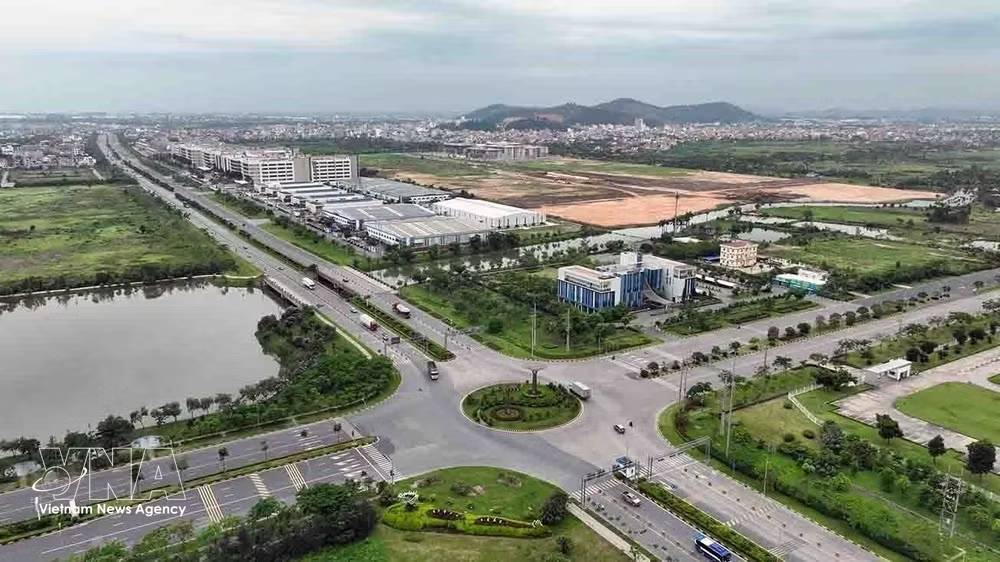
The Vietnam-Singapore Industrial Parks (VSIP) are regarded as flagship symbols of economic cooperation between the two countries. Since the launch of the first VSIP in Binh Duong in 1996, Vietnam has become the country with the largest number of Singapore-developed industrial parks worldwide, with 18 VSIPs attracting more than 18.7 billion USD in investment and generating jobs for over 300,000 workers. The VSIPs have become more than just a successful model of economic cooperation, they stand as a symbol of mutual trust, long-term vision, and strategic partnership between the two nations.
According to Singaporean Ambassador to Vietnam Rajpal Singh, the two countries signed an Implementation Agreement on Carbon Credits in 2025 and are expected to begin rolling out related projects by in late 2026.
The two countries are also expanding cooperation in emerging sectors, including artificial intelligence (AI), big data, semiconductor technology, clean energy, green transition, and developing financial centres. They are also advancing initiatives in technology connectivity and innovation to link their technology ecosystems, innovation hubs, tech enterprises, and pools of highly skilled workforce. This represents a long-term strategic area of cooperation that aligns well with Vietnam’s development demands and Singapore’s strengths.
Human resource development remains another strategic pillar. Singapore has supported Vietnam in training officials, managers, and high-quality professionals through a range of practical cooperation programmes. These have not only delivered tangible benefits but have also helped strengthen strategic connectivity and deepen mutual understanding between the two countries.
Strengthening Vietnam – Singapore strategic coordination, affirming Vietnam’s international position
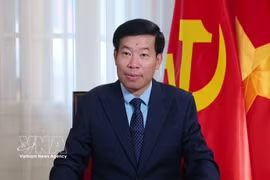
According to Vietnamese Deputy Minister of Foreign Affairs Nguyen Manh Cuong, the visit takes place at a time when both countries are pursuing economic transformation, enhancing competitiveness, and adapting to rapid global changes. It is expected to further strengthen political trust and strategic coordination while opening new opportunities in investment, trade, finance, technology, supply chain connectivity, AI, big data, semiconductor technology, smart cities, digital economy, digital government, and green transition.
The visit is also expected to provide fresh impetus for the development of next-generation VSIPs, making them greener, smarter, and more sustainable in line with global development trends and sustainable development goals of both countries.
A major highlight will be the Vietnamese leader’s keynote speech at the Shangri-La Dialogue - Asia-Pacific’s premier security forum organised annually by the IISS, which gathers heads of state, defence ministers, scholars, and strategic experts from around the world to discuss issues related to peace, security, and regional structure.
Cuong said the invitation for Party Secretary General and State President Lam to deliver the forum’s principal keynote address reflects the international community’s growing recognition of Vietnam’s role, prestige, and influence, as well as confidence in its leadership.
The speech is expected to present Vietnam’s perspectives on addressing emerging strategic challenges and contribute ideas to promoting peace, stability, cooperation, and sustainable development in an evolving regional architecture.
Meanwhile, Ambassador Singh described the invitation as recognition of Vietnam’s remarkable achievements over more than three decades as an ASEAN member. He noted that Vietnam has become one of the bloc’s most active contributors to political stability, economic integration, and building cohesive community, and it increasingly prepared to play a more proactive role in addressing geopolitical and geo-economic uncertainties./.