Hanoi (VNA) – Vietnam’s tourism sector needs to shift from pursuing visitor numbers to maximising value, while developing a high-quality, smart, green, creative and culturally distinctive tourism ecosystem to create new growth momentum, experts have said.
The direction is set out in the Political Bureau’s Resolution No. 26-NQ/TW on developing Vietnam’s tourism into a spearhead economic sector in the new era. The resolution aims to enhance the sector’s added value and regional and global competitiveness, while strengthening its spillover effects on other sectors.
From quantity to value
Vietnam welcomed nearly 21.2 million international visitors and served 137 million domestic tourists in 2025. Tourism revenue reached 1 quadrillion VND (38.5 billion USD), up nearly 38% from 2019, while the sector contributed nearly 8.8% directly to GDP and generated about 4.41 million jobs, or 8.5% of the national workforce.
In the first eight months of 2026, Vietnam received 15.9 million international visitors and is on track to meet its full-year target of 25 million.
However, amid fluctuations in global tourism, the sector needs a more comprehensive and sustainable growth model, with a stronger focus on quality rather than volume.
The resolution sets the goal of making tourism a spearhead economic sector by 2030, directly contributing 10–12% of GDP, welcoming 45–50 million international visitors, serving 160 million domestic tourists, and generating 80–90 billion USD in tourism revenue. By 2045, Vietnam aims to rank among the world’s top 30 countries in tourism competitiveness.

Dr. Trinh Le Anh, from the University of Social Sciences and Humanities (USSH) under the Vietnam National University, Hanoi, described Resolution 26 as a strategic “catalyst” for repositioning tourism. He highlighted three major shifts - from counting visitors to measuring added value and actual spending; from exploiting raw resources to developing the creative and experience economies; and from administrative coordination to integrated value chains.
Sharing Anh’s opinion, Dr. Pham Ha, Chairman and CEO of LuxGroup, said the resolution redefines tourism as part of a broader economic ecosystem capable of driving transport, trade, cultural industries, the digital economy and the night-time economy.
Notably, measures on State-supported tourism risk insurance and pilot mechanisms to address urgent issues reflect a more proactive and flexible policy approach, creating greater room for innovation and helping remove bottlenecks in reality, he said.
Unlocking resources for growth
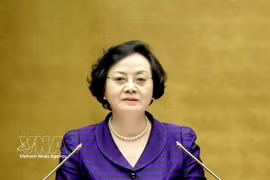
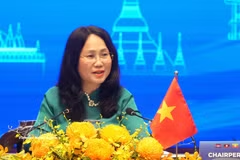
At a national conference on studying, disseminating and implementing a number of the Political Bureau’s resolutions and directions on September 3, Deputy Prime Minister Pham Thi Thanh Tra affirmed that Vietnam has sufficient natural resources, cultural heritage and other resources to build a tourism industry of regional and global stature.
Nguyen Quoc Ky, Chairman of Vietravel, said the sector should focus on increasing spending per visitor. Tourists should have more opportunities to spend on cuisine, entertainment, shopping, arts, health care and other experiences, rather than simply purchasing tours or accommodation.
He also called for a shift from price-based competition to competition through experiences and cultural identity, supported by closer links among the State, localities, airlines, travel firms, destinations, service providers, technology companies and local communities.
When all links in the tourism value chain work toward a common goal, Vietnam can not only attract more visitors but also encourage them to stay longer, spend more and return, Ky said.
Nguyen Hong Hai, Vice Chairman of the Vietnam Tourism Association, said the State should play an enabling and leading role by removing bottlenecks in institutions, infrastructure and resources, while businesses should spearhead innovation, develop high-quality, green and sustainable products, and accelerate digital transformation. Local communities, meanwhile, should participate in service provision, cultural preservation and environmental protection while benefiting directly from tourism.
Meanwhile, Ha called for stronger national-level intersectoral coordination, with clear responsibilities, deadlines and resources, stressing that progress should be measured not only by visitor numbers and revenue, but also by spending, length of stay, repeat visits, job quality, visitor satisfaction and environmental carrying capacity.
Anh stressed the need to narrow the gap between universities and the market to build a tourism workforce with strong professional, language and digital skills. With solid cultural foundations, creativity and international-standard skills, Vietnam’s tourism workforce can turn Resolution 26’s goals into tangible economic value and contribute to sustainable development./.