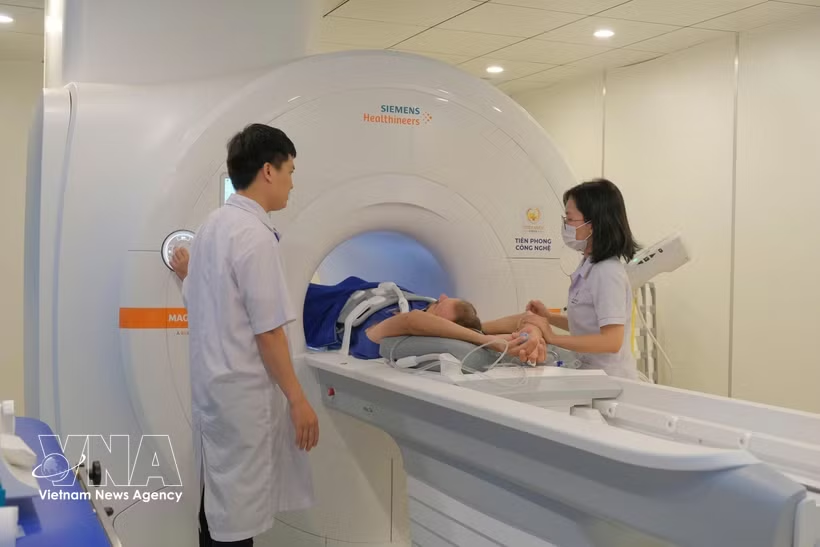
Hanoi (VNA) – Medical tourism is emerging as a high-value service sector, with many countries successfully building national brands and attracting large numbers of international visitors each year. Their experience offers useful lessons for Vietnam as demand for healthcare combined with medical treatment, rehabilitation, wellness and leisure continues to grow globally.
Strong potential
Health-related activities combined with tourism have existed in Vietnam for years, but modern medical tourism has developed mainly over the past decade alongside advances in healthcare and tourism.
Reports estimate that around 300,000 international visitors use medical services in Vietnam annually, generating 1-2 billion USD in spending on treatment, accommodation, transport and food.
Hanoi, Ho Chi Minh City, Hue and Khanh Hoa are developing medical tourism products based on specialised healthcare services, leading doctors and professors, traditional medicine and wellness tourism.
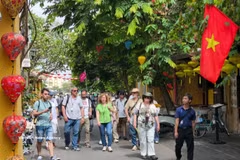
International patients, mainly overseas Vietnamese and visitors from Cambodia, Laos, the Republic of Korea, Japan, Australia and Europe, seek services including dentistry, assisted reproduction, cosmetic surgery, health check-ups and high-tech treatment.
Meanwhile, Vietnamese people spend an estimated 2-3 billion USD each year on medical treatment abroad, highlighting the need to improve service quality and competitiveness.
Experts said Vietnam has strong advantages for developing medical tourism, including competitive healthcare costs, qualified medical professionals, rich natural and cultural resources, traditional medicine and a stable and secure environment.
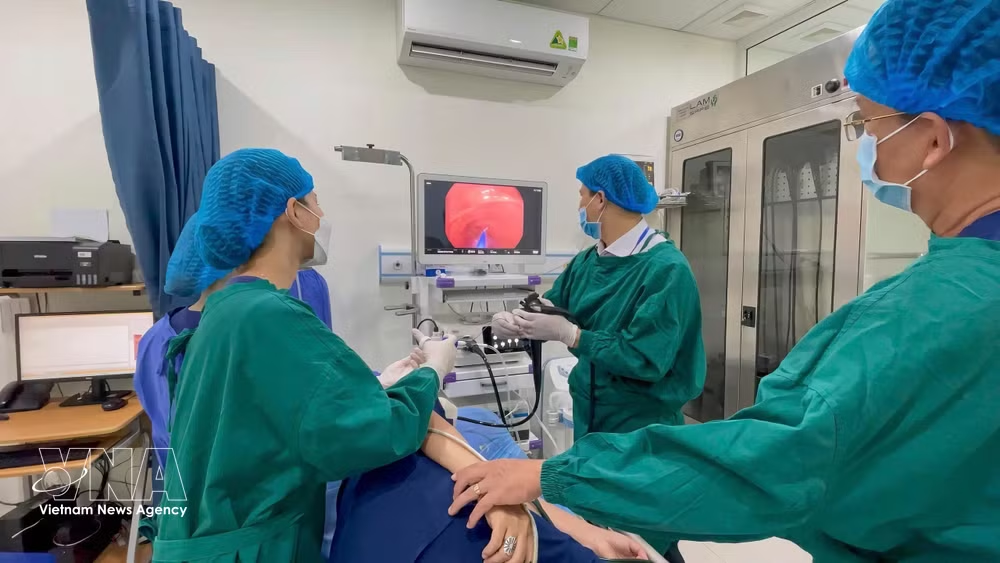
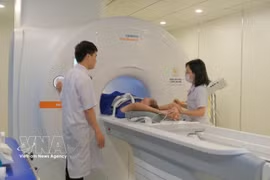
The country has around 100 specialised medical facilities, including 13 hospitals meeting Joint Commission International (JCI) standards. Many hospitals have mastered advanced techniques such as robotic surgery, organ transplantation, cardiovascular intervention, cancer treatment and assisted reproduction.
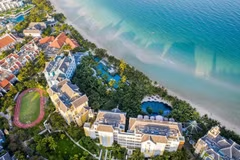
Traditional medicine, including acupuncture, acupressure, massage and herbal therapies, is also gaining international recognition and could form distinctive medical tourism products.
Clear framework needed
The global medical tourism market is estimated at around 100 billion USD and forecast to grow 8-16% annually through 2035, with the Asia-Pacific region expected to expand faster than the global average.
To tap this potential, the Ministry of Health is coordinating with relevant ministries and sectors to develop a project on medical tourism development for 2026-2030, aiming to make Vietnam a competitive destination in Southeast Asia and gradually join Asia's leading group.
The project targets at least 20 hospitals meeting international quality standards and 30 standardised medical tourism packages by 2030. It also envisages a multilingual national medical tourism portal and database, as well as a national “Vietnam Medical Tourism” brand.
Vietnam aims to welcome around 750,000 international medical tourists by 2030, generating about 1 billion USD in direct revenue from medical treatment and healthcare services and 2.5 billion USD in total spending by visitors and accompanying persons.
Several localities, including Hanoi, Da Nang and Lam Dong, have begun developing their own medical tourism plans.
Hanoi is preparing a project for 2026-2030 with a vision to 2045 and promoting the brand “Hanoi – Vietnam's high-quality healthcare centre”, according to Dr. Nguyen Dinh Hung, Deputy Director of the Hanoi Department of Health.
Assoc. Prof., Dr. Tran Cao Binh, Director of the National Hospital of Odonto-Stomatology, said dentistry could become a pioneering field in Vietnam's medical tourism if quality and safety are placed at the centre. He called for a national dental tourism brand and network, with priority given to dental implants, full-mouth rehabilitation, cosmetic and digital dentistry, and orthodontics.
Prof. Dr. Do Tat Cuong, Chairman of the Vinmec Clinical Advisory Council, recommended stronger international communications, a multilingual national information platform, medical tourism visas for patients and relatives, and integrated transport, accommodation and sightseeing services.
Dr. Ha Anh Duc, Director of the Ministry of Health's Department of Medical Service Administration, said localities and healthcare providers should identify priority fields to guide investment. Traditional medicine and rehabilitation could be among Vietnam's distinctive products, given the country's medicinal resources and non-pharmaceutical therapies.
He added that relevant agencies are developing a set of standards for hospitals, clinics, and medical facilities participating in the medical tourism network, along with establishing a pricing mechanism for medical services and promoting Vietnam as a trusted destination for treatment, healthcare, rehabilitation, cosmetic services, and traditional medicine./.