Vietnam boosts rice trade through 2030 with new measures

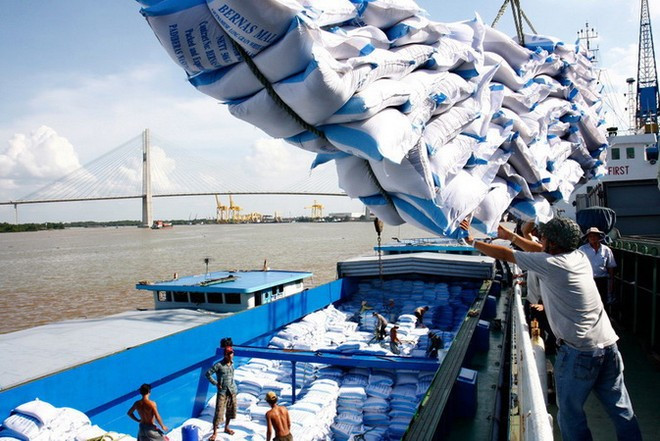
Vietnam exported over 3.43 million tonnes of rice in the first four months of this year, raking in nearly 1.77 billion USD, a 8.1% jump in volume but a 13.3% dip in value from the same period last year.

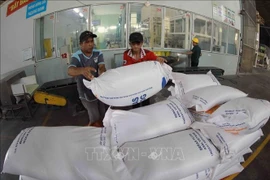
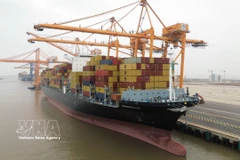
Loading rice at Sai Gon port (Photo: VNA)

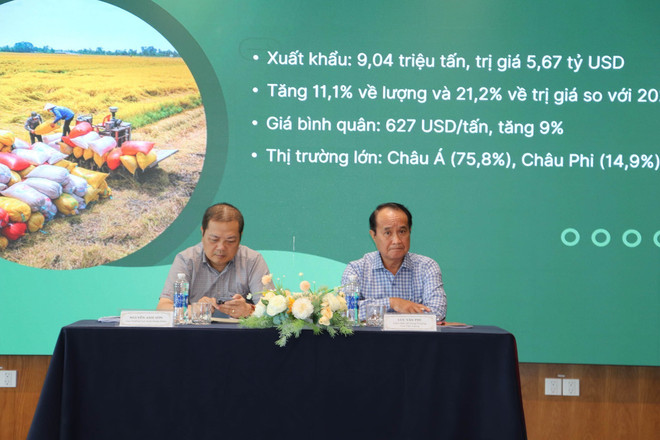
Tien Giang (VNA) – The Ministry of Industry and Trade (MoIT)’s Export-Import Department introduced a raft of measures to improve rice export management for 2025 during a conference held in the Mekong Delta province of Tien Giang on May 20.

Grounded in the Government and MoIT’s directions, these measures aim to bolster rice exports through rigorous inspection and supervision, accelerated implementation of the national rice export strategy through 2030, and robust trade promotion activities.

Authorities are set to expand negotiations and trade deals with international partners while dismantling the logistical and regulatory snarls that have plagued the sector. Local authorities were advised to restructure production and develop value chain linkages among organisations, cooperatives, and rice exporters. Enterprises and traders were encouraged to upgrade deep processing facilities and equipment to churn out rice up to the exacting standards of discerning markets. The goal is to diversify export markets, reducing dependence on traditional buyers to mitigate associated risks.
sy.jpg
At the conference (Photo: VNA)

Luu Van Phi, Director of the provincial Department of Industry and Trade, highlighted Tien Giang’s strategic strengths in rice production, citing its strategic location and robust transport infrastructure, including extensive road and waterway networks. The province boasts around 200 major rice milling and processing facilities capable of grinding out 3 million tonnes of rice annually and generating an estimated 100 million USD in export revenue.

To ensure the sector’s long-term growth, Phi stressed the need for exporters and traders to develop raw material zones, invest in factory upgrades, modernise production lines, enhance processing capabilities, and strengthen financial capacity. Building brand identity and gaining consumer trust in both domestic and foreign markets is seen as a critical step forward. Current rice export regulations, he added, need to be revised to better keep pace with the industry’s evolving needs.

According to the department, Vietnam exported over 3.43 million tonnes of rice in the first four months of this year, raking in nearly 1.77 billion USD, a 8.1% jump in volume but a 13.3% dip in value from the same period last year. The Philippines, as ever, remains Vietnam’s largest rice buyer, making up 43.3% of the export volume and 45.5% of the value./.

VNA

See more

Hai Phong targets 4.3 billion USD in FDI in 2026 (Photo: VNA)

Hai Phong city targets 4.3 billion USD in FDI in 2026

Hai Phong’s investment appeal is underpinned by a rapidly expanding development space, including the Southern Coastal Economic Zone covering more than 20,000 hectares, a planned free trade zone, deep-water ports at Lach Huyen, and 12 industrial parks newly established in 2025.

The relocation of check-in counters aims to better meet the travel needs of residents and visitors. (Photo: VNA)

Vietjet shifts domestic check-in at Tan Son Nhat from January 13

During the recent New Year 2026 holiday peak, Vietjet added 380 flights, equivalent to nearly 78,000 additional seats, on many key domestic routes linking Hanoi and Ho Chi Minh City with destinations such as Vinh, Thanh Hoa, Hai Phong, Da Nang, Phu Quoc, Nha Trang and Da Lat.

Commercial banks are providing approximately 88% of total green credit outstanding in Vietnam. (Photo: nhandan.vn)

Capital sources expanded for sustainable growth

According to the State Bank of Vietnam (SBV), by the end of November 2025, outstanding green credit was estimated at around 750 trillion VND (28.55 billion USD), with an average growth rate exceeding that of overall credit in the economy.

Customers select goods at a supermarket. (Photo: VNA)

Retail market expands sharply, sustainability challenges persist

According to a report on recently released by the Ministry of Industry and Trade’s Agency for Domestic Market Surveillance and Development, the size of the market reached more than 7 quadrillion VND (about 266 billion USD) in 2025, up around 10% compared with 2024.

Oil rigs at the Bach Ho oil field. (Photo: VNA)

Resolution 79: State economy to lead growth

Resolution 79 is described as a “clear action declaration” by the Politburo, saying the state economy is not only responsible for maintaining macroeconomic stability, but must also become the force leading a new growth model that is green and sustainable.

Workers at Garment 10 Corporation produce apparel for export. (Photo: Nhan Dan)

Vietnam leverages export advantages within RCEP region

In 2025, seafood exports to China alone exceeded 2.2 billion USD, up about 33% compared to 2024. Shipments to Japan fetched nearly 1.7 billion USD, a year-on-year increase of 14.6%, while those to the Republic of Korea and Australia grew by 9.6% and 3.2%, respectively.

Certificates of membership in the Vietnam International Financial Centre in Da Nang are awarded at the conference on January 9. (Photo: VNA)

Da Nang continues targeted investment promotion approaches

According to Chairman of the Da Nang People’s Committee Pham Duc An, the city prioritises building sustainable economic ecosystems and focuses on key breakthrough sectors with strong spillover effects, including high technology and digital transformation, logistics, urban infrastructure, finance, processing and manufacturing industries, high-tech agriculture, and the pharmaceutical and medicinal herb industry.

In 2025, Hyundai sales reached 53,229 vehicles across the Vietnamese market. (Illustrative photo: Yonhap/VNA)

Hyundai sales in Vietnam rise almost 23% in December

In 2025, sales reached 53,229 vehicles across the market, a result considered a testament to the efforts by TC Group, Hyundai Thanh Cong, and the entire Hyundai dealership network nationwide amidst a volatile market.

Hydroponic vegetable cultivation model at the High-Tech Agricultural Park (Photo daibieunhandan.vn)

HCM City accelerates shift toward ecological urban agriculture

​The city’s agricultural sector is undergoing a strong transformation, restructuring toward higher value-added and sustainable development. In recent years, the sector has maintained steady growth, with agricultural, forestry and fisheries output rising by an estimated 2.5% annually.