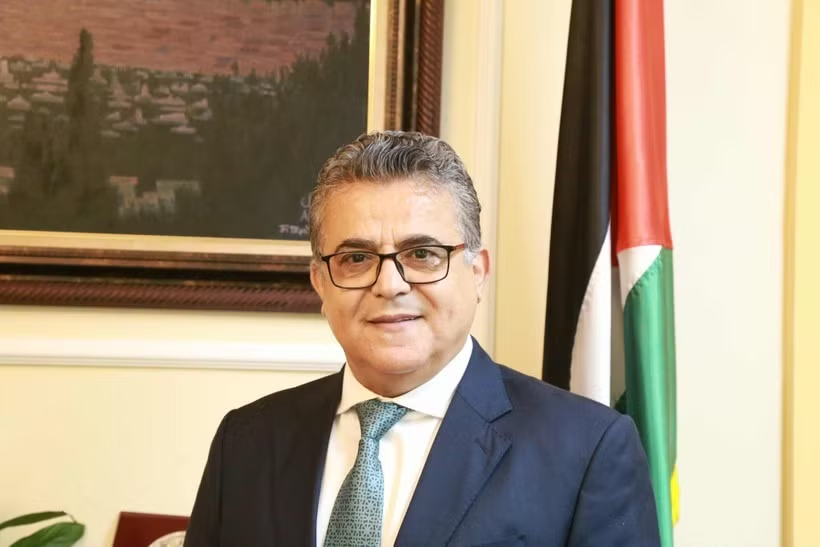
Hanoi (VNA) - On the occasion of the 80th anniversary of Vietnam’s National Day (September 2), Palestinian Ambassador Saadi Salama, head of the diplomatic corps in Hanoi, wrote an article reflecting on Vietnam’s 80-year journey of nation-building and development.
In his piece published in Al-Quds (Palestine) on September 2, the Ambassador highlighted the significance of this day, when 80 years ago President Ho Chi Minh read the Declaration of Independence - marking the birth of the Democratic Republic of Vietnam - now the Socialist Republic of Vietnam.
This is not only a historic milestone but also carries profound political and cultural significance, the Ambassador wrote.
He went on that for nearly four decades, Vietnam was a battlefield of colonial conflicts and devastating wars that left deep scars on the nation.
From the resistance against French colonial rule to the war against the US - those years were marked by widespread destruction, millions of casualties, and shattered infrastructure.
Poverty and food shortages prevailed, while the economy struggled under international isolation and embargoes.
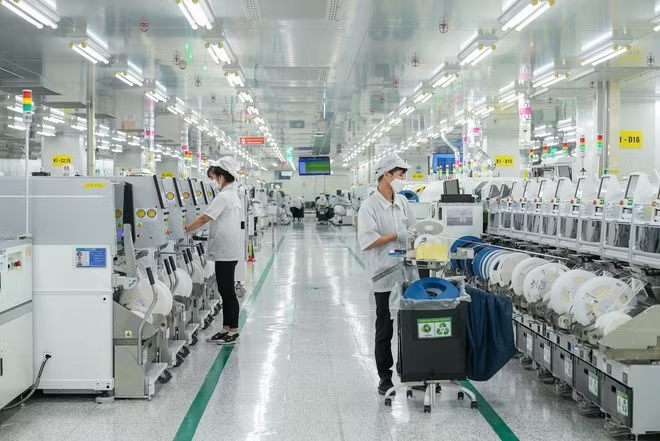
Vietnam’s achievements extend beyond economic growth, reflecting a comprehensive reform agenda aimed at strengthening national governance, the Ambassador wrote.
The government has restructured its administrative apparatus, merged ministries and sectors, simplified administrative procedures, and implemented digital transformation programmes in public services.
At the same time, Vietnam has enforced strict anti-corruption measures and enhanced transparency, emerging as a model that has drawn international attention.
Hanoi has also placed strong emphasis on education and healthcare.
Poverty rates have sharply declined over the past two decades, and today Vietnam stands as a shining example of comprehensive development - harmoniously combining economic growth with social equity.
According to the Ambassador, on the international stage, Vietnam has built a pragmatic and flexible foreign policy founded on the principles of non-alignment and diversification of relations.
This flexible foreign policy approach is known as “bamboo diplomacy.” Like the bamboo plant - with its strong roots and flexible stems that bend with the wind but never break - Vietnam has become a balanced partner, earning the respect of many major powers around the world.
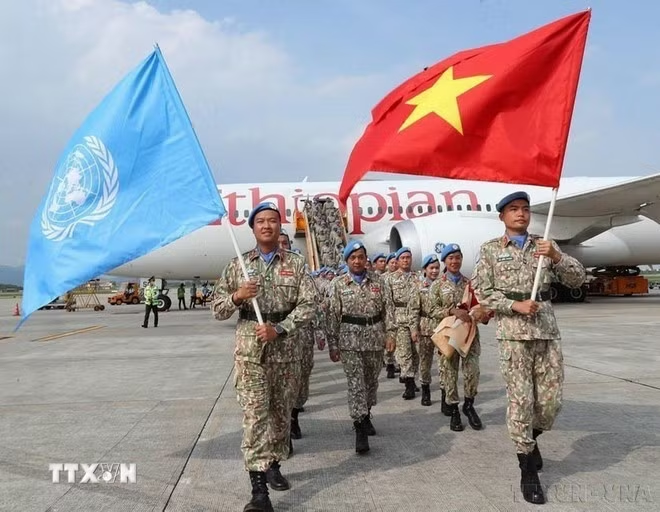
Beyond expanding its international relations, Vietnam has also taken an active role in United Nations peacekeeping operations since 2014.
Hanoi has deployed officers and doctors to conflict zones in Africa, such as South Sudan and the Central African Republic.
Although the number of personnel remains modest, these efforts reflect Vietnam’s growing maturity and its commitment as a responsible member of the international community, making practical contributions to global peace and security.
Amid deepening international integration, Vietnam has never forgotten its tradition of solidarity with nations sharing similar struggles, particularly the people of Palestine.
Since the 1960s, the Vietnamese and Palestinian revolutions have stood together in their fight against colonialism and occupation.
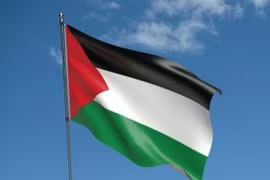
Vietnam was also among the first countries to recognise the Palestinian Declaration of Independence in 1988, and has remained a steadfast and loyal friend, consistently supporting the Palestinian people’s right to self-determination and the establishment of an independent state.
Eighty years after its independence, Vietnam stands not only as a story of economic success, but also as a vivid testament to its ability to transform pain into strength and setbacks into opportunities for progress, the Ambassador highlighted in his piece.
Today, Vietnam stands as a global symbol of resilience, reform, and integration - inspiring many nations with the belief that determination and a pragmatic approach pave the way toward a prosperous and peaceful future, he concluded./.