Vietnam – Ideal venue for opening Hanoi Convention signing: Indian official

The selection of Vietnam to host the opening for the signature of the United Nations Convention against Cybercrime is thanks to its active role in drafting the treaty, its robust legal framework exemplified by the 2018 Cybersecurity Law, effective enforcement, and highly skilled workforce, said an Indian official.

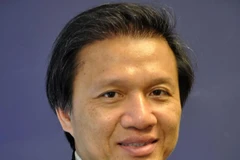
Hanoi (VNA) – Vietnam is a “shining example” in cybersecurity efforts and an ideal venue for opening the signature of the United Nations Convention against Cybercrime, called the Hanoi Convention, underlined Sudhanshu Mittal, head director for technical solutions at the National Association of Software and Service Companies (Nasscom) of India.

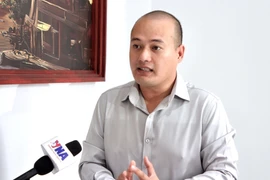
Speaking to the Vietnam News Agency’s correspondents in New Delhi, Mittal described the convention as the UN’s first global cybercrime treaty in nearly two decades, aimed at harmonising national laws, enhancing cross-border investigative cooperation, sharing electronic evidence, and providing mutual legal and technical assistance.

He sees the treaty as a major opportunity for countries like India to strengthen international collaboration, capacity building, and legal framework improvement.

The Indian official attributed the selection of Vietnam to host the opening ceremony to its active role in drafting the treaty, its robust legal framework exemplified by the 2018 Cybersecurity Law, effective enforcement, and highly skilled workforce. He noted Vietnam’s ranking among the top 20 countries in the 2024 Global Cybersecurity Index (GCI), with over 80% of the population engaged digitally. These factors, he said, position Vietnam as a perfect venue for this significant UN event.

Mittal noted that cybercrime has evolved beyond financially motivated individuals, fuelled by the rapid expansion of the digital economy. He identified emerging threats such as financial fraud targeting instant payment systems, social engineering scams like digital arrest (impersonating law enforcement forces to extort money), cross-border ransomware-as-a-service attacks, critical infrastructure assaults, enterprise supply chain intrusions, and the use of AI to generate misinformation and deepfakes affecting elections and public awareness.

Economically, cybercrime causes direct financial loss, disrupts business operations, harms corporate reputations, and raises legal and security costs. Socially, it erodes public trust in digital platforms, especially among the elderly and vulnerable, and can trigger psychological distress when essential services like energy, health care, or telecommunications are attacked.

On India’s cybersecurity framework, Mittal highlighted the country’s comprehensive legal structures and strong public-private cooperation. Key initiatives include the Information Technology Act 2000, the Indian Computer Emergency Response Team (CERT-In), the National Critical Information Infrastructure Protection Centre (NCIIPC), the Indian Cyber Crime Coordination Centre (I4C), and the Digital Personal Data Protection (DPDP) Act 2023.

He emphasised the collaboration among the Indian Government, Nasscom, and the Data Security Council of India (DSCI) to build a secure digital ecosystem and drive innovation./.

VNA
See more

Deputy Prime Minister Tran Hong Ha meets with ambassadors and chargés d’affaires of the European Union (EU) in Vietnam on December 16. (Photo: VNA)

Deputy PM Tran Hong Ha meets EU diplomats in Vietnam

Given the strong partnership built over the past 35 years, the EU hopes to soon elevate relations with Vietnam to a comprehensive strategic partnership, said Deputy Head of the EU Delegation to Vietnam Rafael de Bustamante Tello.

National Assembly Chairman Tran Thanh Man speaks at the meeting with representatives of the NA’s agencies and the NA Office. (Photo: VNA)

Top legislator calls for strict discipline to further enhance quality of NA operations

Chairman Man clearly outlined key tasks for the time ahead and requested the prompt finalisation and promulgation of newly adopted laws and resolutions, proactive reviews to ensure consistency with new guidelines, and thorough preparations for the upcoming elections of deputies to the 16th NA and People’s Councils at all levels for the 2026-2031 tenure.

Minister of Foreign Affairs Le Hoai Trung (right) meets with Fukuda Tomikazu, Governor of Japan’s Tochigi prefecture in Hanoi on December 16. (Photo: Courtesy of the Ministry of Foreign Affairs)

Minister of Foreign Affairs receives Japan’s Tochigi Governor

Trung suggested that Tochigi continue to effectively implement signed agreements and further strengthen cooperation in areas that can create new development momentum for Vietnam, such as science and technology, digital transformation, innovation, and the training of high-quality human resources.

Prime Minister Pham Minh Chinh (R) receives Lao Minister of Education and Sports Thongsalith Mangnormek in Hanoi on December 16 (Photo: VNA)

PM suggests acceleration of Laos–Vietnam University establishment

Prime Minister Pham Minh Chinh said the two sides should strengthen the teaching and learning of Vietnamese and Lao in both countries, including introducing Vietnamese as an optional foreign language in Lao schools, while continuing academic exchanges and programmes on tradition education to nurture the special bilateral relationship, he said.

Vietnamese Ambassador to New Zealand and the Cook Islands Phan Minh Giang (L) presents his credentials to Sir Tom Marsters, Representative of King Charles III to the Cook Islands (Photo: VNA)

Cook Islands attaches importance to ties with Vietnam

Sir Tom Marsters, Representative of King Charles III to the Cook Islands welcomed the establishment of diplomatic relations between the Cook Islands and Vietnam in April 2022, describing it as laying a long-term vision for friendship and cooperation between the two countries.

Ministries and sectors are requested to pay special attention to promoting election publicity and legal education. - Illustrative image (baochinhphu.vn)

Government sets out coordinated plan for 2026 elections

The plan also aims to ensure that the elections are conducted in a democratic, equal and law-abiding manner, while being safe and cost-effective, truly becoming a nationwide civic event, thus contributing to strengthening and enhancing the effectiveness and efficiency of the state apparatus and building a socialist rule-of-law state of Vietnam of the people, by the people and for the people.

President Ho Chi Minh’s image featured on ballots at Communist Party of Uruguay congress (Photo: VNA)

Image of President Ho Chi Minh appears on ballots at Uruguay Communist Party congress

Among the ballots used at the congress were three featuring posters of President Ho Chi Minh and one bearing an image depicting the Vietnamese people engaged in production during the period of resistance against foreign aggression. The latter also carried the inscriptions “80th Anniversary of Vietnam’s National Day” and “33rd National Congress of the PCU".