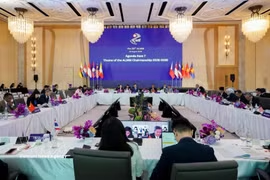
Phnom Penh (VNA) – Vietnam shared its experience and perspectives on the challenges facing traditional media amid digital transformation at an ASEAN workshop in Phnom Penh, Cambodia, with journalist Vo Hoang Long from e-newspaper VietnamPlus of the Vietnam News Agency (VNA) highlighting policy, human resources, technological and economic challenges, and emerging issues posed by artificial intelligence (AI).
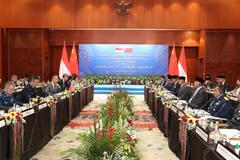
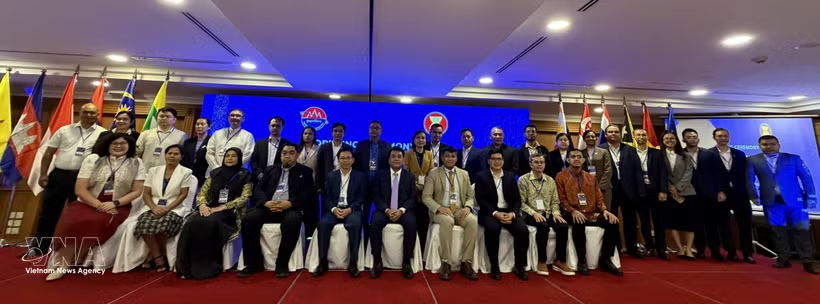
The workshop on mitigating negative impacts of digital transformation on traditional media was held on August 26 – 27, bringing together representatives from ASEAN member states, the ASEAN Secretariat, and media experts and speakers.
In his speech, Long outlined challenges related to policy, human resources, technological gaps and platforms, economic factors, and new issues arising from AI. He also introduced the VNA's solutions to address the challenges of digital transformation and shared VietnamPlus' experience in adapting to the digital environment.
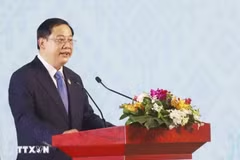
In his opening remarks, Has Sam Ath, undersecretary of state of the Ministry of Information of Cambodia, said the world is undergoing unprecedented technological changes, with digital platforms transforming the way information is produced, distributed and consumed.
While these developments have created new opportunities for media operations, innovation and public engagement, they have also posed major challenges to traditional media organisations, including changing audience behaviour, declining traditional revenue models, intense competition for public attention, and the growing influence of global digital content, he noted.
Has Sam Ath stressed that although digital transformation is an inevitable and necessary trend, its negative impacts must be proactively addressed through effective policies, cross-sectoral cooperation and capacity building.
Traditional media continues to play an irreplaceable role in protecting the public interest, preserving cultural identity, and building an informed citizenry, he said, underscoring the need to help traditional media organisations adapt, innovate, and thrive in a digital-first ecosystem without compromising their core integrity.
He proposed several actions for discussion, including identifying the key challenges facing traditional media organisations in ASEAN member states in terms of sustainability, legal frameworks and professional ethics; sharing effective models and experience in adapting to digital transformation, establishing fair remuneration mechanisms and strengthening information verification processes; and developing regional strategies to promote a balanced, adaptive and responsible media environment, thereby supporting traditional media organisations through this period of transition.
The workshop features experience-sharing sessions among representatives of ASEAN member states on strengthening traditional media in the digital era through policy, innovation and capacity building. It also includes training on AI governance and assessing AI readiness among ASEAN media organisations./.