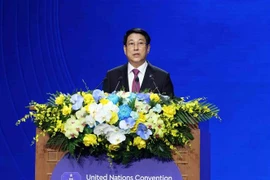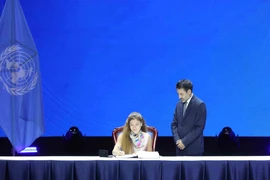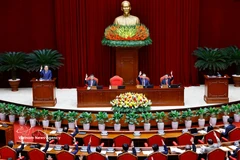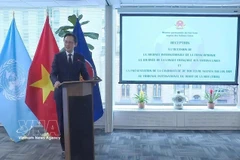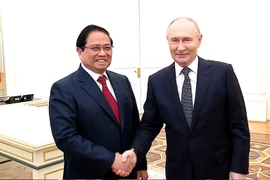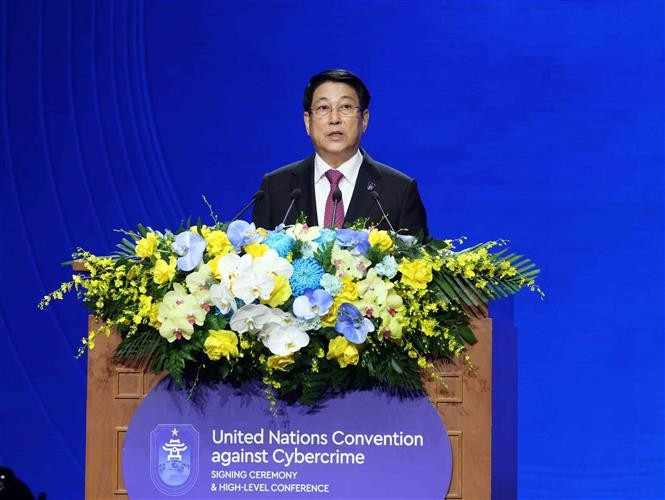
Hanoi (VNA) - Vietnamese State President Luong Cuong delivered the welcome remarks at the Signing Ceremony of the United Nations Convention against Cybercrime (Hanoi Convention) at the National Convention Centre in Hanoi on October 25.
The following is the full text of the welcome remarks.
WELCOME REMARKS AT THE SIGNING CEREMONY OF THE UNITED NATIONS CONVENTION AGAINST CYBERCRIME
Your Excellency Mr. António Guterres, Secretary-General of the United Nations, Distinguished Leaders, Heads of Delegations of Member States and International Organisations,
Ladies and Gentlemen,
On behalf of the State and people of Vietnam, I warmly welcome you all to Hanoi – the City for Peace, to attend the Signing Ceremony of the United Nations Convention Against Cybercrime — a historic event marking the beginning of a new era of global cooperation in cyberspace.
Under the theme “Countering Cybercrime, Sharing Responsibility, Securing our Future,” today’s ceremony embodies the spirit of international solidarity and the shared commitment of all nations to build a cyberspace that is safe, healthy, and sustainable.
This event not only heralds the birth of a global legal instrument, but also reaffirms the enduring vitality of multilateralism — where nations transcend differences and stand shoulder to shoulder in assuming shared responsibilities for peace, security, stability, and development.
Ladies and Gentlemen,
Throughout human history, science and technology have continuously expanded the horizons of human existence, interaction, and progress. Today, we find ourselves in cyberspace — a domain where every data stream, every digital act, and every technological interaction can profoundly affect national security, economic stability, and the future of nations.
Cyberspace has become both a new realm for development and a new frontier for global security — where opportunities and challenges are intertwined, and where technological advancement must always go hand in hand with ethics and responsibility.
Alongside the remarkable achievements of the digital age, cybercrime has grown rapidly in scale, complexity, and consequence. It poses an immediate challenge to the security and development of every nation, and to the well-being and happiness of every citizen. Cyberattacks, data theft, information manipulation, and intrusions into critical infrastructure have become increasingly sophisticated and organized, causing trillions of dollars in global economic losses each year. The personal data and safety of citizens are at risk, with women and children among the most vulnerable.
Safeguarding national sovereignty, interests, and security, and protecting cyberspace, is not only a demand of our time but also a precondition for sustainable development, contributing to peace, stability, and shared prosperity.
Ladies and Gentlemen,
In the face of these global challenges, the Hanoi Convention, a multilateral global convention against cybercrime, stands as a vivid testament to unity and the rule of law. After five years of negotiation, through dozens of sessions and thousands of inputs, today’s outcome reflects the collective perseverance, wisdom, and trust among nations —a triumph of dialogue over confrontation and of cooperation over division.
This process has brought together universal values, embodying the spirit of consensus, the vitality of multilateralism, and the central role of the United Nations. The Hanoi Convention conveys three clear and enduring messages to the world:
First, it reaffirms our collective commitment to shaping an order that ensures safety and security in cyberspace, grounded in international law.
Second, it upholds the spirit of sharing, solidarity, and mutual support, for only through cooperation and capacity-building can we safeguard a stable and resilient cyberspace.
Third, it underscores the ultimate goal of all our efforts, the well-being of people: ensuring that technology serves humanity, that development brings opportunities for all, and that no one is left behind in the global digital transformation.
These three messages vividly embody the core spirit of the Hanoi Convention — a Convention of the rule of law, of cooperation, and of the people. This also reflects the guiding principle that Vietnam consistently upholds in its process of international integration: taking law as the foundation, cooperation as the driving force, and the people as the center, the subject, and the ultimate goal of all endeavors.
Distinguished Guests,
For Vietnam, today’s Signing Ceremony of the United Nations Convention against Cybercrime is not only a great honor, but also a responsibility to the international community. Guided by its foreign policy of independence, selfreliance, peace, cooperation, and development, diversification and multilateralisation of external relations, and as an active, reliable, and responsible member of the international community, Vietnam has, over the past five years, worked closely with other countries throughout the negotiation of this Convention.
We are deeply proud that Hanoi – the capital of a nation that rose from the ashes of war – has been chosen as the starting point for a cyberspace of peace, cooperation, and trust. Hosting this Signing Ceremony and being among the first signatories to the Hanoi Convention reaffirms Vietnam’s strong commitment to the rule of law, full compliance with international obligations, and contribution to strengthening the global legal order in cyberspace.
To bring this Convention to life, we need not only political will but also resources for implementation. International cooperation in training, technical assistance, and technology transfer will be vital to enhancing national capacities and ensuring a safe and stable cyberspace for all.
I call upon all Member States to promptly ratify the Convention, so that this important instrument may enter into force at the earliest opportunity — laying a solid foundation for a just, inclusive, and rules-based digital order.
I wish the Signing Ceremony of the Convention against Cybercrime every success. I wish all of you good health, happiness, and success.
Thank you very much./.