Vietnamese travellers embracing climate-conscious tourism

According to Booking.com's 2026 Travel & Sustainability Report, 96% of Vietnamese respondents said sustainable travel is an important or very important priority.

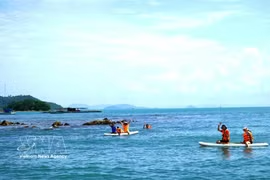
Vietnamese travellers are increasingly turning their commitment to sustainable tourism. (Photo: VietnamPlus)

Hanoi (VNA) – Vietnamese travellers are increasingly turning their commitment to sustainable tourism into action, from immersing themselves in local culture and reducing single-use plastics to choosing public transport, electric vehicles, and less crowded, cooler destinations.

According to Booking.com's 2026 Travel & Sustainability Report, 96% of Vietnamese respondents said sustainable travel is an important or very important priority.

Travellers across generations in Vietnam are finding meaningful ways to travel more sustainably, whether through the experiences they seek, the choices they make during their trips or by adapting itineraries to climate change, said Branavan Aruljothi, Country Manager for Vietnam at Booking.com.

He noted that these choices contributed to 100 million room nights booked at certified sustainable accommodation through the platform in 2025. Vietnamese travellers are also increasingly opting for public transport, renting electric vehicles and selecting cooler, less crowded destinations.

Sustainability moves from intention to action

Sustainability continues to shape travel decisions across generations, with 91% of Gen X, 94% of Millennials and 88% of Gen Z saying they want to travel more sustainably over the next 12 months.

credits-bookingcom-gettyimages-sustainability-report-20264.jpg
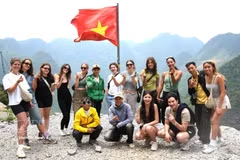
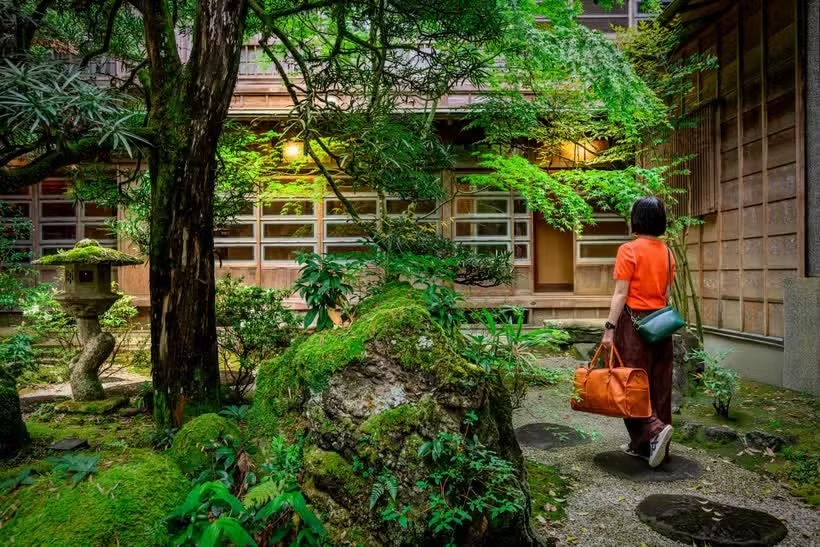
Tourists tend to prioritise trips that allow them to immerse themselves in nature.
(Illustrative photo: VietnamPlus)

Many are already changing their travel habits. To reduce waste, 49% of Gen X, 58% of Millennials and 53% of Gen Z said they recycle or avoid single-use plastics while travelling. Meanwhile, 39% of Gen X, 40% of Millennials and 35% of Gen Z prioritise shopping at local stores and independent businesses.

Booking.com said sustainability is increasingly influencing accommodation choices as travellers adopt environmentally friendly practices throughout their journeys.

Based on a survey of 32,500 travellers across 35 markets, including Vietnam, the report found that while sustainable travel is valued across all age groups, each generation expresses it differently.

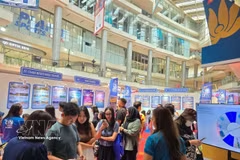
Among Vietnamese respondents, 37% of Gen X, 42% of Millennials and 47% of Gen Z have joined tours or activities that engage with local communities and cultures. More than one-third have also participated in activities supporting environmental protection and wildlife conservation.
credits-bookingcom-gettyimages-sustainability-report-20263.jpg
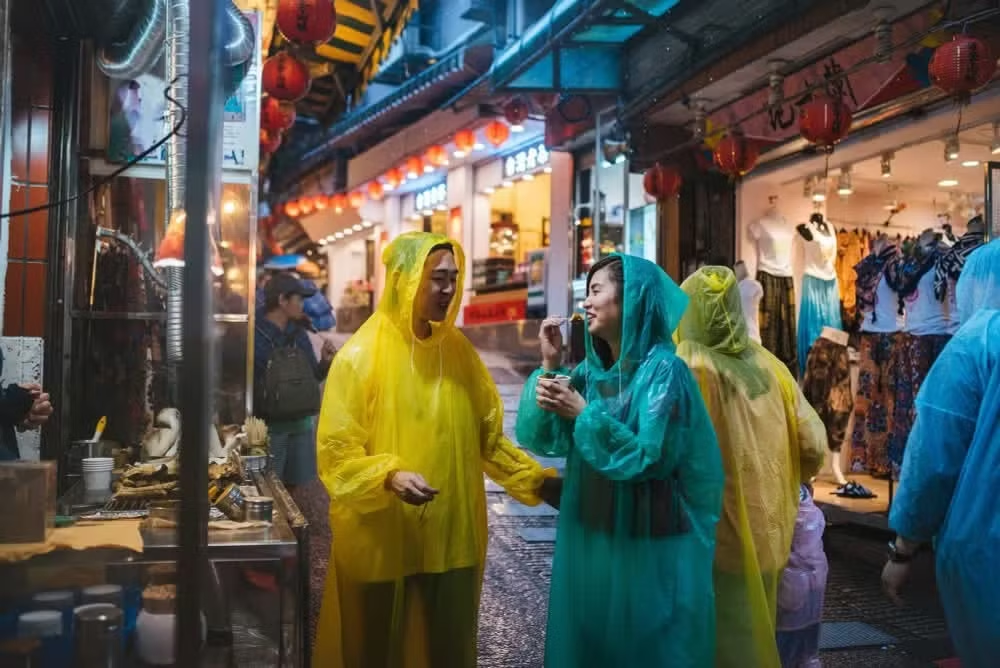
Vietnamese people prioritise choosing locally sourced food when travelling. (Illustrative photo: VietnamPlus)

Sustainable accommodation is gaining popularity, with 35% of Gen X, 35% of Millennials and 37% of Gen Z planning to stay at certified properties. Nearly half also intend to reduce energy use while travelling, such as switching off lights and air conditioning when leaving their rooms.

Local and seasonal food is another priority, chosen by 40% of Gen X, 48% of Millennials and 44% of Gen Z, while reusable water bottles are used by 35%, 37% and 43%, respectively.

However, financial support for lower-emission air travel remains limited, with only 26-30% of respondents contributing to carbon offsetting or sustainable aviation fuel initiatives.

Climate concerns reshape travel choices

Extreme weather is increasingly influencing where and when Vietnamese people travel. About 82% said they consider climate risks when selecting destinations and travel dates, while 81% avoid destinations known for severe weather.
credits-bookingcom-shutterstock-studios-sustainability-report-2026.jpg
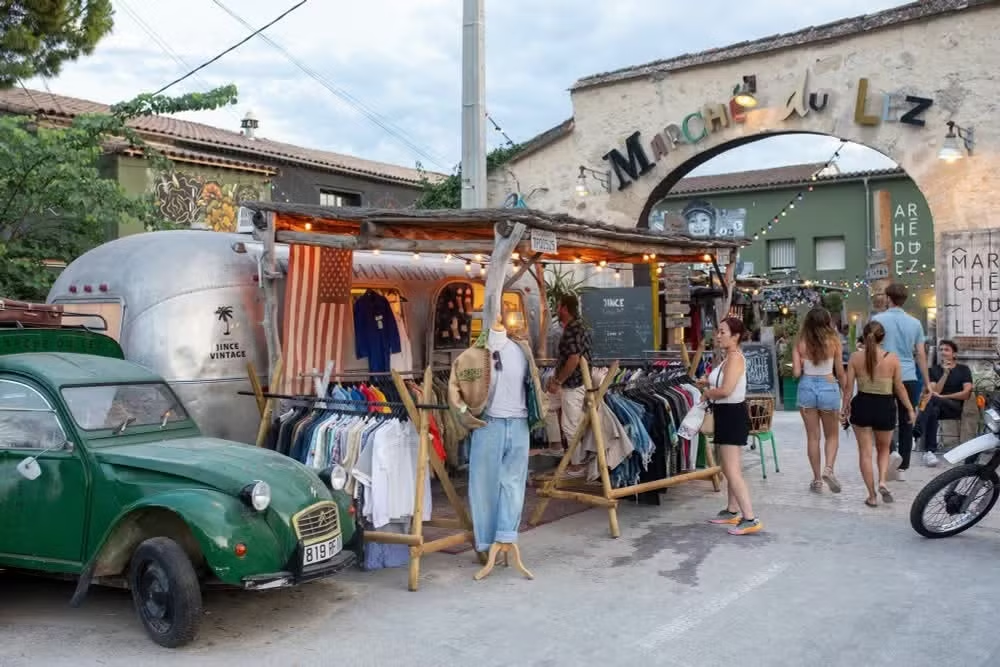
Visitors prefer tours or activities that engage with local communities and cultures. (Photo: VietnamPlus)

Some 73% said weather-related concerns cause stress during trip planning, and 71% found unpredictable weather makes it harder to decide when to travel.

Notably, 58% reported cancelling or changing travel plans over the past year because of extreme weather or natural disasters, including heatwaves, storms, wildfires and floods.

More than half (52%) said some destinations have become too hot to visit at their preferred time of year, while 77% have removed destinations from their wish lists after learning about extreme weather or disasters there.

Beyond choosing sustainable accommodation and reducing waste, energy use and impacts on wildlife, Vietnamese travellers are making more conscious decisions about where and when to travel.

The report found that 40% plan to avoid overcrowded destinations, 35% intend to travel during the off-season, and 31% are looking for cooler destinations.

Among those choosing quieter locations, 55% said they wanted to avoid contributing to overtourism, while 63% of off-season travellers hoped to reduce pressure on popular destinations.

The findings suggest Vietnamese travellers are becoming increasingly aware of tourism's impact on local communities and the environment, reflecting a broader shift towards more sustainable travel in 2026./.
VNA

See more

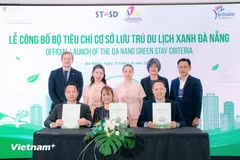
The Da Nang Hotel Association and accommodation establishments sign a commitment to work together to implement the Da Nang Green Stay Criteria. (Photo: VietnamPlus)

Da Nang introduces criteria for green tourism accommodations

The criteria comprise 219 green standards covering environmental protection, human resources and training, green consumption, visitor experiences, energy efficiency, low-carbon emissions, recycling, biodiversity conservation, native plant species, wastewater management, food safety and the reduction of food waste.

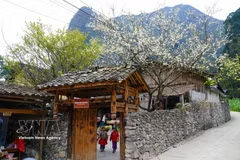
A Lo Lo ethnic minority house in Lo Lo Chai village, Tuyen Quang province. (Photo: VNA)

Tuyen Quang turns cultural heritage into a driver of sustainable tourism

Lo Lo Chai village, beneath the Lung Cu Flag Tower, is a vivid example of how cultural preservation can support tourism development. Traditional rammed-earth houses, costumes, festivals, cuisine and the daily life of the Lo Lo ethnic community have become key elements of the village’s tourism appeal.

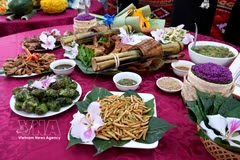
A meal imbued with the distinctive cultural identity of the Thai ethnic community in Dien Bien province. (Photo: VNA)

Cuisine key to boosting Vietnam’s tourism brand

Cuisine should be viewed not merely as food but as a cultural resource, creative asset and driver of economic development amid the country's efforts to promote innovation, digital transformation, private-sector development, tourism and cultural industries.

Fansipan dons a vibrant facade to usher in the Northwest's brilliant autumn festival season this September

Immerse in vibrant colours on the Roof of Indochina this autumn

Fansipan has long been a must-visit destination for anyone exploring Vietnam’s Northwest. The journey to conquer the "Roof of Indochina" typically begins with a spectacular cable car ride soaring above the clouds. Nestled at the foot of the cable car station, Ban May Village welcomes visitors as a charming stopover, showcasing a different beauty in every season of the year.

Streets adorned with national flags to celebrate Vietnam's National Day on September 2nd

A journey through southern Vietnam during National Day

In the days surrounding National Day, the red flag with its five-pointed golden star appears across city streets, outside homes and on public buildings. For Vietnamese people, it is one of the most significant occasions of the year. For international visitors, it also offers a rare opportunity to observe, more vividly than usual, the connection between history, national pride and everyday life in contemporary Vietnam.

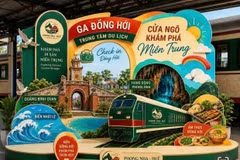
A new railway tourism service linking the former imperial city of Hue with Phong Nha-Ke Bang National Park is scheduled to begin operation on September 1. (Photo: hanoimoi.vn)

Tickets for Hue–Phong Nha tourist train go on sale

Rather than serving solely as a means of transport, the railway service will become an integral part of the tourism product, connecting Hue with Quang Tri’s historical, cultural and natural attractions, as well as Phong Nha-Ke Bang National Park.

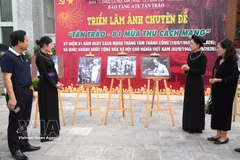
Visitors listen to an introduction to the thematic photo exhibition on Tan Trao and 81 autumns of revolution at the ATK Tan Trao Museum in Tuyen Quang province. (Photo: VNA)

Tuyen Quang's Tan Trao builds cultural-tourism brand around National Day celebrations

Hoang Van Canh, Standing Vice Chairman of the Tan Trao People’s Committee, said National Day is an occasion for local people to recall the nation’s glorious traditions and pay tribute to President Ho Chi Minh, revolutionary predecessors, fallen heroes and all those who sacrificed their lives for the independence and freedom of the Fatherland.

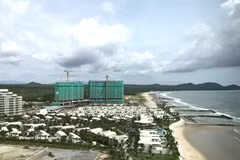
A host of tourism projects in the Ho Tram area of Ho Chi Minh City are helping shape a “world-class tourism hub”. (Photo: VNA)

Ho Chi Minh City tourism takes lead in expanding into international markets

Nguyen Cong Vinh, Vice Chairman of the municipal People's Committee, said tourism programmes combining air travel, trade, shopping, conferences, exhibitions, resorts, entertainment and cultural experiences should form an integrated service chain, increasing added value while extending visitors’ stays and boosting their spending. The tourism sector must strengthen resource sharing and work together to develop interconnected products capable of competing at both national and international levels.

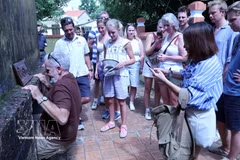
Tourists explore Ky Anh Tunnels, Da Nang city. (Photo: VNA)

Vietnam finds ways to lure international tourists

Vietnam welcomed about 12.3 million international visitors in the first six months of 2026, up nearly 15% year-on-year, with China and the Republic of Korea remaining the two largest source markets. However, experts noted that growth in visitor numbers should go hand in hand with improvements in spending, length of stay, satisfaction and environmental and cultural sustainability.