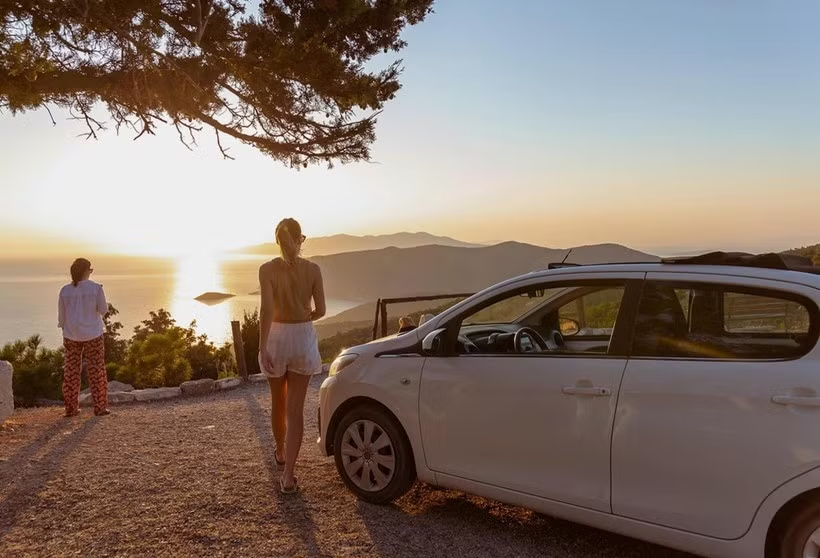
Hanoi (VNA) – Vietnamese travellers are increasingly looking for journeys that reflect their personal identity. Road trips offer exactly that: the freedom to set one’s own pace, choose spontaneous detours, and fully control travel experiences.
Often associated with a spirit of exploration and independence, road trips have become a popular travel style, especially in spring, considered one of the most beautiful seasons to hit the road. From cloud-covered mountain passes in northern Vietnam to long forest routes stretching across the Central Highlands, the journey itself is often just as captivating as the destination.
For travellers who enjoy long, adventurous drives rather than simply stopping for scenic views, Ha Giang Loop, often called the golden route of Northeast tourism, is an ideal choice.
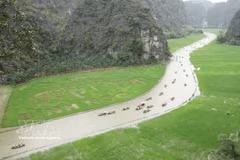
This circular route, stretching around 300–350 km, connects major destinations in Ha Giang province. It leaves a lasting impression with its breathtaking landscapes of towering limestone mountains, layered terraced rice fields, and winding mountain passes that seem to fold along the rugged terrain.
From March to April, Ha Giang takes on a particularly gentle and colourful charm as cherry blossoms, kapok flowers, plum blossoms, and pear blossoms blanket the mountainsides. The Dong Van Karst Plateau, recognised by UNESCO as a Global Geopark, becomes even more spectacular under the soft sunlight of spring.
Branavan Aruljothi, Country Manager of Booking.com in Vietnam, noted that 82% of Vietnamese Gen Z travellers said they are willing to use self-driving vehicles or AI tools to design their travel routes. The winding roads of Ha Giang appear perfectly suited for this generation seeking adventure and a chance to disconnect from the fast pace of everyday life.
Hai Van Pass, also known as the “Sea of Clouds Pass,” lives up to its name with dramatic mountain roads overlooking the blue sea and clouds drifting at eye level. The pass connecting Da Nang and Hue has long been considered by travel enthusiasts as one of the most spectacular driving routes in the world.
March is an ideal time for exploration as the central coastal region enjoys a pleasant transitional season, when the chill of winter fades while the summer heat has yet to arrive.
Travellers can stop at Hai Van Gate at the summit to explore historic remains, breathe in the salty sea breeze, and take in the magnificent scenery. Continuing the trip to the North towards Hue, the former imperial capital known for its garden houses and cultural heritage, provides a perfect pause before beginning another journey.
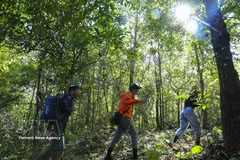
Running nearly 790 km through forests, high mountain passes, and vast plateaus, the Truong Son Dong route offers a glimpse of Vietnam in its raw and peaceful form.
Along the journey, travellers can detour to K50 Waterfall, considered one of the most magnificent remote waterfalls in Vietnam, located deep within the Kon Chu Rang Nature Reserve.
Another unique stop is the former So Phai military airstrip. Once used as a strategic logistics site, it has now been transformed into a long concrete runway stretching across the wilderness, creating a surreal and mysterious landscape that invites travellers to stop and explore.
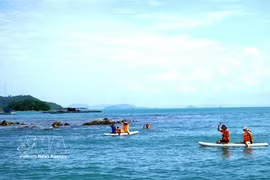
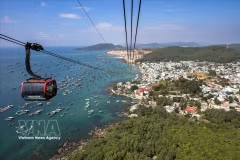
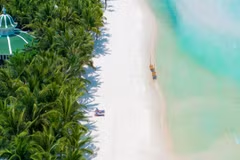
While mountain routes impress with their grandeur, the coastal road around Nui Chua connecting Cam Ranh and Vinh Hy offers a different experience, a harmony of sunshine and sea. Provincial road DT702 is often regarded as one of the most beautiful coastal drives in Vietnam, where the rugged cliffs of Nui Chua National Park descend dramatically into the turquoise waters of Vinh Hy Bay.
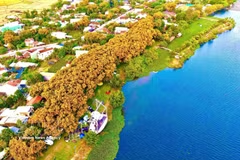
Along this picturesque route, stops such as Chuoi Beach, Kinh Beach, Nuoc Ngot Beach, Vinh Hy Bay, and Thai An vineyards encourage travellers to slow down and savour the scenery.
According to Aruljothi, a Booking.com survey found that 93% of Vietnamese travellers enjoy flexibility and spontaneity during their trips. This coastal route perfectly matches that preference, allowing visitors to turn off toward hidden beaches or stop unexpectedly at roadside seafood stalls to enjoy grilled lobster and fresh grapes.
Aruljothi said that travelling along scenic routes allows visitors to experience Vietnam in a completely different way. He noted that Booking.com’s Travel Predictions 2026 report indicates travellers today are no longer simply looking for destinations but are seeking journeys that reflect who they are, how they connect with the world, and the emotions they wish to experience. Road trips provide exactly that, offering the freedom to set one’s own pace, choose different routes, and shape the entire travel experience./.