Vietnam’s exports surge, led by processing industries

The United States remained Vietnam’s largest export market with turnover reaching 57.2 billion USD.

Vietnam’s exports surge, led by processing industries

Hanoi (VNA) – Vietnam’s exports continued to grow strongly in the first five months of 2025, with processed industrial goods as the main driver, according to the Ministry of Industry and Trade.

gao.jpg
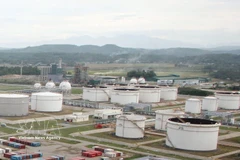
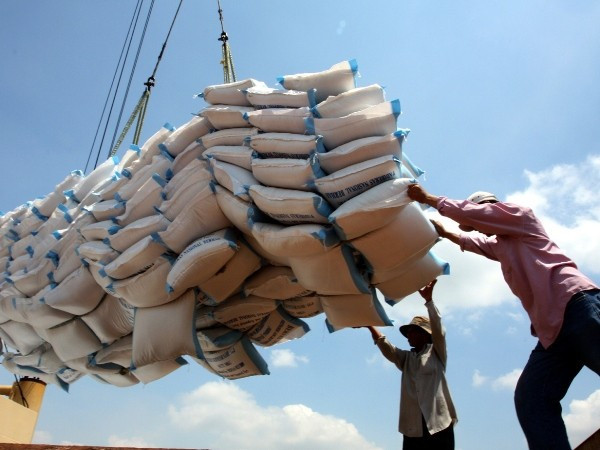
In the first five months of 2025, 25 export items post export revenue of over 1 billion USD (Photo: VNA)

Exports maintain double-digit growth

In the context of rising global uncertainty, trade conflict and increasing protectionism, Vietnam's foreign trade maintained impressive momentum. In the first five months, the country’s total export revenue reached 180.23 billion USD, up 14% year-on-year, while imports stood at 175.56 billion USD, resulting in a trade surplus of 4.67 billion USD.

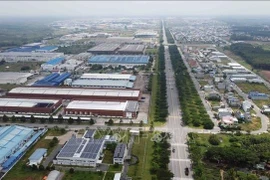
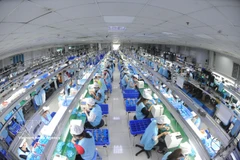
Processed industrial goods brought in nearly 153 billion USD, up 14.5% compared to the same period last year. This group continued to serve as the backbone of national export growth, with key items such as textiles, footwear, computers, electronics and machinery recording strong increases.

Computers and electronic products alone earned 38.4 billion USD, up 39.7%; machinery and equipment brought in 22 billion USD, rising 16.4%; and wood products fetched an estimated 6.8 billion USD, up 8.6%. Overall, 25 exports posted expert revenue of over 1 billion USD, accounting for 90% of total export turnover, including seven exceeding 5 billion USD.

2-doanh-nghiep.jpg
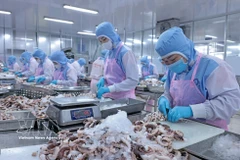
Enterprises meet high standards to boost exports. (Photo: VietnamPlus)

Agricultural and aquatic exports also maintained robust performance, estimated at nearly 17.7 billion USD, up 15.8% year-on-year. Many commodities in this group recorded notable growth despite falling volumes, thanks to strong price increases. For instance, coffee exports dropped 0.6% in volume but rose 62.3% in value, pepper down 22.5% in volume but up 40.5% in value, and cashew kernels fell 5% in volume but surged 19.4% in earnings.

Diversifying markets, minimising risks

Exports to most major markets grew positively. The United States remained Vietnam’s largest export market with turnover reaching 57.2 billion USD. The EU followed with 23 billion USD, up 12% year-on-year, and China came next with 23.5 billion USD and 3.2%. Shipments to the Republic of Korea and Japan reached 11.37 billion USD and 10.56 billion USD respectively, both growing over 10%.

Meanwhile, Vietnam spent 175.56 billion USD on imports in the first five months, up 17.5% from a year earlier.

Notably, imports of production-related goods such as machinery, equipment, and raw materials reached nearly 156.5 billion USD, and accounted for 89% of the total value in the five-month period, up 17.8% year on year.

Imports of computers, electronics and components rose 38.3% to 56 billion USD, while machinery and equipment imports reached 22.89 billion USD, up 22.7%. Other materials such as plastic resins, fabrics, and inputs for textiles and footwear also increased to support domestic production and export demand.

The foreign-invested sector posted a trade surplus of 17.09 billion USD, while the domestic sector ran a deficit of 12.42 billion USD. In the same period last year, the country had a higher trade surplus of 8.71 billion USD.

To sustain growth in the face of global market fluctuations, the Ministry of Industry and Trade said it is prioritising negotiations with the United States towards a sustainable trade agreement, resolving issues such as reciprocal tariffs, and expanding the use of free trade agreements to diversify markets and boost exports.

The ministry is also stepping up market information efforts to help industry associations and enterprises adjust their production plans and explore new markets in a timely manner.
3-doanh-nghiep.jpg
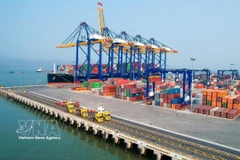
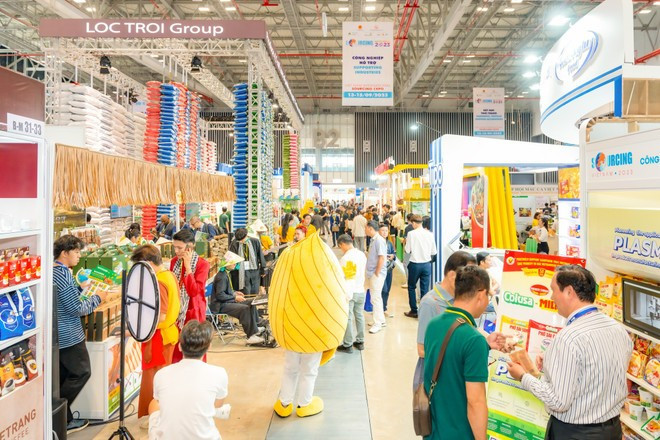
Vietnamese businesses take part in international trade fairs to expand export markets. (Photo: VietnamPlus)

Vietnamese trade officials urged businesses to raise domestic competitiveness, improve resilience, and diversify supply chains to reduce dependency on any single source of raw materials or intermediate goods.

They also encouraged companies to expand into niche markets through new-generation FTAs and to stimulate domestic demand through consumption-driven policies.

Efforts are also underway to accelerate the signing of new FTAs to access untapped potential markets, with Canada cited as a promising example./.
VNA

See more

Milk collection at a dairy farm operated by Vinamilk at the Nhon Tan concentrated farming zone in An Nhon Tay commune, Gia Lai province. (Photo: VNA)

Self-reliance in raw materials fuels Vietnam’s dairy growth

The strategy targets annual industry growth of 12-14% by 2030, with processed liquid milk output reaching 4.2 billion litres annually. Domestic fresh milk production is projected to hit 2.6 billion litres per year, meeting 60-65% of processing demand, while milk powder output is expected to reach 245,000 tonnes annually. Per capita milk consumption is targeted at 40 litres per year.

Quang Ninh gives in principle approval to first offshore wind power plant

Quang Ninh gives in principle approval to first offshore wind power plant

Covering an area of 11.95 ha of land and water surface, the project is expected to have a designed capacity of 50 MW and will be implemented in nearshore waters of the Co To special zone. Its key components include wind turbines, a substation, a 110kV transmission line, and related auxiliary facilities.

At Nghi Son 2 thermal power plant in Thanh Hoa province. (Photo: VNA)

Vietnam’s national standards strategy for 2026–2035 approved

The strategy envisions a modern, open standards system welded to international norms, serving as a piece of soft institutional infrastructure, a policy tool and a technical backbone for state governance. It also casts standards as an engine of innovation, digital transformation, green transition and sustainable development.

Shrimp harvesting in Ca Mau province (Photo: VNA)

Vietnamese shrimp sector seeks distinct path in global race

Nguyen Duy Hoa, Deputy Technical Director of Cargill Vietnam, said Vietnam cannot compete with Ecuador on costs nor match India in scale. Instead, the country should focus on value rather than volume or price competition, prioritising quality improvement, technology adoption and value-added products.

Wind turbine No. 3 at the V1-3 site of the Duyen Hai Wind Power Plant in Truong Long Hoa ward, Vinh Long province.(Photo: VNA)

Retail market seen driving double-digit growth

Domestic consumption is being regarded as one of the key drivers for sustaining economic growth. Following the Government’s Resolution No. 88/NQ-CP on promoting the domestic market and stimulating consumption, many retailers have accelerated the expansion of distribution systems, invested in technology and improved supply chains.

Cargo containers are handled at Gemalink International Port, Ho Chi Minh City. (Illustrative photo: VNA)

Government delegation for international economic, trade negotiations established

The delegation is tasked with assisting the Prime Minister in directing ministries, sectors and localities in the negotiation, signing, coordination of ratification and approval, as well as implementation of international treaties and agreements on economic and trade matters involving the Vietnamese State and Government.

Lotte Mart Vietnam is currently distributing around 900 private-label products manufactured in Vietnam under the retailer’s strict quality control. (Photo: VNA)

RoK steps up trade cooperation with Vietnam, Malaysia

The Korean business delegation's trip aims to provide Korean firms with information on import – export trends across the ASEAN region and developments in local markets, while also offering opportunities to explore the latest industry trends and technologies.

An overview of the Vietnam-China Green Industry Cooperation and Exchange Programme held in Beijing.(Photo: VNA)

Vietnam, China boost cooperation in green industry development

The Vietnamese Embassy in China, in coordination with the International Cooperation Centre under China’s National Development and Reform Commission (NDRC), on May 18 organised the Vietnam–China Green Industry Cooperation and Exchange Programme in Beijing to strengthen policy exchanges, share experience, and promote substantive cooperation in green industry amid climate change and growing global environmental challenges.

The infrastructure of Thang Long 3 Industrial Park in Phu Tho province is comprehensive and modern, creating favourable conditions for businesses and investors. (Photo: VNA)

Strong economic conglomerates drive domestic economic growth

In manufacturing, THACO has built one of Southeast Asia’s largest automobile and mechanical engineering ecosystems in Quang Nam province, while VinFast has become Vietnam’s first electric vehicle producer, establishing a major factory in Hai Phong, listing on Nasdaq and expanding into North America, Europe and Southeast Asia.

Producing garments for export to the EU market at TDT Thai Nguyen Garment Company. (Photo: VNA)

Vietnam’s textile industry draws high-tech FDI amid green, smart shift

With export turnover rising steadily in recent years and a target of 50 billion USD by 2026, Vietnam remains among the world’s top three textile exporters. Beyond its traditional appeal as a low-cost manufacturing base, the country is now positioning itself as a strategic hub for high-value and technology-driven investment.

An FDI enterprise invests in factory facilities at Chau Duc Industrial Park, a project spanning approximately 2,290 ha. (Photo: VNA)

Ho Chi Minh City targets next-generation, high-value FDI

The southern economic hub attracted nearly 3.3 billion USD in FDI during the first four months of 2026, marking a sharp year-on-year increase of 227.1%. The total included 539 newly licensed projects with registered capital exceeding 791.8 million USD and 58 existing projects adding 259.3 million USD in supplementary investment.

The VinFast electric vehicle charging station at the CT1 apartment complex of 103 Hospital in Hanoi. (Photo: VNA)

Vietnam accelerates drive to master EV technologies

By the end of 2025, Vietnam had established 28 standards and technical regulations related to charging stations, charging equipment and batteries. The legal framework is expected to be fully completed in the third quarter of 2026.

Duyen Hai Wind Power Plant in Truong Long Hoa ward, Vinh Long province. (Photo: VNA)

Energy sector seen as key pillar for Vietnam’s green, double-digit growth ambitions

Chairman of the Vietnam National Industry-Energy Group (Petrovietnam) Le Ngoc Son said Vietnam’s energy demand will continue rising sharply, creating enormous pressure on power generation investment. To sustain GDP growth of around 10%, electricity demand is expected to increase by 12-15% annually, requiring an additional 7,000-8,000 MW of new capacity each year.

A view of the Lien Chieu Container Port construction project in Da Nang city (Photo: VNA)

Logistics set to drive Vietnam’s rise in global supply chains

Amid sweeping restructuring in global trade driven by digitalisation, green transition and geopolitical shifts, logistics is no longer a back-end function. It is increasingly a decisive factor in economic performance, especially as Vietnam deepens integration into international supply chains. The challenge now extends beyond faster delivery to building a modern and interconnected logistics ecosystem capable of organising supply chains at a regional scale.