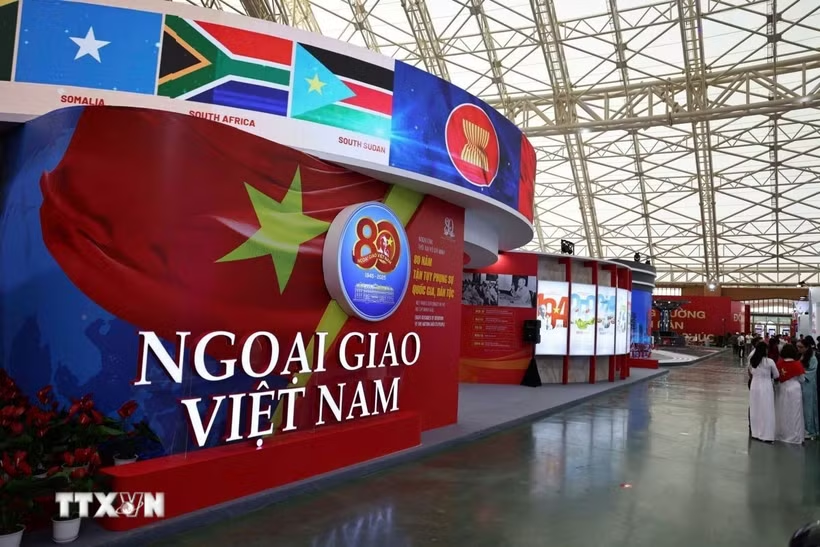
Hanoi (VNA) – Vietnam’s foreign affairs in 2025 recorded outcomes of strategic and long-term significance as the country effectively seized opportunities, addressed challenges and helped shape a new external complexion amidst profound global volatility.
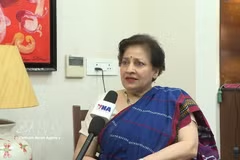
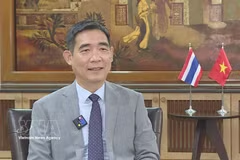
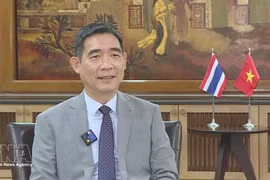
Granting an interview to VietnamPlus, Minister of Foreign Affairs Le Hoai Trung said 2025 was one of the most turbulent years in recent history, marked by heightened instability, conflicts in multiple regions and deep shifts described in the 14th National Party Congress documents as “changes of an epochal nature”.
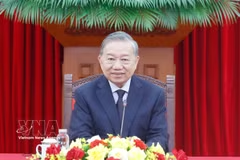
Against that backdrop, he said, foreign affairs efforts in 2025 showed the highest sense of responsibility to realise the strategic tasks of “maintaining a peaceful and stable environment, promoting fast and sustainable socio-economic development, and improving people’s life quality, all for the sake of the people” as underscored by Party General Secretary To Lam.
The official highlighted that a defining achievement of the year was the upgrade and expansion of relations with partners. Vietnam elevated ties with 17 countries, bringing the total number of partners at the comprehensive partnership level or higher to 42. Nearly 350 cooperation agreements were signed, 2.5 times higher than in 2024, reflecting a strong focus on substance and effectiveness. Relations with political parties were also consolidated while people-to-people diplomacy continued to expand in diverse forms.
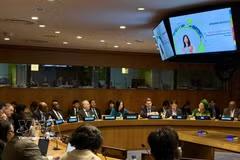
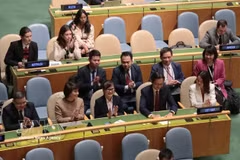
On the multilateral front, Vietnam further affirmed its sense of responsibility and commitment at a time when multilateral institutions faced mounting challenges. The country made substantive contributions to shaping norms and orientations at international mechanisms. It was commended for actively engaging in peacekeeping operations, search and rescue, energy and food security safeguarding, and governing roles at the UN Human Rights Council and six out of seven UNESCO mechanisms. Vietnam also successfully hosted major multilateral events such as the ASEAN Future Forum, the P4G Summit and the signing ceremony for the UN Convention against Cybercrime, thus reinforcing its role, credibility and organisational capacity, he noted.
Economic diplomacy continued to play a pioneering role, contributing to the realisation of the national growth target of 8%. External economic activities were closely integrated into high-level diplomatic events. As a result, a record number of commitments were achieved, helping expand markets, attract investment and enhance Vietnam’s position in regional and global supply chains.
Science – technology diplomacy emerged as a spearhead, supporting innovation, digital transformation, green transition and the implementation of 11 strategic technology areas, according to Trung.
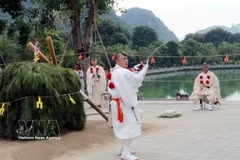
Foreign affairs also helped strengthen Vietnam’s soft power, he went on, elaborating that cultural diplomacy was deployed in a more methodical and impactful manner, with the successful organisation of the UN Day of Vesak celebrations and the UNESCO recognition of seven new more elements in 2025, raising Vietnam’s total to 77. The external relations information work became more proactive, promoting the national image while safeguarding the ideological foundation and national interests.
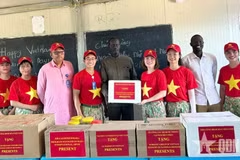
Citizen protection efforts were carried out promptly in hotspots, enabling thousands of Vietnamese nationals to return home safely. Work related to overseas Vietnamese communities helped foster patriotism and national pride while encouraging remittance inflows that reached a record high and became an important development resource.
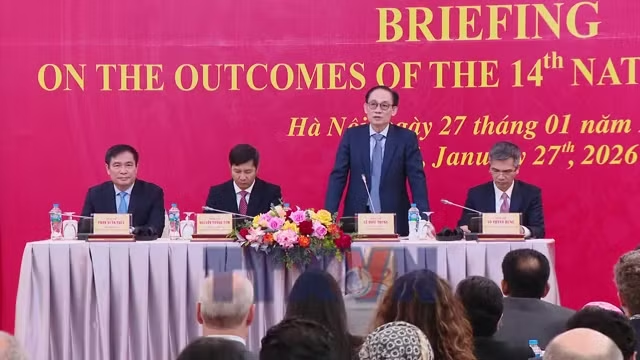
The Foreign Minister noted that alongside performing tasks, the diplomatic sector underwent significant apparatus restructuring, reducing 42.5% of units. It assumed duties related to the Party’s foreign affairs and part of the National Assembly’s external relations responsibilities. Many important legal frameworks were also advanced, including the amended laws on international treaties and nationality, as well as National Assembly Resolution 250 on special mechanisms and policies to enhance international integration effectiveness, thereby reinforcing the institutional basis for foreign relations.
Trung emphasised that the 14th National Party Congress’s designation of foreign affairs, alongside national defence and security, as a “key and regular” task reflects a shift in the strategic mindset rooted in Ho Chi Minh Thought on diplomacy. This position underscores foreign affairs as a matter of national survival, prosperity and long-term development. Given this, the diplomatic sector is aware that promoting foreign affairs and international integration is a shared responsibility of the entire Party, people, and armed forces – one of the whole political system, rather than any single institution.
Looking ahead, the minister said that Vietnam’s diplomatic sector will focus on three major orientations – safeguarding peace, stability and national independence, sovereignty, unity and territorial integrity through close coordination with defence and security forces, as well as minsitries, sectors, and localities nationwide; maximising external resources and favourable conditions – particularly through economic and technology diplomacy – to support the realisation of development goals and the two centenary objectives for 2030 and 2045; and helping enhance Vietnam’s international role, stature and credibility so that the country can stand shoulder to shoulder with global powers.
To implement the Politburo’s Resolution 59-NQ/TW on international integration in the new context, four groups of breakthrough solutions will be prioritised. These include shifting the integration thinking from “receiving assistance to making contributions”, from “extensive integration to full integration”, and from “starting late to taking the lead in new areas”.
Other groups of solutions are to draft and issue special mechanisms to boost comprehensive and effective integration into the world in different fields; strengthening coordination among Party diplomacy, State diplomacy and people-to-people diplomacy; and promoting a strong implementation culture that prioritises feasibility, substance and alignment of domestic institutional frameworks with international commitments.
To build a comprehensive, modern and professional diplomatic service, the Ministry of Foreign Affairs will focus on thoroughly grasping the Party and State’s guidelines; building a contingent of capable and moral personnel at place interests of the Fatherland and the people above all else; comprehensively developing the Party diplomacy, State diplomacy and people-to-people diplomacy, along with political, economic and cultural diplomacy, with businesses and citizens at the centre of service delivery.
Cultural diplomacy will continue to be an important pillar in enhancing national soft power. In the coming period, efforts will focus on renewing thinking, launching impactful initiatives, deepening international cultural integration, strengthening digital communication, and developing specialised human resources, particularly for overseas missions.
These orientations, Trung said, aim to ensure that Vietnam’s diplomacy remains proactive, resilient and forward-looking, contributing to national development and firmly positioning the country in the new era./.