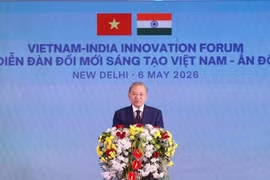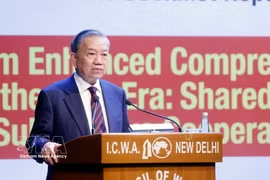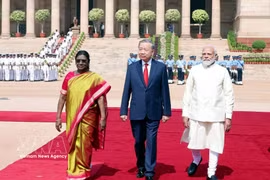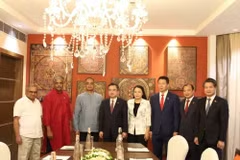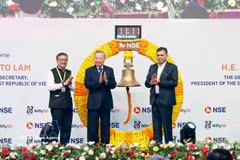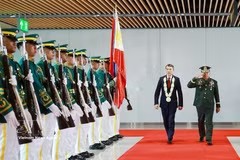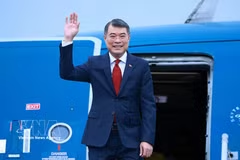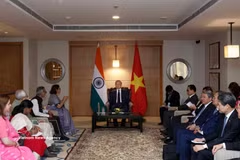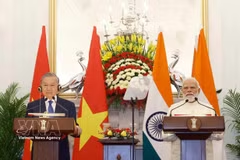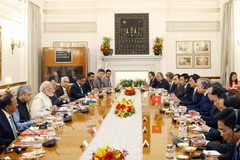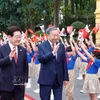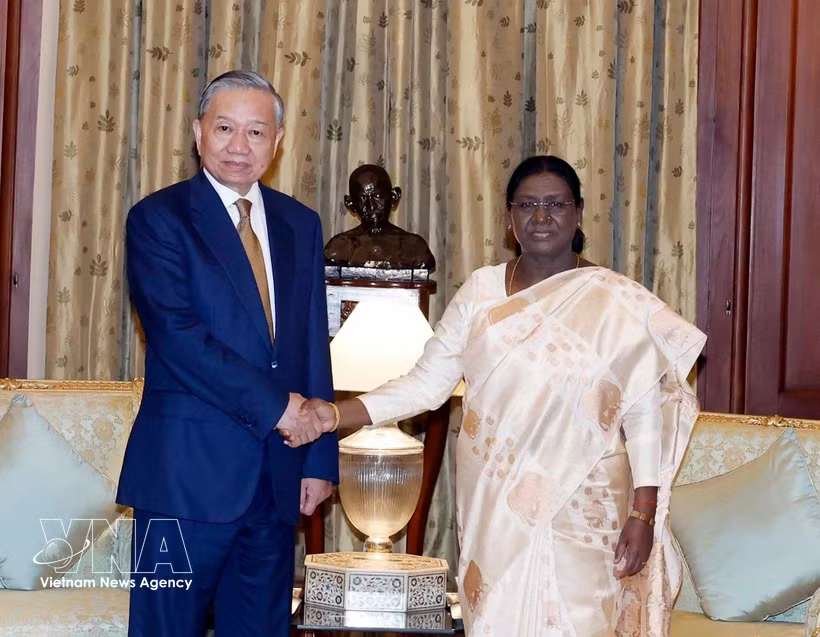
New Delhi (VNA) – General Secretary of the Communist Party of Vietnam Central Committee and State President To Lam met with Indian President Droupadi Murmu in New Delhi on May 6 afternoon (local time) as part of his state visit to India.
President Droupadi Murmu warmly welcomed General Secretary and President To Lam on his state visit to India and congratulated him on being elected State President by the 16th National Assembly of Vietnam.
General Secretary and President To Lam sincerely thanked President Droupadi Murmu, the State and the people of India for the respectful, sincere, and warm reception extended to him and the high-ranking Vietnamese delegation. He expressed his pleasure at returning to the beautiful and tradition-rich country of India. He also congratulated India on its remarkable development achievements and expressed admiration for President Murmu’s role in promoting education initiatives and the development of high-quality human resources in India.
During the meeting, General Secretary and President To Lam reaffirmed Vietnam’s consistent policy of attaching high priority to its relationship with India. Vietnam supports India playing a greater role in regional and international multilateral forums and supports India’s “Act East” policy and closer connectivity with ASEAN countries, he said.
Informing the host about his very successful talks held earlier the same day with Prime Minister Narendra Modi, General Secretary and President To Lam stated that both sides had agreed to further elevate bilateral ties to an “Enhanced Comprehensive Strategic Partnership” based on shared vision, strategic convergence, and substantive cooperation.
The two sides also agreed to strengthen high-level visits and exchanges to consolidate political trust; deepen defence cooperation, particularly in the defence industry; create breakthroughs in economic and trade cooperation; and promote in-depth cooperation in science and technology, including information technology, artificial intelligence, 6G, renewable energy, new technologies, rare earths, and the use of atomic energy for peaceful purposes.
President Murmu appreciated the results of the talks between General Secretary and President To Lam and Prime Minister Narendra Modi. She expressed pleasure that the two sides had upgraded their relationship to an “Enhanced Comprehensive Strategic Partnership” during the visit, which coincided with the 10th anniversary of the Comprehensive Strategic Partnership between the two countries.
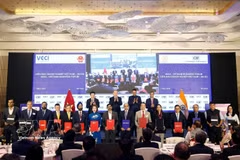
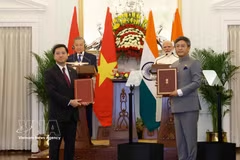
The Indian leader welcomed the signing of numerous cooperation documents in areas such as science and technology, cybersecurity, healthcare, critical minerals, and tourism during the visit of General Secretary and President To Lam. Affirming her strong support for further deepening bilateral ties within the new framework, she emphasised that stronger relations would bring practical benefits to the people of both nations, citing healthcare cooperation will help provide consumers with more high-quality medical products at reasonable prices.
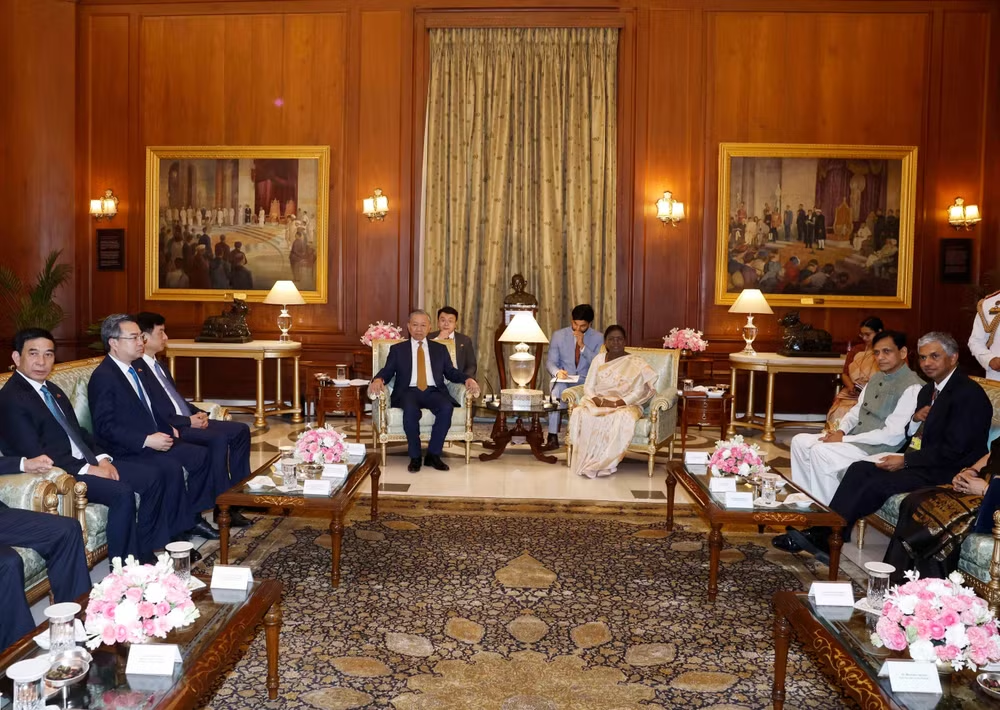
Emphasising that India always regards Vietnam as one of its most important partners in its “Act East” policy and “Indo-Pacific Oceans Initiative,” President Murmu affirmed that Vietnam and India share a long-standing traditional relationship rooted in historical, civilisational, and religious values, which remain evident today. She cited the enshrinement of Buddha relics in Vietnam in 2025, which attracted more than 15 million visitors, and the cultural exchange traces preserved at Vietnam’s My Son Sanctuary.
Expressing thanks for Vietnam’s support in the early completion of the review of the ASEAN–India Trade in Goods Agreement (AITIGA), President Murmu noted that more than 400 Indian investors are currently operating in Vietnam. She expressed her hope that Vietnam would continue facilitating favourable conditions for these investors in the spirit of the Enhanced Comprehensive Strategic Partnership and in accordance with Vietnamese law, while also encouraging Vietnamese investors to invest in India.
General Secretary and President To Lam said he hopes that President Murmu would continue directing cooperation in the aforementioned areas, especially instructing relevant Indian agencies to help increase the frequency of direct flights between Vietnam and India and remove tariff and non-tariff barriers for Vietnamese goods exported to India.
To create a solid foundation for bilateral relations, both sides affirmed the importance of expanding cooperation in culture, religion, people-to-people exchanges, and education. The Indian President pledged continued support for Vietnam within the Mekong-Ganga Cooperation framework, the Indian Technical and Economic Cooperation (ITEC) scholarship programmes, and educational scholarships. She also expressed a desire to see more Indian and Vietnamese tourists visiting each other’s countries.
Discussing regional and international issues, the two leaders agreed to continue close coordination at multilateral forums such as the United Nations and ASEAN. Both sides reaffirmed the importance of maintaining peace, stability, security, safety, and freedom of navigation and overflight, as well as resolving disputes through peaceful means in accordance with international law, particularly the 1982 United Nations Convention on the Law of the Sea (UNCLOS 1982).
On this occasion, General Secretary and President To Lam cordially invited President Droupadi Murmu to visit Vietnam at an early date. The host gladly accepted the invitation, and the timing of the visit will be arranged through diplomatic channels.
Following the meeting, the Indian President hosted a state banquet in honour of General Secretary and President To Lam and the high-ranking Vietnamese delegation. Indian Prime Minister Narendra Modi also attended the banquet./.