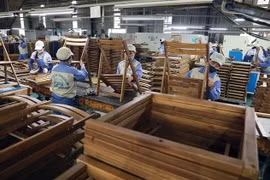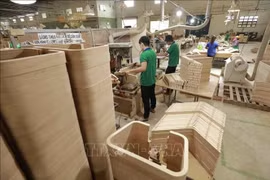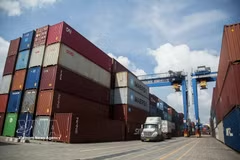
Hanoi (VNA) – Vietnam’s timber and wooden furniture industry has been presented with a major opportunity to expand its global footprint through cross-border e-commerce.
Industry insiders say early birds entering cross-border e-commerce platforms will gain a competitive edge, enabling them to capture market share, accelerate growth, and bring Vietnamese furniture products closer to global consumers.
Vietnam has already established itself as a key pillar in the global furniture supply chain. With strong manufacturing capabilities, particularly in the mid- to high-end segments, Vietnamese enterprises are well positioned to secure a larger share of the international market.
More than 200 leading wood and furniture manufacturers gathered in Ho Chi Minh City for the Wayfair Global Selling Vietnam Summit 2026. The event served not only as a networking platform but also as a clear signal of the industry’s ambition to expand its presence on global e-commerce platforms.
Speaking at the event, Ryan Fitzpatrick, Vice President of Wayfair’s furniture, home décor, and soft home business, reaffirmed the company’s long-term commitment to Vietnam. He said Wayfair has established a dedicated team in Ho Chi Minh City to support local suppliers in navigating the complexities of cross-border e-commerce.
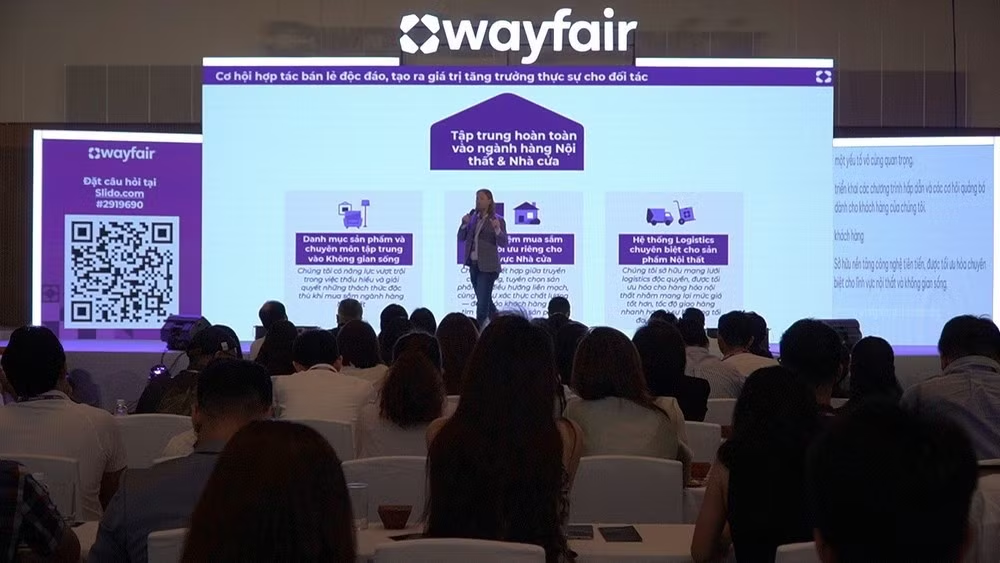
Highlighting Vietnam’s competitive advantages, Wayfair expert Andy Li noted that the country accounts for around 35% of total US furniture imports. Vietnamese suppliers are producing some of the best-quality furniture in the world, he said, adding that unlike many sellers focusing on mass production at low cost, Vietnamese firms prioritise craftsmanship and product refinement - qualities that align well with global consumer demand.
Li also pointed to rapidly evolving shopping habits, with increasing shifts towards omnichannel retail and direct-to-consumer models. These trends, he said, present significant opportunities for Vietnamese businesses to build and strengthen their own brands internationally.

From the perspective of the Handicraft and Wood Industry Association of Ho Chi Minh City (HAWA), standing committee member Tran Lam Son described e-commerce as an inevitable pathway.
This is the shortest route from manufacturers to end consumers, he said, noting that HAWA, with more than 35 years of experience and extensive production data, sees digital platforms as essential for scaling up global market access.
He cited acacia wood (Akasia) as a successful example of Vietnam’s long-term brand-building efforts. Over the past 25 years, HAWA and partner companies have developed the “Akasia” brand, similar to Vietnam’s bamboo and rattan products, and are now looking to elevate its global value through platforms like Wayfair.

Sharing insights from recent overseas working trips, Son noted that Vietnamese-made products account for nearly 50% of goods stored in Wayfair warehouses. However, sales generated directly by Vietnamese sellers remain modest, with most revenue captured by foreign distributors.
“This shows that while Vietnam has strong production capacity and sustainability, we still lag behind in tools, information channels and logistics,” he said, calling for stronger collaboration and clearer strategies to help domestic firms take greater control of global distribution channels.

With HAWA now representing more than 1,000 companies and factories, the association aims to raise Vietnam’s wood and handicraft export turnover from 17 billion USD last year to over 20 billion USD in 2026.
The overarching message from the summit is clear: a “golden window” has opened. Businesses that move early into cross-border e-commerce stand to gain significant advantages, positioning Vietnamese wood products to successfully conquer global markets and reinforce the country’s standing in the international furniture industry./.