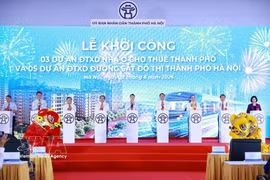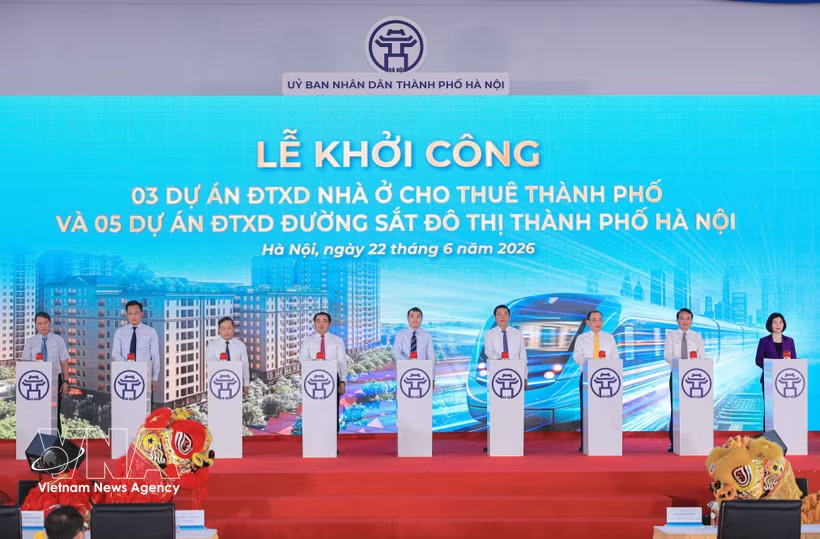
Hanoi (VNA) – The recent simultaneous start of work on three large-scale rental housing projects in Hanoi marks more than an expansion of housing supply; it reflects a significant shift in the capital city’s housing development mindset at a time when soaring property prices have placed home ownership beyond the reach of many workers and young families.
The move aligns with the direction repeatedly emphasised by Party General Secretary and State President To Lam that houses are for living, not for speculation or wealth accumulation, and is expected to broaden people's access to stable residence.
Turning policy into homes
Following guidance from Party General Secretary and State President To Lam and Prime Minister Le Minh Hung on developing rental housing, the municipal People’s Committee has identified this as a long-term strategic priority aimed at ensuring social welfare, diversifying housing options and meeting the increasingly varied needs of residents.
At its recent fourth session, the municipal People’s Council adopted a resolution introducing mechanisms and policies on housing investment, development and support, creating an important legal framework for the city to pursue new approaches to urban housing development.
Chairman of the Hanoi People’s Committee Vu Dai Thang said that based on central policies and local mechanisms, the city has decided to immediately launch rental housing projects using both public and private resources.
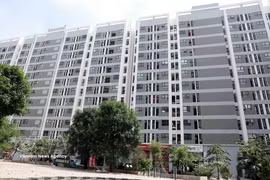
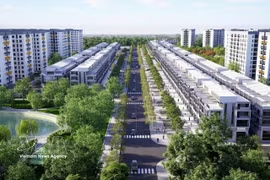
In the short term, Hanoi is implementing the three projects comprising more than 8,000 apartments with a total estimated investment of over 30 trillion VND (1.14 billion USD). They include a rental housing development in the Phap Van – Tu Hiep New Urban Area in Yen So ward, another in Viet Hung ward, and the Him Lam Long Bien mixed-use housing complex developed by Him Lam Group.
Thang said these projects are the first under Hanoi’s rental housing development programme and will lay the foundation for a new housing segment designed to meet evolving housing demand. The ultimate goal is to form a professional, high-quality and reasonably priced rental housing market.
Once completed, they are expected to ease pressure on home ownership, contribute to a healthier and more sustainable real estate market, and align the local housing market with international trends. Future rental housing areas will be integrated with metro lines, employment centres, educational institutions, healthcare facilities and public services to create modern, civilised and convenient urban communities.
Expanding access to stable residence
For years, owning a home in Hanoi has been an aspiration for many families. However, rapid urbanisation and continuously surging property prices have widened the gap between incomes and housing affordability.
With average monthly incomes ranging from 15 million to 25 million VND, many workers, young civil servants, migrant labourers and even middle-income households find it increasingly difficult to access commercial housing.
Although social housing programmes have been expanded in recent years, supply remains insufficient to meet growing demand. Against this backdrop, rental housing is increasingly viewed as a practical solution.
Experts noted that Hanoi’s launch of the three projects represents a concrete step to place the people at the centre of development policies while promoting social welfare and steering the real estate market toward greater sustainability.
For Hanoi, a special-class city with a population approaching 9 million and counting, the development of rental housing has become increasingly urgent. In addition to permanent residents, the city hosts millions of workers, students, professionals and migrants. Without adequate attention to the rental segment, achieving a balanced and sustainable housing market would remain difficult.
Notably, the newly launched projects are designed to serve low-income earners, workers, young people and policy beneficiaries – groups that face the greatest challenges in securing housing.
As Hanoi continues to advance social housing programmes, renovate ageing apartment complexes and promote transit-oriented urban development (TOD), expanding the rental housing stock is set to become a key pillar of its housing strategy.
The launch of the three rental housing projects is not merely about constructing new buildings. It represents the beginning of a more progressive and people-centred housing philosophy, one that prioritises the social value of housing over speculation and places citizens’ right to adequate housing at the heart of urban development./.
VNA