Jakarta (VNA) – The World Bank (WB) has issued a stark warning over five major issues facing Bali, cautioning that Indonesia’s premier tourist island could face long-term risks without swift and effective action.
During a meeting with Bali Governor Wayan Koster in Denpasar on May 24, World Bank Country Director for Indonesia Carolyn Turk highlighted five challenges requiring urgent attention, including wastewater management and recycling, waste management, transportation mobility, clean water supply, and electricity availability in several areas across Bali.
According to the WB, these issues not only threaten Bali’s tourism sector – the backbone of its economy, but also directly affect residents’ quality of life and access to basic services.
Turk stressed that while Bali has become a global destination of choice, the challenge is how to sustain its status as a leading region in the coming years without compromising environmental integrity and sustainable development.
For his part, Governor Koster said infrastructure development has a direct impact on the sustainability of Bali’s tourism sector and therefore requires serious and well-planned policies.
He noted that the local authorities have consistently promoted a clean and healthy environment through policies such as limiting single-use plastics, strengthening waste management at the source, expanding green spaces and mangrove forests, and accelerating the shift toward clean energy.
Bali is also working to reduce reliance on fossil fuels by limiting coal-fired power plants, encouraging electric vehicle adoption, and developing waste-to-energy projects, he added.
Koster said these efforts aim to safeguard Bali’s sustainability across environmental, cultural, and community dimensions.
The WB has proposed that Bali establish a dedicated technical task force to coordinate strategic solutions and risk mitigation plans in the coming time./.
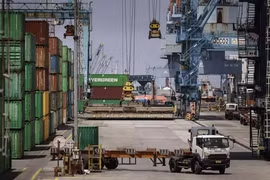
Indonesia faces mounting maritime logistics challenges
For months, domestic shipping routes, particularly those outside Java, have suffered from container shortages, while soaring freight rates have disrupted supply chains and affected businesses and consumers alike.