Buenos Aires (VNA) – Argentine media has highlighted the historic significance of Vietnam’s August Revolution, describing the 1945 general uprising as a decisive turning point that ended colonial and fascist rule, secured national independence and sovereignty, and ushered in a new era in the country’s history.
In an article published on August 19 (local time), Acercándonos Ediciones said the uprising was the culmination of the Vietnamese people’s prolonged struggle against oppression and colonial rule under the leadership of President Ho Chi Minh and revolutionary forces.
The publication said the victory paved the way for the establishment of the Democratic Republic of Vietnam, now the Socialist Republic of Vietnam. On September 2, 1945, President Ho Chi Minh read the Declaration of Independence in Hanoi, proclaiming the birth of an independent Vietnamese state to the Vietnamese people and the world.
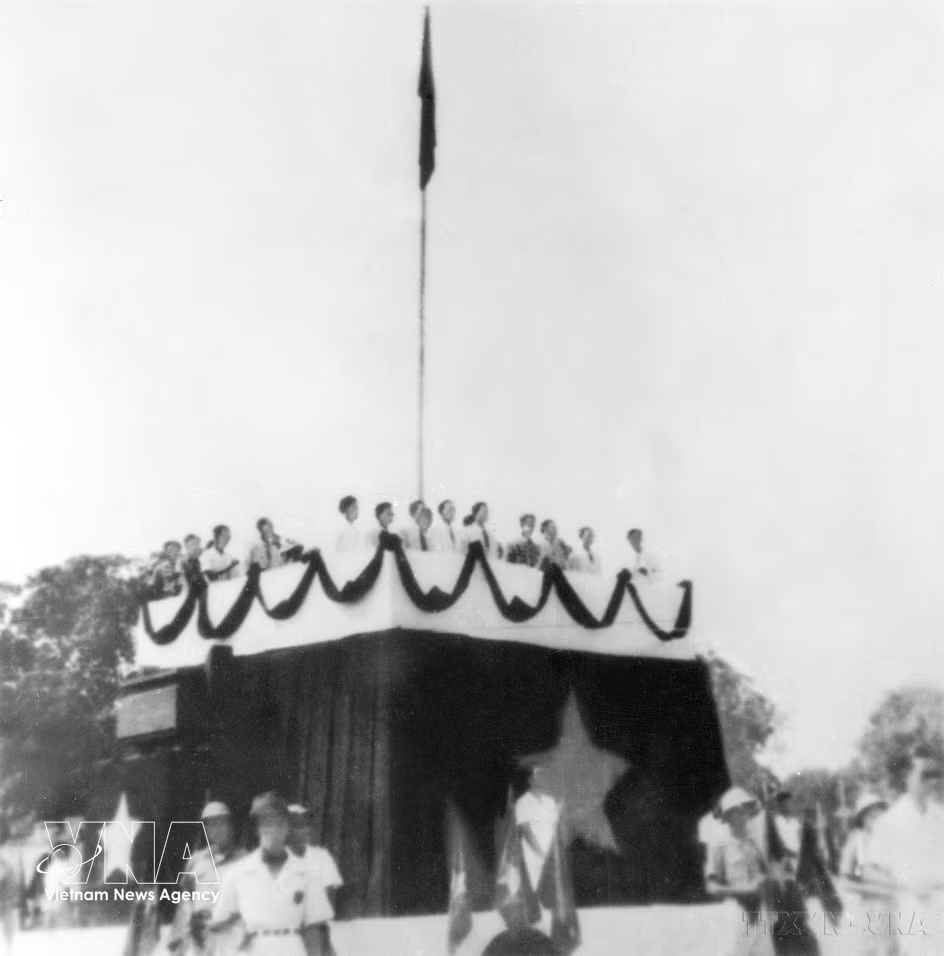
It added that the events of August 1945 not only changed Vietnam’s destiny but also inspired peoples in other countries to rise up and break free from colonial rule.
The article recalled the gradual establishment of French colonial rule in Vietnam from 1858 and numerous patriotic movements that emerged across the country in subsequent decades, reflecting the Vietnamese people’s determination to resist foreign domination.
It particularly spotlighted the development of the revolutionary movement initiated and led by President Ho Chi Minh. On February 3, 1930, Nguyen Ai Quoc, a name used at that time by President Ho Chi Minh, chaired a conference to unite communist organisations and establish the Communist Party of Vietnam, marking a significant turning point in the country’s revolutionary history. In 1941, the Viet Minh Front was set up, bringing together people from different social strata in the struggle for national independence.
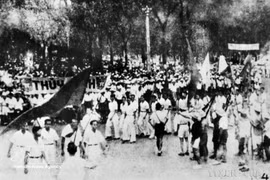
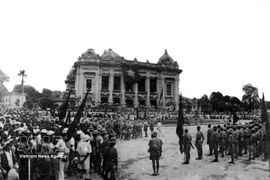
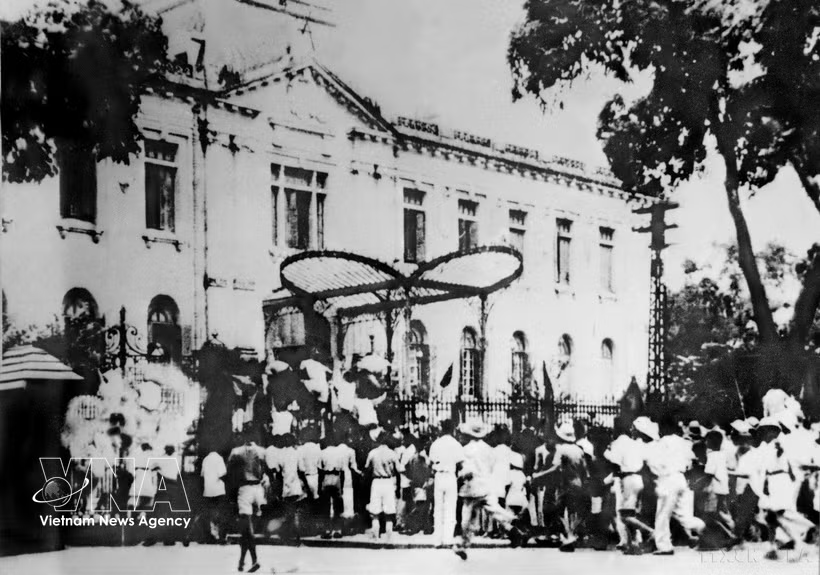
Acercándonos Ediciones noted that following Japan’s surrender to the Allies on August 15, 1945, Vietnamese revolutionary forces quickly seized the opportunity. Revolutionary committees in many localities began taking over administrative functions as the movement to seize power spread nationwide. On August 19 that year, Hanoi’s people seized power, and the victory in the capital quickly created momentum for similar actions across the country.
The writing stressed that the August Revolution was more than a political event, marking the beginning of a new era in which the Vietnamese people regained their dignity, sovereignty, independence and right to live in peace — values secured through the great sacrifices of generations.
It said the revolution also carried broader significance for global national liberation movements, inspiring peoples who were struggling against colonial rule and demonstrating that an oppressed nation could rise up and determine its own destiny.
More than eight decades on, the article continued, the August Revolution continues to be regarded in Argentina as a symbol of Vietnam’s determination to defend its independence and exercise its right to self-determination, with its significance extending beyond the country’s borders and inspiring national liberation movements worldwide./.