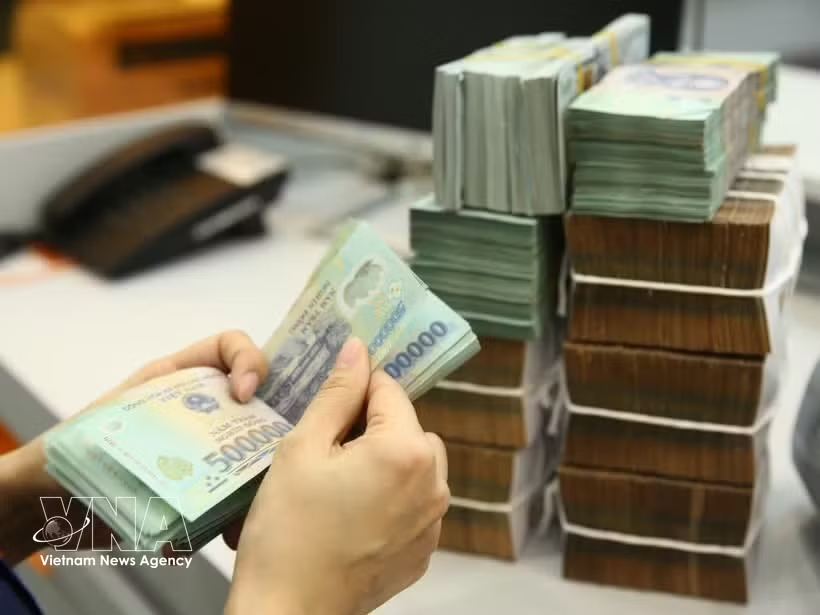
Hanoi (VNA) – Vietnam’s state budget revenue reached an estimated 1,114 trillion VND (42.84 billion USD) in January-April, equivalent to 44% of the full-year plan and up 15.2% from a year earlier, the Ministry of Finance reported on May 4.
While still on track, the ministry flagged that fallout from the Middle East conflict and a suite of fiscal relief measures, including cuts to environmental protection tax, value-added tax, special consumption tax and fees on gasoline and aviation fuel, are starting to chip away at revenue. Collection progress and growth rates across several tax streams have decelerated from the previous year.
The Government is extending tax and fee relief to help firms and households weather production and trade headwinds. Newly introduced reductions cover environmental protection tax, VAT and special consumption tax on fuels. Total exemptions and reductions in the four-month period were estimated at 57.9 trillion VND.
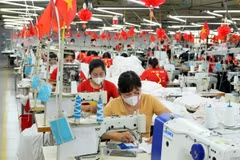
On the revenue structure, domestic receipts were pegged at 991 trillion VND, 45% of the annual estimate and up 17.4% year-on-year. Revenue from State-owned, foreign-invested and private enterprises hit 546.9 trillion VND, making up 53.6% of the estimate and surging 31.2%.
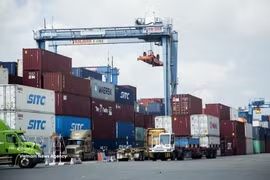
Crude oil revenue came in at about 17 trillion VND, or 39.5% of the estimate, buoyed by an average realised oil price of 80.7 USD per barrel, or 10.7 USD above the budgeted level. Import-export revenue stood at 105.4 trillion VND, or 37.9% of the target.
The ministry has intensified inspections, audits and anti-revenue loss measures. As of April 15, tax authorities had completed 10,200 inspections, recommending financial settlements worth 17.6 trillion VND, while recovering nearly 23.9 trillion VND in tax arrears.
In e-commerce, 235 foreign suppliers registered for tax through the electronic portal, generating an estimated 7.9 trillion VND in revenue, a 112% jump from the same period last year.
Total state budget expenditure in the first four months was estimated at 668.2 trillion VND, 21.2% of the annual target and up 11.6% year-on-year. Recurrent spending accounted for the largest share, reaching 26% of the estimate. Central and local budget balances remain in place.
Spending has met requirements for socio-economic development, national defence-security, state management and debt servicing, while ensuring timely payment of salaries, pensions and social benefits, the ministry said.
Both central and local budget balances are secure. By April 28, the Government had issued 106.3 trillion VND in sovereign bonds with an average maturity of 10 years and an average interest rate of 4.08% per annum./.