Connecting agriculture, tourism to unlock economic development in mountainous areas

Building on the advantages of forests, gardens and indigenous knowledge, Da Nang has an opportunity to develop new value chains linking agriculture with processing and services.

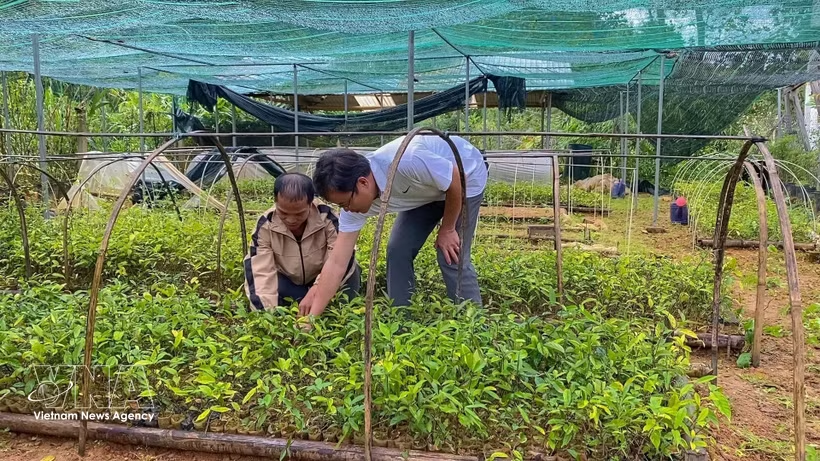
Members of the Anh Duong Herbal Cooperative in Tay Giang commune, Da Nang city, take care of medicinal plants. (Photo: VNA)

Da Nang (VNA) – From medicinal plants grown under forest canopies to processing models and ecotourism, mountainous areas of Da Nang are poised to develop new growth drivers following the administrative merger. However, to turn natural resources into sustainable livelihoods, the central city is striving to shift decisively from agricultural production towards an agricultural economy, with market demand and added value as key measures of success.

Following the merger, Da Nang’s agricultural and forestry development space has expanded significantly. Statistics from the municipal Department of Agriculture and Environment show that the city now has more than 203,000 hectares of agricultural production land, 442 farms, 654 cooperatives and 477 products under the One Commune, One Product (OCOP) programme.

Notably, 19 products have been exported, with export revenue projected to exceed 100 billion VND (3.86 million USD) in 2026. In addition, forests and land used for forestry cover more than 744,000 hectares, including over 688,000 hectares of natural and planted forests, providing a substantial foundation for developing the forestry economy and medicinal plant cultivation.

However, the scale of these resources has yet to translate into commensurate economic returns. Vu Thi Bich Hau, Deputy Director of the Da Nang Department of Agriculture and Environment, stressed that the current priority is not simply to expand production but to improve the quality of development and determine how much value each garden and farm could generate, as well as where there is further room to increase that value.

Growing medicinal plants under forest canopies, combined with livestock farming and ecotourism, is emerging as a key development path for mountainous communes, helping generate income while maintaining forest cover.

In the border commune of Hung Son, medicinal plants and tourism have been identified as breakthrough areas. Nguyen An, Chairman of the commune People’s Council, said the locality is focusing on helping residents cultivate medicinal plants under forest canopies, implementing payments for forest environmental services and exploring mechanisms to generate income from forest resources, including the potential of carbon credits.

The commune has successfully transplanted and trialled Ngoc Linh ginseng, while developing other valuable medicinal plants.

For cooperatives, ensuring short-term income to sustain longer-term investments is a top priority. Bh’ling Mieng, Director of the Loc Troi Agriculture, Medicinal Plants and Tourism Cooperative in Tay Giang commune, said medicinal plants such as “ba kich” (Morinda officinalis How) and Paris polyphylla take around five years to mature for harvesting. Relying solely on income from these crops will make it difficult for growers to sustain production.

The cooperative has therefore combined medicinal plant cultivation with livestock and poultry farming and on-site ecotourism to generate short-term cash flow.

In tourism, although the Loc Troi cooperative has been recognised as a tourist destination, it is not yet able to receive international visitors. Mieng called on the city to introduce an appropriate management framework to allow foreign tourists to stay at ecotourism sites near the border.

Building on the advantages of forests, gardens and indigenous knowledge, Da Nang has an opportunity to develop new value chains linking agriculture with processing and services. When residents can earn a sustainable living from forestry, local products have stable markets and a greater share of value remains within communities, the shift from agricultural production to an agricultural economy will begin to deliver genuinely sustainable development./.

VNA
See more

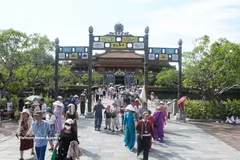
Visitors tour the Hue Imperial Citadel. (Photo: VNA)

Hue cuts heritage site entrance fees to attract more tourists

Under the first scheme, visitors using new tourist transport services to Hue will receive a 50% discount on entrance fees. Eligible services include the Hue – Phong Nha heritage railway, the Hue – Da Nang heritage steam train, and new domestic and international air routes, including charter and scheduled flights. The incentive does not cover existing air routes with increased flight frequencies.

Screenshot of the article. (PhotoVNA)

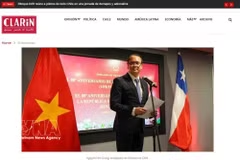
Chilean media spotlight Vietnam’s growing global role

Chilean newspaper El Clarín recently published an interview with Vietnamese Ambassador to Chile Nguyen Viet Cuong, highlighting Vietnam’s foreign policy of independence and self-reliance and international integration, its contributions to regional cooperation, and prospects for bilateral ties as the two countries mark the 55th anniversary of diplomatic relations.

The exchange of a Memorandum of Understanding (MoU) on academic cooperation between the Vietnamese Consulate General in Khon Kaen and College of Asian Scholars. (Photo: VNA published)

Vietnam Studies Centre opens in northeastern Thailand

The centre would serve as a valuable academic hub for teaching and promoting Vietnamese language, culture and history, while fostering people-to-people exchanges and connecting younger generations of the two countries.

Fishing boats enter and leave Quy Nhon port (Photo: VNA)

Gia Lai tightens controls over vessels to combat IUU fishing

Inspections by an inter-sectoral working group identified weaknesses in managing ineligible fishing vessels, controlling vessels entering and leaving ports, seafood traceability, handling violations and implementing support policies for decommissioned vessels, according to the committee.

Construction site for the Ben Thanh - Tham Luong metro project on Cach Mang Thang Tam street (Photo: VNA)

Ho Chi Minh City plans five TOD areas along Metro Line No. 2

According to the Ho Chi Minh City Department of Planning and Architecture, the boundaries of the five TOD areas along Metro Line No. 2 (Ben Thanh – Tham Luong) have been approved, covering a total area of approximately 939 ha. The city is now drawing up plans for these areas.

Russian and CIS tourist groups visit the central city of Da Nang in 2026. (Photo: VNA)

Vietnam gains popularity among Russian tourists

Vietnam recorded the fastest growth in Russian tourist arrivals among mass-tourism destinations in the first nine months of 2026, according to data from the Association of Tour Operators of Russia (ATOR) and Russia’s Federal Security Service (FSB).

The 24th Asian Maritime and Fisheries Universities Forum takes place in Hai Phong city. (Photo: VNA)

Leading Asian maritime universities gather for Hai Phong forum

Vietnam needs engineers, seafarers, experts and managers who can adopt and develop advanced technologies for the maritime industry and future marine economy. That is why Vietnam attaches special importance to international cooperation in education, training and research.

Vietnamese Ambassador to Italy Nguyen Phuong Anh (second from right) poses for a photo with journalists. (Photo published by VNA)

Italian journalists seek to promote positive image of Vietnam

During his visit to Vietnam, freelance journalist Federico Giuliani, a regular contributor to the daily il Giornale, was impressed by the country's landscapes, cuisine, rich cultural traditions, dynamic cities and hospitable people in Hanoi, Hoi An and Ha Long Bay.

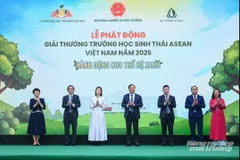
The Ministry of Agriculture and Environment launched the 2026 ASEAN Eco-Schools Award at Tay Ha Noi Primary and Secondary School in Xuan Phuong ward, Hanoi, on the morning of November 13. (Photo: nongnghiepmoitruong.vn)

Vietnam plans to go green by expanding ASEAN eco-schools model

At the launch ceremony, Deputy Minister of Agriculture and Environment Le Trong Yen said schools play an important role in shaping young people's knowledge, character, and habits. Daily practices such as saving electricity and water, sorting waste and caring for trees could help students understand the value of natural resources and their responsibility towards the environment, while spreading positive habits to families and communities.

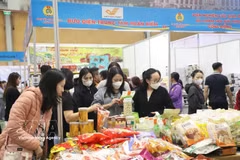
Workers shop at the "Trade Union Tet Market – Spring 2026” in Hanoi. (Photo: VNA)

Hanoi steps up support for workers ahead of Tet

Under a newly issued plan, the “Tet Sum vay – Xuan on Dang” (Tet Reunion – Spring of Gratitude to the Party) and “Cho Tet Cong doan – Xuan 2027” (Trade Union Tet Market – Spring 2027) programmes will be held at four locations from January 18 to 25, 2027.