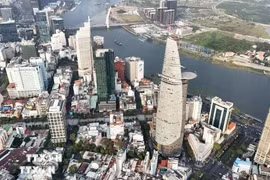
Hanoi (VNA) - Da Nang is laying the groundwork to become a major hub of growth and a globally competitive city by reimagining its development space and embracing new economic models.
The new development vision also requires local businesses to move beyond the limits of the domestic market.
Going global
Many Vietnamese businesses are pursuing a “Go Global” strategy to expand growth opportunities. The trend is no longer limited to large corporations but is also opening opportunities for small- and medium-sized enterprises and innovative startups.
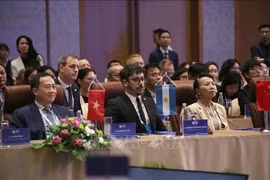
Experts at the Da Nang Innovation Startup Festival (SURF) 2026 said that although Vietnam has a promising domestic market, international venture capital funds expect innovative startups seeking rapid growth to develop products to compete in international markets.
James Tan, Managing Partner at venture capital fund Quest Ventures, said startups focusing solely on domestic problems would find it difficult to grow into large companies or technology unicorns, stressing that they need to “think bigger” and expand internationally.
The experience of Da Nang shows that going global is becoming a pathway for technology businesses to overcome the limitations of the local market. Ngo Tan Tien, CEO of BookShare, said the city should focus on helping local businesses connect with global markets.
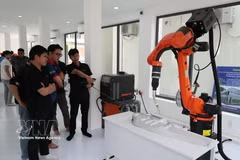
In recent years, Da Nang has organised a wide range of international events, helping expand networks and facilitating cooperation in technology and innovation. The city has also created spaces connecting domestic and international businesses, enabling local firms to access advanced technologies, venture capital, and leading foreign experts and technology companies.
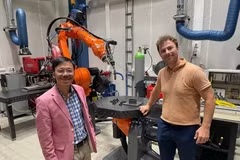
The Daegu Technology and Innovation Showcase in Da Nang, for example, has become a platform for businesses from Da Nang and Daegu, the Republic of Korea, to exchange ideas and explore technology transfer and cooperation in artificial intelligence, semiconductors, smart cities and green technology.
Choi Jong-tae, President of the Daegu-Gyeongbuk ICT Industry Association, said cooperation between businesses in the two cities is expected to generate stronger investment and joint efforts to enter international markets.
Renewing the development model
Politburo Resolution No. 59-NQ/TW dated January 24, 2025 on international integration in the new situation highlights the proactive role of people, businesses and localities, while identifying international integration in science, technology and innovation as a separate area of focus.
Against this backdrop, Da Nang is pursuing its ambition of becoming a global city by improving governance, the investment environment and innovation capacity, while integrating more deeply into international flows of knowledge, technology and finance.
Experts at the recent Da Nang Business, Finance and Technology Week 2026 said growth models based on low-cost labour, resource exploitation, input incentives and expansion are becoming increasingly constrained amid rapid advances in AI, automation, the digital and green economies, shifting supply chains and strategic competition.
They said Da Nang’s global-city ambition can encourage the city to adopt new development models and strengthen its resilience to rapid technological and environmental changes.
The city’s living environment and natural attractions have helped draw international professionals, but retaining highly skilled talent will be crucial for new initiatives such as an international financial centre, a free trade zone and semiconductor development.
Dr. Le Quang Dam, General Director of Marvell Vietnam Technology Co., Ltd., said talent is the most important factor determining investment success.
Chairman of the Da Nang municipal People’s Committee Nguyen Manh Hung said competition among cities is increasingly a competition for investment and high-quality resources, including human resources, science, technology, international finance and strategic investors.
He stressed that building Da Nang into a city that is attractive to live in, visit, invest in and contribute to will not only benefit local residents but also help strengthen Vietnam’s national competitiveness amid intensifying global competition for high-quality talent./.
See more
Bac Ninh promotes cashless transactions in digital environment
With the digital economy accounting for a leading share of gross regional domestic product (GRDP) nationwide, the northern city of Bac Ninh is accelerating cashless payments in public services, online shopping and the marketing of products on digital platforms.
AI - infrastructure for next-generation digital economy
By combining its established electronics manufacturing base with growing capabilities in semiconductor design, AI research, cloud computing and data centres, Vietnam can become a strategic link in the regional AI ecosystem.
Vietnam, Australia step up digital technology, AI cooperation
An Australian diplomat said Australian businesses are keen to engage in Vietnam’s digital development, particularly in semiconductors, AI and cybersecurity. They also hope to share expertise and support Vietnamese companies in technology and investment.
AI adoption in banking requires strict supervision
Banks are increasingly applying AI in data analysis, personalised services, fraud detection and risk management. In August, the Joint Stock Commercial Bank for Foreign Trade of Vietnam (Vietcombank) launched its One Data Platform (ODP) project to support advanced analytics and lay the groundwork for AI and machine learning applications.
Connecting global Vietnamese expertise to seek solutions for green agriculture
The contributions of overseas Vietnamese intellectuals should be assessed not only by the number of research publications they produce but also by their ability to develop solutions that meet the country's development needs, said a Vietnamese scientist in Canada.
Saigontel licensed to distribute satellite Internet, bolster connectivity for production
Under the licence, Saigontel can resell telecommunications services on public networks, including leased-line services for mobile base stations, Internet access via fixed satellite public telecommunications networks nationwide, and Internet access via mobile satellite public telecommunications networks for maritime connectivity.
Efforts stepped up to harness overseas Vietnamese expertise for national development
The main challenge is how to match overseas Vietnamese experts with domestic needs and utilise their expertise to generate practical results in support of the nation.
CMC showcases homegrown AI solutions for public services, business management
CMC presented its “Make in Vietnam, Made by CMC” AI ecosystem, developed on the basis of digital infrastructure, core technologies and specialised AI platforms under the company’s AI-X strategy.
Commune-level digital transformation app launched
The app is designed to help grassroots officials, businesses, household businesses and citizens find suitable solutions, acquire relevant skills and access consultancy during their digital transformation journey.
Project to build big data database on law approved
The project is expected to help reform lawmaking and law enforcement, advance smart legal governance, promote a culture of legal compliance and make the law a national competitive advantage in the new era.
Vietnam targets modern pharmaceutical chemical industry by 2045
By 2030, Vietnam aims to master, acquire and transfer advanced technologies and produce selected essential and strategic pharmaceutical ingredients, prioritising active pharmaceutical ingredients (APIs), starting materials, chemical intermediates and excipients.
Vietnamese intellectuals in China pin high hopes on NA President’s visit
Vietnam could learn from China’s experience in developing research universities, attracting talent, ensuring long-term research funding and connecting universities and research institutes with businesses.
DNA testing capacity expanded to identify over 207,000 martyrs’ remains
By September 2026, Steering Committee 515 had collected samples from the remains of 207,656 martyrs, achieving 98.15% of the goal. Nearly 120,000 samples have been received and preserved. Additionally, authorities gathered 265,761 DNA samples from martyrs’ relatives, with about 100,000 analysed and around 80,000 results entered into the database.
Hanoi’s power grid modernised through science, technology and data
As the national political and administrative centre and a major hub for economic, scientific, technological and innovation activities, Hanoi is seeing growing demand for energy infrastructure. Rapid urbanisation and the development of industry, services, modern transport, data centres and the digital economy require the capital’s power system to ensure not only daily consumption but also reliable electricity for production and business activities, operations of central agencies, and major political and diplomatic events.
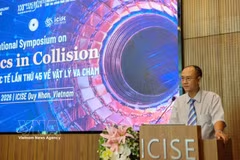
Over 50 international scientists attend 45th symposium on physics in collision
Participants are discussing the latest experimental and theoretical findings in particle physics, covering Higgs and electroweak physics, quantum chromodynamics (QCD), physics beyond the Standard Model, neutrinos and heavy ions, as well as dark matter, gravitational waves and cosmology.
Digital technology gives Vietnamese businesses an edge in market access
When data is standardised, transparent and updated, digital platforms can help businesses more effectively reach buyers, investors and international partners. Data thus becomes not merely a promotional tool but part of a business’s competitive capacity.
Vietnam turns AI ambitions into tangible business results
AI has become a high or top priority for 69% of surveyed Vietnamese businesses, while 84% expect their use of AI to increase over the next year. Although 61% of adopters remain at the experimentation stage, 71% said their AI investments have already broken even or generated returns.
Vietnam, Canada look to turn strategic partnership into tech projects
Canada's research strength paired with Vietnam's manpower, market size and speed of adoption could address national-level challenges and help small- and medium-sized enterprises modernise production and tap into the international innovation ecosystem, said Assoc. Prof. Vu Viet Hung.
Public security ministry eyes AI, cyber training ties with Canada's Concordia University
Concordia is ready to step up exchanges with the Vietnamese Ministry of Public Security's training and research facilities to identify areas that fit both sides' strengths and needs and gradually turn training and research opportunities into concrete initiatives, said Prof. Graham Carr, Concordia University's President and Vice-Chancellor.
Vietnam’s approach to innovation inspires countries worldwide: WIPO
Vietnam's approach to adopting the GII and coordinating with government agencies at both central and local levels is an invaluable lesson many other countries are studying and trying to replicate.