Ho Chi Minh City (VNA) – Competitive incomes alone are not enough to attract, retain and effectively utilise highly qualified personnel. Hence, Ho Chi Minh City is building a comprehensive ecosystem featuring flexible recruitment mechanisms, modern research facilities, professional autonomy and performance-based assessment.
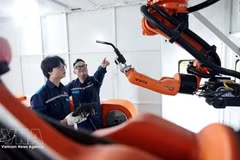
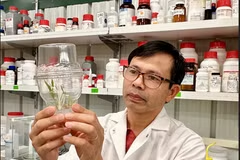
At the Ho Chi Minh City High-Tech Agricultural Park, the demand for experts is rising as research expands beyond traditional fields into biotechnology, gene editing, robotics, automation, artificial intelligence, the Internet of Things, digital technologies and green transition in agriculture.
Nguyen Thanh Hien, deputy head of the park's Management Board, said attracting experts must be accompanied by effective deployment, support and development, with a focus on recruiting highly qualified personnel and creating conditions for them to apply their expertise and deliver practical scientific and technological outcomes.
To this end, the agency identifies from the outset the issues to be addressed, objectives, expected outcomes, timelines and professional autonomy, while ensuring suitable working and research conditions. Experts and scientists are encouraged to express independent views, propose solutions, select research methods and organise implementation within their assigned scope, he said.
However, he noted that challenges remain as some expert criteria and standards are not well suited to high-tech agriculture.
The park’s demand for highly qualified personnel continues to grow as Ho Chi Minh City expands its network of high-tech agricultural zones. It currently needs nine experts in strategic planning, biotechnology, crop cultivation, animal husbandry, aquaculture, post-harvest technology, digital transformation, database development, and artificial intelligence.
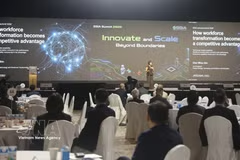
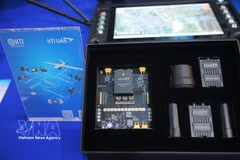
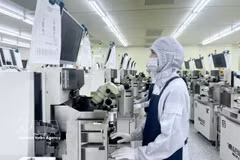
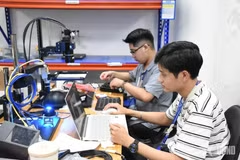
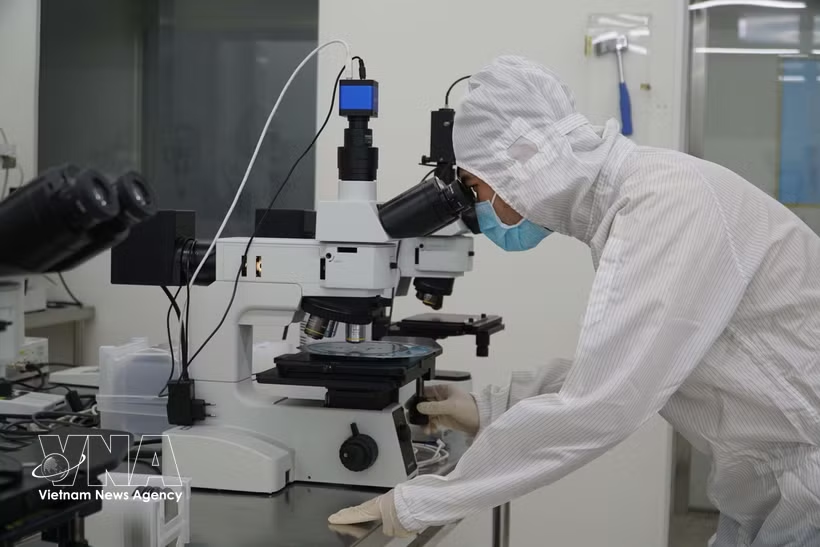
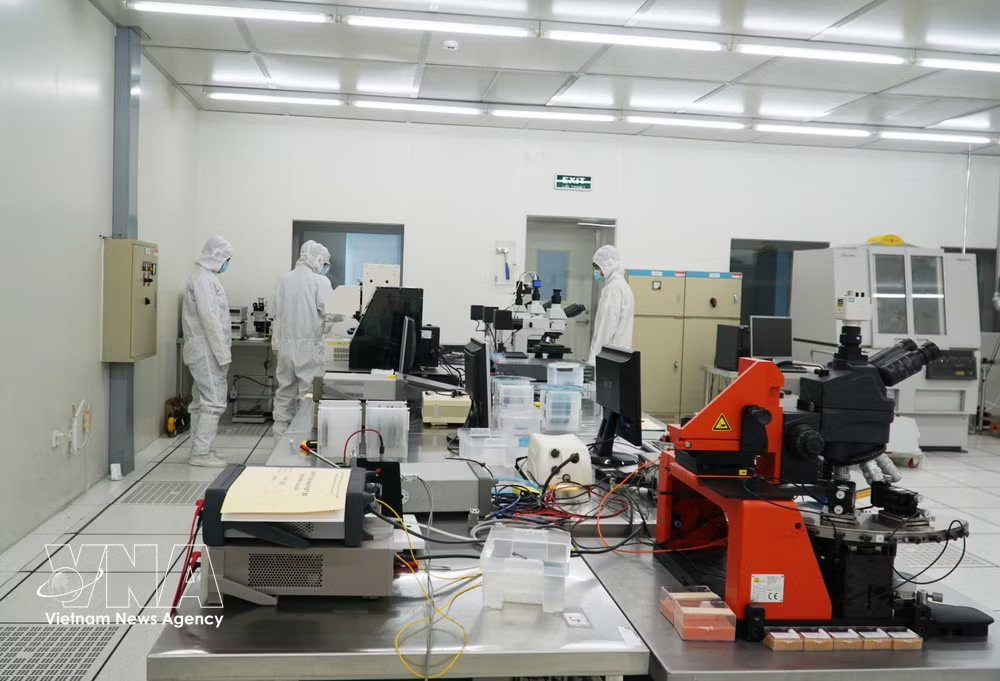
At the SHTP Research and Development Centre (SHTP Labs), demand for highly qualified personnel is also linked to the development of strategic technologies and stronger international connectivity.
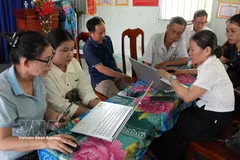
According to the municipal Department of Science and Technology, agencies in the city need 43 highly qualified personnel in 2026, including 39 experts, three people with special talents and one project architect.
Creating major assignments for talent
Ho Chi Minh City is finalising a comprehensive policy framework for identifying, recruiting, deploying, remunerating, assessing, developing and retaining high-quality personnel. It will pursue three approaches – attraction, recruitment and selection – to expand the talent pool while effectively utilising capable personnel already within the system.
Under the proposed policy, the city will sign contracts with experts and those with special talents to undertake key programmes, schemes, projects, works and tasks. It will also recruit highly qualified personnel and select outstanding individuals from its existing workforce for appropriate tasks.
Beyond income, the municipal authorities plan to create professional, open and democratic working environments, provide access to data, laboratories and libraries, and allocate research funding, equipment and support staff. Policies will also address experts’ housing and family conditions to help them stay with the city long term.
Dr. Trinh Xuan Thang, Director of SHTP Labs, said the new policy orientation represents a breakthrough and more open approach to attracting high-quality personnel, focusing not only on the number of people recruited but also on creating major assignments for talented individuals to perform.
For leading international experts, he proposed more flexible mechanisms, including allowing them to retain concurrent positions at overseas institutions, work remotely, and be assessed based on results and products rather than mainly administrative working hours.
He also suggested that the city consider providing 300-500 million VND (11,550-19,250 USD) in annual research funding, depending on the expert’s position, so that scientists can immediately implement ideas, technologies, and technology-transfer activities after being recruited./.