Deputy PM asks for tight price controls to prevent abnormal fluctuations by year-end

Deputy PM Nguyen Van Thang asked ministries, agencies and localities to closely monitor domestic and global supply–demand developments and market prices, particularly for goods with high CPI weightings and essential inputs such as fuel, food, fertilisers, animal feed and construction materials.

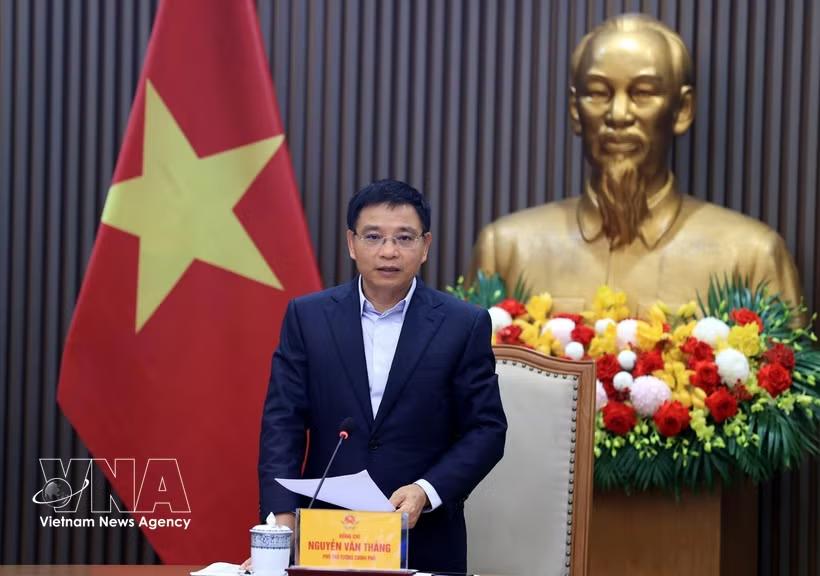
Deputy Prime Minister Nguyen Van Thang speaks at the meeting of the price management steering committee on November 9, 2026. (Photo: VNA)

Hanoi (VNA) – Deputy Prime Minister Nguyen Van Thang chaired a meeting of the price management steering committee in Hanoi on November 9, urging efforts to keep prices of all State-regulated goods and services stable through the end of 2026.

Thang, who is also head of the committee, highlighted inflation control and macroeconomic stability as consistent top priorities, and commended 20 localities for keeping their CPI growth below 4.5%, the threshold approved by the National Assembly.

Reporting on price management and administration, Deputy Minister of Finance Le Tan Can said that the consumer price index (CPI) rose 0.2% month on month in October, mainly due to higher domestic fuel prices in line with global trends. In the first 10 months, the CPI increased 4.57% year on year, while core inflation rose 4.24%.

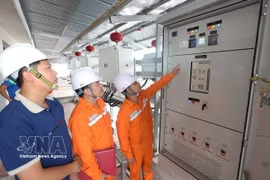
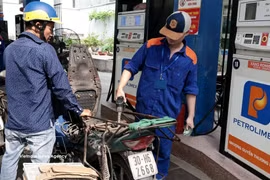
To ease inflationary pressures, the Government has directed the coordinated implementation of measures to ensure supplies of essential goods, stabilise the market, reduce or waive taxes and fees, and support production and business activities. From November 1, 2026, the average retail electricity price was cut by 2%, while the excise tax on petrol was reduced to 0% until March 31, 2027.

Based on domestic and international economic developments, the ministry has updated this year's average CPI growth scenario of 4.5–4.7%, Can noted, adding that the State Bank of Vietnam has made the same forecast. International organisations project Vietnam's average inflation in 2026 at around 4.2–5.5%.

Regarding tasks and solutions for the remaining months of 2026, the Deputy PM asked ministries, agencies and localities to closely monitor domestic and global supply–demand developments and market prices, particularly for goods with high CPI weightings and essential inputs such as fuel, food, fertilisers, animal feed and construction materials. They must promptly assess factors affecting the overall price level and proactively prepare response plans for abnormal fluctuations.

Prices of goods and services regulated by the State should be adjusted according to appropriate roadmaps, with careful assessment of the necessity, timing and scale of any changes, as well as their impact on the CPI and people's ability to pay. Price adjustments should not be concentrated towards the end of the year or around the Lunar New Year, he said.

He asked ministries, agencies and localities to proactively monitor and assess changes in input costs and selling prices of goods and services under their management before and after the petrol tax cut and electricity price reduction.

They were also urged to step up public communications on supply–demand conditions, commodity prices and the Government's price management policies, ensuring information is timely and transparent to avoid public anxiety and expectations of further price increases. Inspections and supervision of price declarations, price listings and compliance with pricing regulations should be strengthened, focusing on essential goods and sectors at risk of significant price fluctuations during the year-end period and the Lunar New Year holiday.

The Deputy PM asked for the prompt detection and strict handling of stockpiling, speculation, price manipulation and other practices that exploit market fluctuations or natural disasters to raise prices unreasonably.

Meanwhile, localities with CPI growth below the national average were urged not to become complacent or relax their price management efforts./.

VNA

See more

Production line at Hana Micron Vina Co., Ltd in Bac Ninh city (Photo: VNA)

Processing and manufacturing continue to drive industrial growth

The sector’s industrial production index (IIP) rose 13% year on year, contributing 10.2 percentage points to overall industrial growth. Mining increased 7.1%, adding 1.1 percentage points, while electricity generation and distribution grew 10.6%, contributing one percentage point. Water supply, waste and wastewater management and treatment expanded 9.2%.

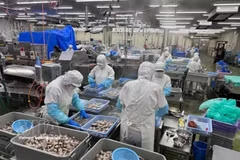
Vietnamese workers at a Japanese oyster processing factory (Photo: VNA)

Vietnam-Japan trade machine has room to run

Economic, trade and investment cooperation remains the core pillar and the main engine of comprehensive, sustainable bilateral ties. General Secretary of the Communist Party of Vietnam Central Committee and President To Lam’s official visit to Japan is therefore a key moment to reinforce political trust, deepen the Comprehensive Strategic Partnership and open new cooperation opportunities in the next growth phase.

Prof. Kenichi Ohno from Japan’s National Graduate Institute for Policy Studies (GRIPS) (Photo: vietnamfinance.vn)

Vietnam, Japan poised to shape new economic partnership: Japanese expert

Vietnam's progress in income levels and technological capabilities has opened up a new phase in economic ties with Japan, with both countries shifting from a model centred on Japanese support for Vietnam to one of jointly developing and operating business activities, he said, noting that this shift reflected Vietnam's development achievement.

The forum provides a platform for businesses from both countries to exchange market information, seek partners and explore concrete trade and investment opportunities. (Photo: VNA)

Vietnamese goods eye greater access to Australian market

Participants at the Vietnam-Western Australia Business Forum 2026 in Perth city on November 6 highlighted strong prospects for Vietnamese rice, agricultural produce and food products in the Australian market as local businesses seek to diversify supply chains.

Ambassador Mai Phan Dung (centre), Permanent Representative of Vietnam to the United Nations, the WTO and other international organisations in Geneva at Vietnam’s third Trade Policy Review (Photo: VNA)

Vietnam highlights integration achievements at WTO

Vietnam views the Trade Policy Review not merely as a transparency obligation but also as an opportunity to objectively assess its achievements, listen to other members’ views and identify areas for improvement.

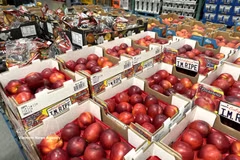
Nectarines from California are on sale at a supermarket in Washington, D.C (Photo: VNA)

US to send largest-ever agricultural trade mission to Vietnam

The USDA’s statistics show that Vietnam was the seventh-largest export market for American agricultural and related products in 2025, with import turnover of nearly 5.6 billion USD. The US’s 2025 agricultural exports to Vietnam increased 38% from 2024.

At the opening of the Food Expo Vietnam 2025 (Photo: VNA)

Vietnam Food Forum 2026 to take place soon

Vietnam Food Forum 2026 is scheduled for November 11 in Ho Chi Minh City as one of a series of specialised activities designed to help Vietnamese food businesses keep abreast of policy developments, improve their ability to meet international standards and expand opportunities to participate in global supply chains.

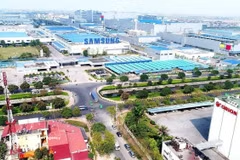
Many foreign-invested enterprises have chosen Yen Phong Industrial Park in Bac Ninh city as a destination for their manufacturing and business operations. (Photo: VNA)

Bac Ninh seeks to attract high-quality investment, create fresh appeal

Bac Ninh aims to attract projects that participate in global production and supply chains, apply advanced and green technologies, and support industries. Priority sectors include semiconductors, artificial intelligence, digital technology, robotics, new materials and renewable energy.

Col. Nguyen Ba Son, Deputy Director-General of the Ministry of Public Security’s Department of Cyber Security, speaks at the event. (Photo: thanhnien.vn)

Vietnam studies pilot system to trace cash flows in fraud cases

A representative of the Vietnam Banks Association said AI can help banks spot customer needs, detect unusual transactions and improve credit scoring. But poorly standardised input data or inadequately controlled AI models can create new risks in decision making and data protection.