Hanoi (VNA) - In 2025, Vietnamese cinema experienced resounding box-office success, signalling not only a strong recovery after the pandemic but also a novel level of growth. Record revenues of over 700 billion VND for a single film highlighted the industry’s vast untapped potential. At the same time, the number of filmmakers has risen sharply, driving demand for fresh, diverse stories about Vietnamese people and society.
With Resolution No. 80-NQ/TW, widely seen as a “master blueprint” for harnessing the nation’s cultural resources, the film industry now has a clear opportunity to develop in a more structured and strategic manner. It is well-positioned to become a spearhead sector, playing a more visible role in strengthening the country’s soft power.
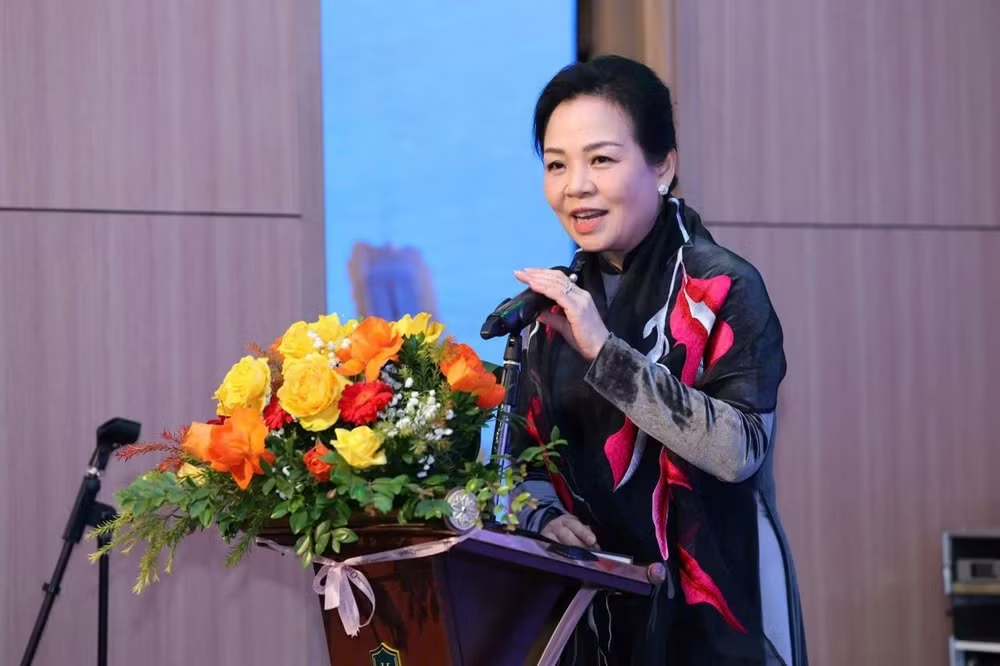
On the occasion of the 2026 Lunar New Year, VietnamPlus e-newspaper interviewed Dr Ngo Phuong Lan, President of the Vietnam Cinema Promotion and Development Association (VFDA), to explore the industry’s internal challenges and discuss solutions for advancing the seventh art in the country’s new era.
Improved quality drives Vietnamese films forward
In 2025, Vietnam’s box-office revenue surpassed 3.7 trillion VND, nearly doubling the 1.9 trillion VND recorded in 2024, according to Box Office Vietnam. The number of films earning over 100 billion VND also rose sharply. How do you assess this development?
Dr Ngo Phuong Lan: In 2025, Vietnamese films posted notable box-office growth, partly thanks to productions tied to major national events. Titles such as “Mua Do” and “Tu Chien Tren Khong” benefited from the strong momentum generated by large-scale commemorations held throughout the year.
Mua Do (Red Rain) was released during the grand celebrations marking the 80th anniversary of the August Revolution (August 19, 1945-2025) and National Day (September 2, 1945-2025). This was a rare and highly significant moment, allowing the film to dominate cinemas thanks to a powerful combination of social resonance and solid production quality.
Had it been released at a more ordinary time, its box-office performance might not have been as striking. Ultimately, however, a film attracts audiences first and foremost through its quality. If a production is poorly made or careless, it will struggle to draw viewers regardless of when it is released.

From a market perspective, having gone to cinemas myself, I have observed that films currently succeeding in attracting audiences are both stronger and more consistent than those of five to seven years ago. Back then, box-office hits were often seasonal, leaning heavily towards comedy and largely catering to holiday periods such as Tet, delivering only short-term gains.
To sustain the momentum of Vietnamese cinema, the decisive force lies with those directly involved in filmmaking – directors, producers, and distributors. State management agencies primarily provide regulatory frameworks. In practice, however, such mechanisms often lag behind market dynamics and the pace of film development.
Overall, the quality of scripts and productions has improved, but risks remain. If filmmakers simply chase prevailing commercial trends, the industry may face saturation and audience fatigue. There are also cases where a director delivers an excellent film one year, only to see a marked decline in quality in the next.
This underscores the need for more sustained effort and professionalism from directors, producers, and distributors alike. What matters most is the ability to innovate continually, as the market’s response ultimately determines a film’s success or failure.

In your assessment, what are the internal challenges currently facing Vietnamese cinema?
Dr Ngo Phuong Lan: As I mentioned earlier, the quality of films has improved. In 2025, around ten films each grossed over VND 200 billion, helping to drive up the overall box office revenue of Vietnamese cinema. However, this growth remains far from stable. Dozens of films have come and gone almost unnoticed shortly after their release, while some have even failed to secure a theatrical run.
Promotion on social media and digital platforms, in various forms, is undoubtedly important, but it cannot substitute for quality. This shows that the achievements of recent years do not yet fully reflect the true state of Vietnamese cinema.
Moving into 2026, with fewer major events to buoy the market, the key question is how to build steady progress grounded in strong film quality. This is the most crucial factor. Filmmakers need to be encouraged to continue producing works that appeal to mass audiences with strong entertainment value, while also offering human depth and aesthetic merit.
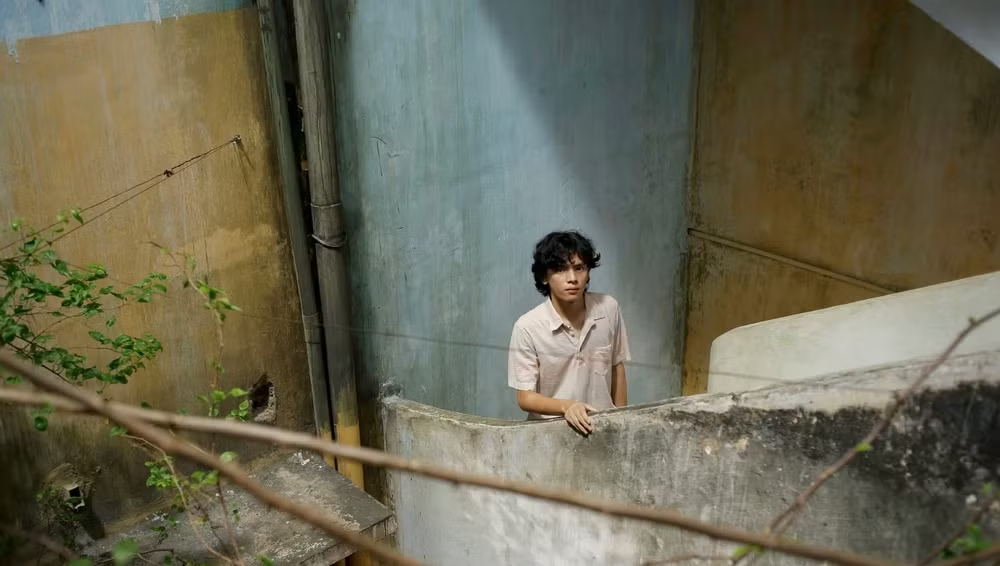
Such films should not be marked by superficial propaganda or rigid didacticism; they must win over audiences through their substance and intrinsic appeal. Only in this way can a film’s value endure and genuinely earn the audience’s affection.
From a production standpoint, every link in the chain must hold its own. Directors invariably aspire to create the best possible films. However, this cannot be achieved without a professional production team. Film production is not merely about securing funding; it must begin with idea development, project building, and organization. This is followed by selecting a distributor, choosing the right release timing, and ensuring the film reaches audiences most effectively.
In 2025, a wave of new directors entered the film industry, with some releasing as many as two works in a single year. Setting aside questions of quality and commercial success, many of these films have demonstrated themes of clear innovation and appeal. How do you assess this trend?
Dr Ngo Phuong Lan: Clearly, this is a major advantage for Vietnamese cinema at present, as the number of people seeking to enter the industry continues to grow. Many of them do not come from formal film school backgrounds and are not professionally trained directors. They may be actors, members of a film crew in other roles, or even complete outsiders to the industry, yet they are eager to try their hand at directing – and in some cases, they have succeeded.
The key issue is how to guide them onto a professional filmmaking path. Each filmmaker needs to identify the type of cinema that suits them best. Some may pursue commercial films aimed at mass audiences and high box office returns, while others are drawn to independent filmmaking. When individuals recognise their own strengths, the cinematic landscape will become more diverse and balanced.
Maintaining a healthy cinematic ecosystem
Film festivals serve as a platform to discover new talent, sustain diversity in cinematic voices, and build an ecosystem for the film industry. As Director of the Da Nang Asian Film Festival (DANAFF), what strategy have you set to ensure these goals?
Dr Ngo Phuong Lan: For the Da Nang Asian Film Festival, we have clearly defined our selection criteria. In the Asian competition section, we prioritise artistic and independent films that have the potential to make a mark at international festivals.
For the Vietnamese film programme, we select the most notable works of the year that meet the festival’s standards. These include both commercially successful films that resonate with audiences and those highly regarded by critics. This approach is designed to maintain a professional platform, where each type of cinema has its appropriate space. More importantly, the festival serves as an anchor for professional standards, helping filmmakers avoid being swept up in the pursuit of the market at all costs.

From 2023 to 2025, award-winning works across DANAFF’s categories have demonstrated clear diversity and tangible improvements in quality. To a certain extent, the festival has also contributed to advancing Vietnam’s film industry, helping it move towards greater professionalism.
While the festival has largely maintained a consistent programme framework, we have continuously sought to introduce new elements and distinctive features for each edition. At the third edition, an important new component was launched – the “DANAFF Talent” programme, which includes the acting workshop “Nurturing Talent”, initiated in the first season, and the Project Market, “Project Incubator”, introduced from the third edition.
Our greatest effort has been to implement more substantive measures to discover and nurture young talent in a professional manner, with direct and practical impact.
Looking ahead, we plan to introduce a “Script Lab” – a platform for developing and refining screenplays – along with training courses on project development. These initiatives will better equip emerging talents to present their scripts and projects at international film festivals. They will also help film funds and supporting organisations, thereby increasing the chances of bringing their films to fruition. International experts from the Republic of Korea, France, and the United States led the training sessions and workshops. While this initiative will require considerable effort and funding, it is also an exciting endeavour.
Could you share the key highlights of the fourth edition of DANAFF?
Dr Ngo Phuong Lan: In 2026, DANAFF will feature a major programme spotlighting Vietnamese cinema during the Đổi Mới period. The year marks the 40th anniversary of the Party’s 6th National Congress, when the country entered the era of renewal. Over these four decades, Vietnamese cinema has undergone significant transformations from the post-war and reunification period, through the hardships of the subsidy era, to the development of a market economy under State management.
As for the international focus, DANAFF 2026 will turn its attention to American cinema, offering a broad panorama of global film history from the silent era and landmark works of the 20th century to those of the 21st century. The selection will span mainstream productions, arthouse and independent films, works marked by strong directorial signatures, and globally acclaimed successes.
In the past, American films accounted for around 60 - 70% of Vietnam’s domestic market share. Today, Vietnamese cinema has risen to approximately 60 - 65%, while the share of American films has fallen to below 20%. This shift highlights a notable transformation in the market.
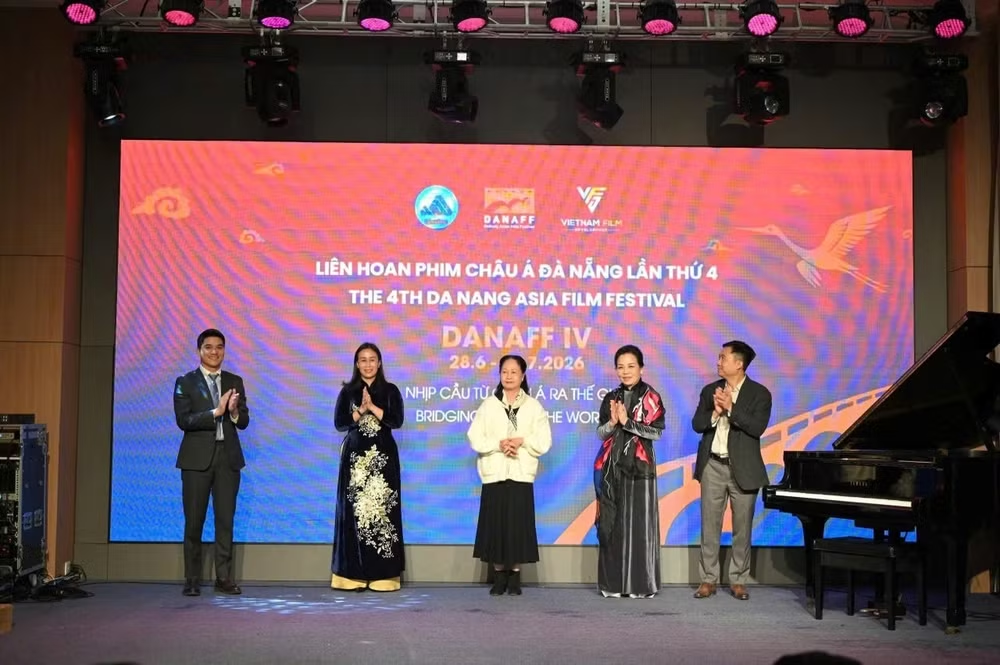
In addition, DANAFF IV will continue its efforts to enhance the quality of its programmes, including encouraging more films to hold their premieres and international screenings at the Da Nang Asian Film Festival.
A notable highlight will be the industry networking programme, bringing together filmmakers, producers, distributors, and exhibitors. It will feature screenings and promotional events for film buyers, project showcases, and discussions sharing successful experiences from Vietnamese and international films over the past year.
DANAFF IV will also host at least three major seminars. One will address global themes, focusing on the role of digital technology, artificial intelligence, and copyright protection. Another will explore the landscape and values of Vietnamese cinema during the Doi Moi (Renewal) process.
Overall, the festival is on a fast trajectory, requiring significant efforts from our association, the city of Da Nang, and all stakeholders to sustain and expand the festival’s brand, both domestically and internationally, among industry professionals and the wider public alike.
Thank you very much.