HCM City office market sees highest absorption in a decade

Ho Chi Minh City’s office market has achieved rapid growth fuelled by steady demand and burgeoning supply, reinforcing the city’s status as a premier destination for both local and international corporations seeking strategic growth opportunities in Southeast Asia, according to real estate consulting firm Knight Frank.

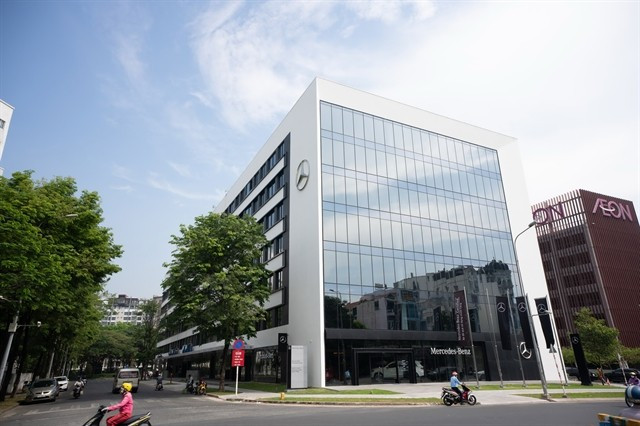
An office building in HCM City’s Tan Phu district. HCM City's office market is experiencing record absorption in 2024. (Photo: VNA)

HCM City (VNS/VNA) – Ho Chi Minh City’s office market has achieved rapid growth fuelled by steady demand and burgeoning supply, reinforcing the city’s status as a premier destination for both local and international corporations seeking strategic growth opportunities in Southeast Asia, according to real estate consulting firm Knight Frank.

The market absorbed 96,400sq.m of net lettable area in the first nine months of 2024, and the city was on track to achieve its highest net absorption in over a decade.

The previous annual peak in recent years was 81,300sq.m in 2019.

The performance underscored the strength and resilience of the market.

But despite the high absorption rate, rentals had remained relatively stable, due to landlords offering incentives, which fuelled occupancy without significantly increasing rents.

Leasing activity was driven by strong demand from companies in the IT, technology, pharmaceuticals, finance, and banking sectors.

IT and technology led the way, with both local startups and multinationals seeking modern office spaces to support their rapid expansion.

Pharmaceutical companies contributed significantly, securing premium office spaces in response to growing healthcare investments.

Meanwhile, the expansion of domestic and international banks has led to larger and more sophisticated office solutions.

There was significant leasing activity in newly completed buildings, largely driven by tenant relocations.

This trend reflected the ongoing “flight-to-quality” movement, as tenants increasingly prioritised green-certified office spaces offering modern amenities.

Among the standout developments was The METT in District 2, whose occupancy soared from 10% in Q1 to over 80% by Q3, with its prime location in Thu Thiem and modern facilities making it a choice for high-profile tenants.

In the city’s south, Cobi Tower 1 achieved an impressive 90% occupancy rate in Q3, a 55 percentage point increase year-on-year, thanks to its competitive rents and excellent accessibility.

Truong Anh Nguyen, research manager at Knight Frank Vietnam, said: “The record performance of HCM City’s office market in 2024 highlights the city’s economic resilience and its growing reputation as a magnet for global investors.

“With sustained demand across key sectors and the rise of premium-grade developments, HCM City is solidifying its position as a leading commercial hub in Southeast Asia.

“To put this all into context, net absorption of 96,400sq.m is enough space for approximately 13,700 new desks in the city – that is a lot of jobs.”

But other markets in the neighbourhood showed mixed results.

In Hanoi, new supply rose by 18% in the first nine months, but slower absorption in newly launched buildings led to higher vacancy rates.

Bangkok experienced a significant decline in new supply compared to 2023, with occupancy rates across all office grades also dropping to their lowest levels since 2019.

Jakarta’s grade A office market continued to face challenges, with vacancy rates exceeding 30% in Q3 2024 and rents under persistent downward pressure.

But Kuala Lumpur showed signs of recovery, with grade A vacancy rates declining from 32% to 27% despite new project launches and rising rents.

The exceptional performance of the HCM City office market reinforced the city’s status as a premier destination for both local and international corporations seeking strategic growth opportunities in Southeast Asia./.
VNA

See more

Deputy Prime Minister Ho Quoc Dung (right) receives Yongsoo Huh, Vice Chairman and CEO of GS Energy. (Photo: chinhphu.vn)

Deputy PM meets GS Energy leader, encourages renewable investment

Deputy Prime Minister Ho Quoc Dung called on GS Energy to continue working closely with Vietnamese authorities and partners to explore solutions for developing local supply chains, enhance mutually beneficial cooperation and contribute to the sustainable development of both countries.

Party General Secretary To Lam speaks at the meeting with representatives of more than 40 international corporations from the Asia Business Council in Hanoi on March 26 (Photo: VNA)

Vietnam pledges partnership to develop resilient, green supply chains: Party leader

Party General Secretary To Lam affirmed that Vietnam will continue to encourage domestic enterprises to expand partnerships with foreign investors, while directing legislative, executive and judicial bodies, along with agencies in the political system, to create the best possible conditions for businesses to grow, enhance international cooperation, and move up global value chains.

Nguyen Tuan Anh, Deputy Secretary of the municipal Party Committee, holds a working session with a consortium of China Harbour Engineering Company (Vietnam) and Shenzhen Energy Group on March 26, 2026. (Photo: VNA)

Can Tho city courts global investors to accelerate energy ambitions

Rising interest from major global players underscores Can Tho city’s growing appeal as an investment destination. Clean energy, particularly wind power, has been identified as a strategic pillar to drive socio-economic growth while strengthening energy security across the Mekong Delta.

Visitors savor freshly prepared dishes on-site at the “Discover US Agriculture” programme, held on July 19, 2025 in Ho Chi Minh City. (Illustrative photo: VNA)

Vietnam, US work to step up agricultural cooperation

Vietnam has strengths in tropical farm produce, seafood and wooden products, while the US is a major supplier of key inputs such as soybeans, corn, wheat and dairy products. This trade structure creates a balanced supply chain with little direct competition, delivering tangible benefits to businesses and consumers in both countries.

Deputy Prime Minister Tran Hong Ha speaks at the opening ceremony of the Vietbuild Hanoi International Exhibition 2026 on March 26. (Photo: VNA)

Vietbuild Hanoi 2026 International Exhibition opens

The five-day event, themed “Construction – Building Materials – Real Estate – Green Transport”, brings together more than 2,500 booths from domestic and international enterprises, reflecting the development momentum of Vietnam’s construction sector and the broader economy.

An overview of the International Coffee Conference 2026 (Photo: VNA)

Global Coffee Alliance launched to drive sustainable, inclusive growth

The Global Coffee Alliance is envisioned as a public–private partnership that bridges diplomatic efforts with business operations. Looking ahead to 2040, it aims to develop a global coffee ecosystem that is inclusive, technology-driven, and aligned with net-zero emissions goals.

At Dung Quat oil refinery (Photo: VNA)

Vietnam races to restart idle ethanol plants to meet surging demand

Do Van Tuan, Chairman of the Vietnam Biofuels Association, said that monthly ethanol demand for the E10 blend is projected at 92,000–100,000 cu.m. The country’s six ethanol plants have a combined design capacity of roughly 41,000 cu. m per month, but only three are now running, churning out about 25,000 cu.m, or just 25–27% of demand. Even if every plant hits full tilt, local supply would cover only around 41% of national needs.

At a supermarket in Ho Chi Minh City (Photo: VNA)

Ho Chi Minh City to pilot pork trading on Mercantile Exchange of Vietnam

Nguyen Nguyen Phuong, Deputy Director of the municipal Department of Industry and Trade, said listing pork on the MXV will finally give consumers and firms more stable prices, while slapping on stricter food safety rules and making it easier to track where the meat actually comes from. Farmers, meanwhile, stand to gain from more predictable margins and dodge fewer of the supply-demand imbalances that routinely distort prices.

Processing octopus for export to the Japanese market at Huy Nam Company in An Giang (Photo: VNA)

Squid, octopus exports pick up early in 2026

In terms of product structure, squid has emerged as the main growth driver. Export turnover of squid exceeded 64 million USD, rising nearly 30%, while octopus exports brought in more than 47 million USD, up over 16%. The development indicates that demand for squid products is recovering faster in the short term.

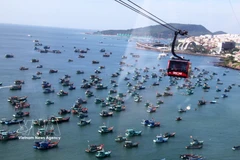
The world’s longest over-sea cable car to Hon Thom Island in the Phu Quoc special zone, An Giang province. (Photo: VNA)

An Giang steps up tourism development ahead of APEC 2027

Tourism in the province has recorded strong growth, affirming its position as one of the region’s leading destinations. Phu Quoc Island continues to attract the majority of international travellers, receiving more than 817,660 visitors, accounting for over 98.5% of total foreign arrivals to the province.

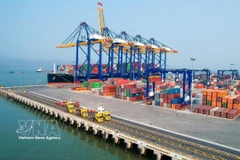
Import-export activities at Lach Huyen international port in Hai Phong (Photo: VNA)

Reducing risks, removing logistics bottlenecks amid Middle East volatility

According to Truong Xuan Trung, Trade Counsellor of Vietnam in the UAE, the Middle East serves not only as a consumption market but also as a key global transhipment hub, meaning instability in the region creates ripple effects across intercontinental transport networks. Shipping route adjustments and airspace restrictions have lengthened transit times, increased costs and disrupted delivery schedules, with some Vietnamese shipments forced to reroute or seek alternative markets.

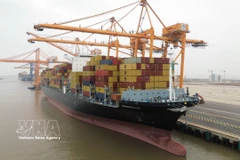
Cargo is handled at container terminals No. 3 and No. 4 of Hai Phong International Gateway Port. (Photo: VNA)

Businesses seek “survival momentum” amid global geopolitical turbulence

This is an urgent move as the challenges of 2026 differ markedly from previous ones, shaped by overlapping external shocks ranging from geopolitical tensions disrupting supply chains to surging logistics and raw material costs, exchange-rate pressures, and increasingly complex tariff barriers in global markets.

At the 2025 trade connectivity week for mechanical, electrical and digital industries. (Photo: VNA)

Ho Chi Minh City gives boost to supporting industry firms

Supporting industry firms in Ho Chi Minh City are scrambling to embed themselves more deeply into both global and domestic supply chains, backed by a suite of local incentives that are speeding up their tech upgrades and market access.

Italy's national pavilion at the ongoing Food & Hospitality Vietnam 2026 exhibition at Ho Chi Minh City's Saigon Exhibition and Convention Centre (SECC) draws visitors for hands-on experiences. (Photo: IVNA)

Italian food firms eye opportunities in Vietnam

Italy’s exports of food and beverages to Vietnam reached 105.1 million EUR in 2025, up 4% year-on-year, positioning the country among the leading EU suppliers to the Vietnamese market.