High-level diplomacy concretises Vietnam’s renewed foreign policy mindset: Spokeswoman

These activities have concretised Vietnam’s foreign policy of openness, independence, self-reliance, self-reliance, peace and friendship, diversification and multilateralisation and being a friend, a reliable partner and a responsible member of the international community.

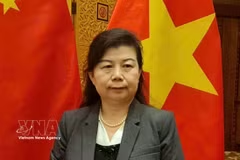
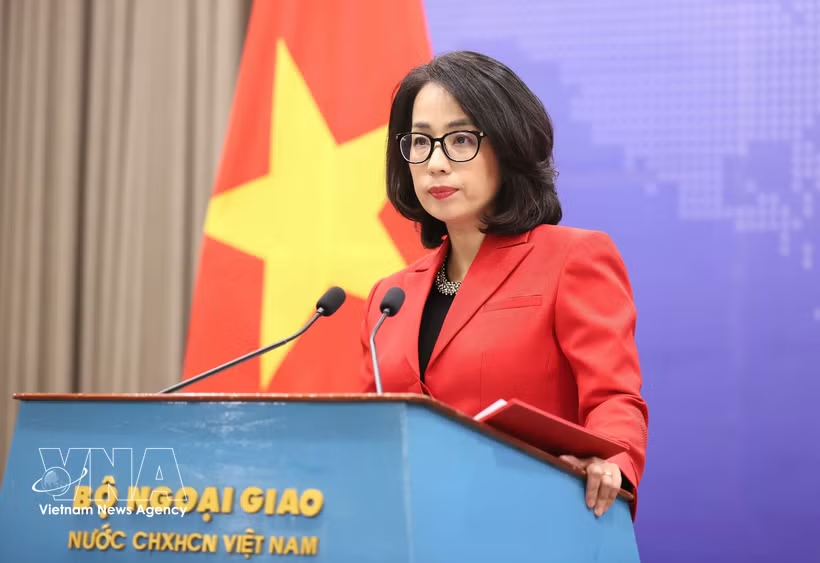
Spokeswoman of the Ministry of Foreign Affairs Pham Thu Hang speaks at the ministry’s regular press briefing in September. (Photo: VNA)

Hanoi (VNA) – Vietnam’s recent successful high-level diplomatic activities have concretised its foreign policy of openness, independence, self-reliance, self-strengthening, peace, friendship, diversification and multilateralisation while reflecting a renewed approach to foreign affairs, said Spokeswoman of the Ministry of Foreign Affairs Pham Thu Hang.

Hang made the statement on September 17 in response to a reporters' question at the ministry’s regular press briefing about recent high-level external activities and shifts in Vietnam’s foreign policy mindset.

Implementing the foreign policy set out by the 14th National Congress of the Communist Party of Vietnam (CPV), Party and State leaders have conducted numerous high-level external activities, which were of great significance to both bilateral and multilateral relations, Hang said, stressing that Vietnam has also welcomed many high-ranking leaders from other countries.

These activities have concretised Vietnam’s foreign policy of openness, independence, self-reliance, self-strengthening, peace and friendship, diversification and multilateralisation and being a friend, a reliable partner and a responsible member of the international community, she said.

The recent activities also reflect Vietnam’s renewed mindset in its foreign policy. One of the most notable aspects of this renewal is that the 14th National Party Congress elevated the pioneering role of foreign affairs and defined it as a key and regular task, enabling external relations to serve the goals of national development and defence, Hang said.

External relations and international cooperation must help mobilise resources and generate momentum for national development and build national strength. Strategic autonomy should be reflected in each high-level visit and its outcomes, with agreements and commitments translated into concrete projects and products that deliver practical benefits to both Vietnam and its partners.

Looking at Vietnam’s recent external activities as a whole, Hang said the renewed mindset in foreign policy is reflected not only in policy but also in practice and action. Following each high-level diplomatic engagement, ministries, sectors, localities and businesses need to translate agreements reached by senior leaders into specific programmes, plans and projects relevant to their respective fields and localities.

Regarding the state visit to Vietnam by Thailand's King Maha Vajiralongkorn Phra Vajiraklaochaoyuhua and Queen Suthida Bajrasudhabimalalakshana from September 14 to 16 at the invitation of General Secretary of the CPV Central Committee and President To Lam and his spouse, Hang described it as a particularly important and historic occasion in Vietnam-Thailand relations.

The visit was the first by a Thai monarch to Vietnam since the two countries established diplomatic relations in 1976. It also took place on the occasion of the 50th anniversary of bilateral diplomatic ties and came as the two countries had just elevated their relations to a Comprehensive Strategic Partnership in May 2025.

Given the special role of the King and the Royal Family in Thailand’s spiritual, historical and cultural life, the visit carried significance beyond state diplomacy, contributing to people-to-people exchanges and bonds while demonstrating the high regard of the Thai Royal Family, the State, and people for Vietnam, the spokeswoman said.

“The visit’s key messages were high-level political trust and the close bonds between the two countries' people. Building on these positive sentiments, shared perceptions and growing political trust, the two sides will take concrete action to implement programmes and projects for the benefit of their people and make practical contributions to peace, stability and development cooperation in the region and the world,” Hang stressed./.

VNA
See more

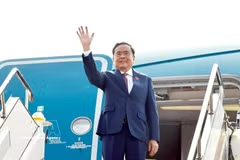
National Assembly President Tran Thanh Man concludes his official visit to China (Photo: VNA)

Vietnamese NA President concludes official visit to China

China will join Vietnam in promoting the continued development of the Vietnam-China community with a shared future that carries strategic significance, while deepening relations between the two Parties and countries in an increasingly substantive and comprehensive manner.

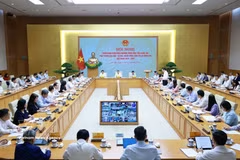
An overview of the conference to launch the 2026–2035 national target programme on cultural and socio-economic development, rural development, and development in ethnic minority and mountainous areas. (Photo: VNA)

PM chairs conference on implementation of national target programme for cultural, socio-economic, rural development

Deputy Prime Minister Ho Quoc Dung, who is deputy head of the Central Steering Committee for the 2026–2035 national target programme on cultural and socio-economic development, rural development, and development in ethnic minority and mountainous areas, said the conference aims to accelerate implementation, deliver more visible improvements and ensure substantive results under the guiding principle of clearly defining policies, geographical areas and beneficiaries.

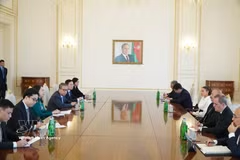
Vietnamese Vice President Vo Thi Anh Xuan holds talks with Azerbaijani President Ilham Aliyev and First Vice President Mehriban Aliyeva in Baku on October 14. (Photo: VNA)

Vietnamese Vice President holds talks with Azerbaijani leaders

Vietnam always remembers Azerbaijan’s valuable support during its past struggle for national reunification and its current nation-building process. Azerbaijan had helped train many highly qualified personnel for Vietnam’s oil and gas industry, while generations of Vietnamese experts and officials who studied and worked in Azerbaijan had made positive contributions to bilateral relations.

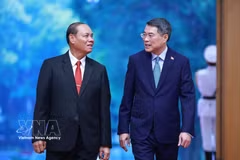
Prime Minister Le Minh Hung (right) and Politburo member and Standing Member of the Secretariat of the Lao People's Revolutionary Party (LPRP) Central Committee Vilay Lakhamphong at their meeting on October 14 (Photo: VNA)

Vietnam gives top priority to relations with Laos: PM

Prime Minister Le Minh Hung reaffirmed Vietnam's strong support for Laos' renewal, nation-building and development, expressing its desire to work with Laos to translate high-level agreements into concrete actions, strengthen economic ties and infrastructure connectivity, and promote practical cooperation projects that benefit the people of both countries.

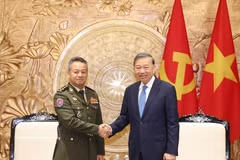
Party General Secretary and President To Lam (R) welcomes General Tea Seiha, member of the Standing Committee of the Cambodian People’s Party (CPP), Deputy Prime Minister and Minister of National Defence, in Hanoi on October 14. (Photo: VNA)

Vietnamese Party, State facilitate more substantive defence ties with Cambodia: Top leader

Top leader To Lam called on the Vietnamese and Cambodian defence ministries to enhance information sharing and support each other in maintaining political stability and national security. He also urged more effective coordination in border management and protection, facilitation of border demarcation and marker planting and the legal formalisation of achievements already made.

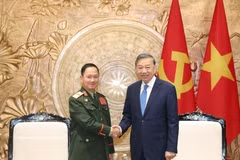
Party General Secretary and President To Lam (R) receives General Khamlieng Outhakaisone, Politburo member, Deputy Prime Minister and Minister of National Defence of Laos, in Hanoi on October 14. (Photo: VNA)

Top leader hosts Lao Deputy Prime Minister and Defence Minister

Highlighting defence and security cooperation as a key pillar of bilateral ties, General Secretary and President To Lam called for stronger strategic political trust, effective exchanges and defence dialogues at all levels, substantive implementation of existing cooperation mechanisms, and closer coordination between agencies, units, military regions, services and armed forces of the two countries.

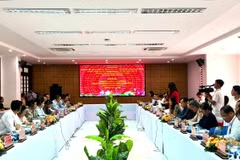
An overview of the meeting between Can Tho leaders and a delegation of Lao People’s Revolutionary Party officials. (Photo: VNA)

Can Tho, Lao localities step up cooperation in high-quality human resources development

With major educational and research institutions, Can Tho stands ready to share experience with Lao agencies and localities in political system building, personnel training and applying scientific knowledge to socio-economic development. It also looks forward to learning from Laos’s valuable experience in national governance and development.

An overview of the annual meeting of the defence ministers of Vietnam, Laos, and Cambodia in Hanoi on October 14. (Photo: VNA)

Vietnam, Laos, Cambodia strengthen defence cooperation

Vietnam gives top priority to strengthening its close and trusted relations with Laos and Cambodia, expressing deep appreciation for their valuable support during the country’s past struggle for national liberation and reunification, as well as its current nation-building and safeguarding efforts, said General Phan Van Giang, Deputy Prime Minister and Minister of National Defence of Vietnam.

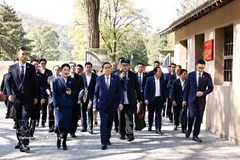
NA President Tran Thanh Man arrives at Zaoyuan revolutionary site, China’s Shaanxi province, on October 14, 2026. (Photo: VNA)

NA President tours revolutionary sites in China’s Shaanxi

NA President Man and his delegation travelled to Yan’an by high-speed train. The city is regarded as the cradle of China’s revolution and a symbol of resilience, solidarity and self-reliance. It also bears the imprint of Nguyen Ai Quoc, or President Ho Chi Minh, whose revolutionary activities during his time in China contributed to the Chinese revolution and the international communist movement.