Hue city taps green resources to promote sustainable tourism

For Hue, green tourism is not merely a trend. It is a way to preserve the heritage of the former imperial capital while creating new growth, livelihoods and a greener, more liveable and competitive heritage city.

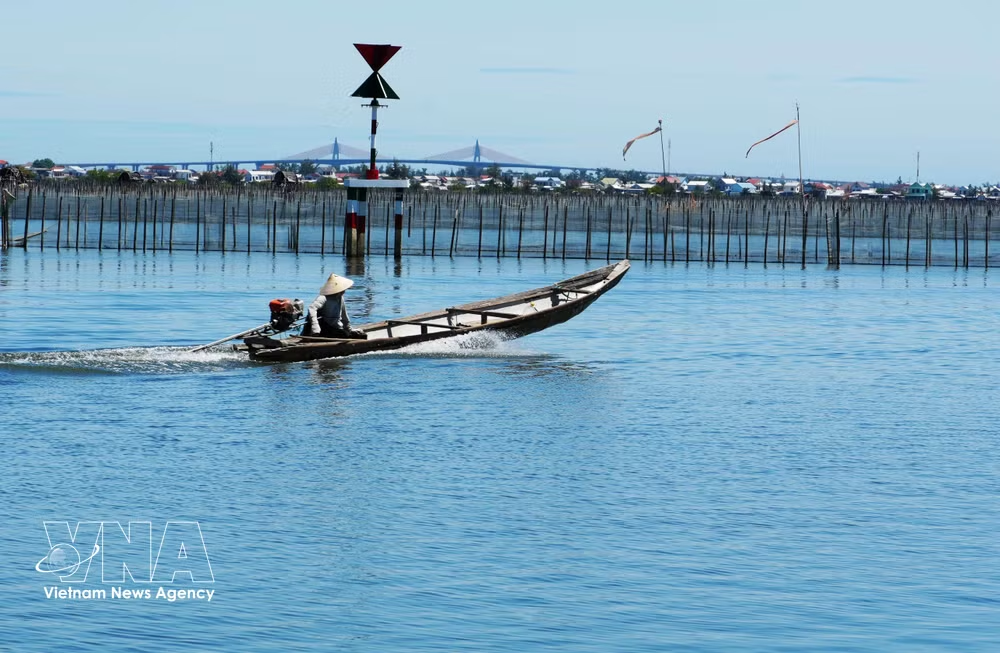
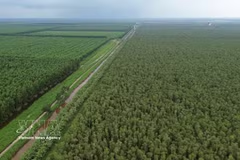
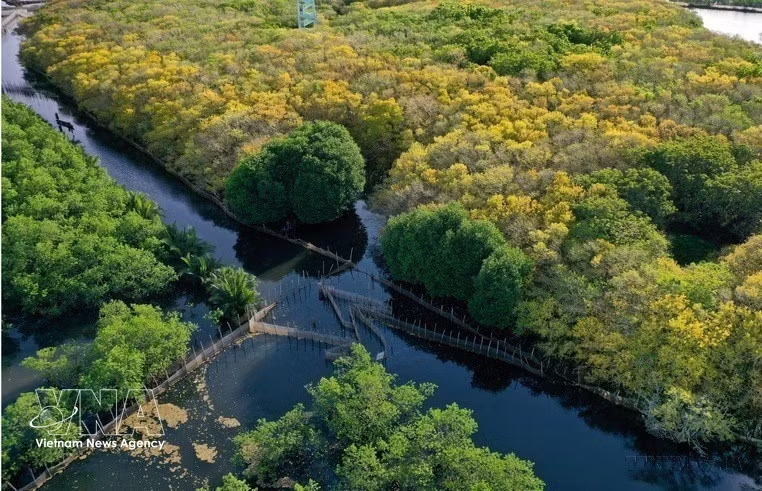
Ru Cha, the largest primeval mangrove forest on Tam Giang Lagoon. (Photo: VNA)

Hue (VNA) – From rivers and lagoons to beaches and primeval forests, the central city of Hue has abundant natural resources that can support sustainable tourism.​

As green travel becomes increasingly popular, connecting natural and cultural assets is opening up new opportunities for the city to enhance its appeal, extend visitors’ stays and increase the value of tourism.​

Beyond its heritage sites, Hue boasts diverse ecosystems stretching from mountainous and midland areas to plains, lagoons and the sea. These include the Huong and Bo rivers, the Tam Giang-Cau Hai lagoon system – the largest of its kind in Southeast Asia – Lap An Lagoon, and beaches such as Thuan An, Phu Thuan, Canh Duong and Lang Co.​

The city also has forests, streams and waterfalls in its western mountainous areas, as well as rural villages, craft villages, gardens and fields interspersed with residential areas.​

vnanet_potal-hue-khung-canh-yen-binh-tren-dam-chuon-8831393.jpg
The peaceful rhythm of life at Chuon Lagoon in Hue city. (Photo: VNA)

This diversity gives Hue strong advantages in developing green tourism. Visitors can combine heritage sightseeing with nature experiences, cycling, stand-up paddleboarding, river cruises, lagoon tours, beach holidays, farm experiences and opportunities to learn about the local community's life.​

Hoa Chau ward is home to Ru Cha, the largest primeval mangrove forest on Tam Giang lagoon. Nearby is Con Te, a wetland area along the lagoon and opposite Thuan An estuary.​

During the recent National Day holiday, Hoa Chau piloted a community-based ecotourism model at Ru Cha. Visitors can explore trails through the mature mangrove forest, enjoy views of Tam Giang Lagoon and learn about the lifestyles and cultural traditions of local communities.​

Ru Cha has become a popular green tourism destination, attracting large numbers of visitors, particularly at weekends and during holidays.​

Le Uy Phuong, a visitor from Quang Tri province, said the cool, green surroundings and fresh air at Ru Cha, together with the peaceful setting of Con Te, make the area ideal for both nature exploration and relaxation.​

Ngu My Thanh fishing village in Dan Dien commune is another distinctive green tourism destination on Tam Giang Lagoon. Visitors can experience traditional fishing activities while exploring the mangrove ecosystem.​

The protection and restoration of mangrove forests are considered crucial to sustainable ecotourism development. Dan Dien has more than 2,500ha of water surface on Tam Giang lagoon, with around 150ha of mangrove forest now being planted.​

According to Pham Cong Phuoc, Vice Chairman of the Dan Dien commune People’s Committee, the locality encourages residents to both sustainably use aquatic resources and protect and expand mangrove forests.​

vnanet_potal-hue-soi-noi-giai-dua-ghe-tren-song-huong-8997881.jpg
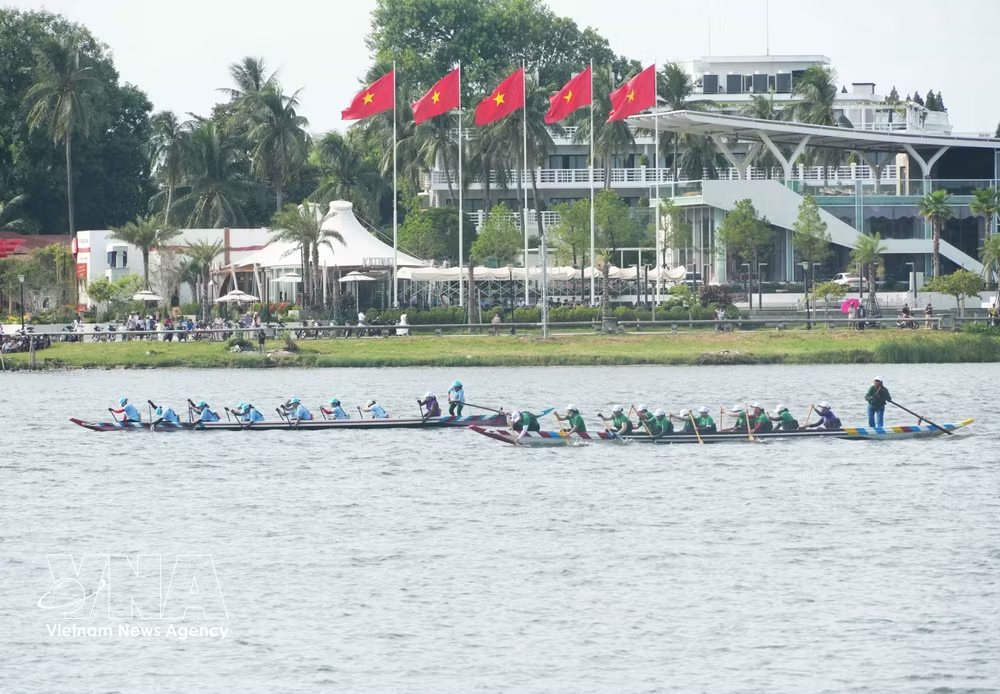
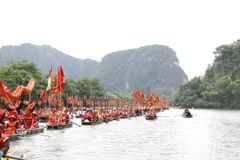
A boat race on the Huong River (Photo: VNA)

The Huong River is another valuable asset. Beyond creating Hue’s iconic landscape, it can serve as a “green axis” linking diverse tourism products, from river cruises and cultural performances to heritage sites, rural villages and riverside ecological areas.​

Since early September, visitors have been able to take a combined sightseeing vehicle and electric boat tour connecting the Hue Imperial City with the Huong River, Dong Ba River and Ngu Ha River. The route offers a new way to explore the heritage complex through its waterways, landscapes and historic architecture.​

During a recent inspection of infrastructure for inland waterway tourism along the Huong River, Chairman of the Hue City People’s Committee Le Tri Thanh said the river and its banks have strong potential for distinctive tourism products.​

He stressed that development should be carefully planned with a long-term vision, creating new experiences and extending visitors’ stays while protecting the landscape, environment, culture and heritage. Authorities are studying ways to diversify river tourism products and develop piers, stops and service areas linked to attractions and historic sites.​

vnanet_potal-dong-dao-du-khach-tham-quan-dai-noi-hue-trong-ngay-le-quoc-khanh-8998322.jpg
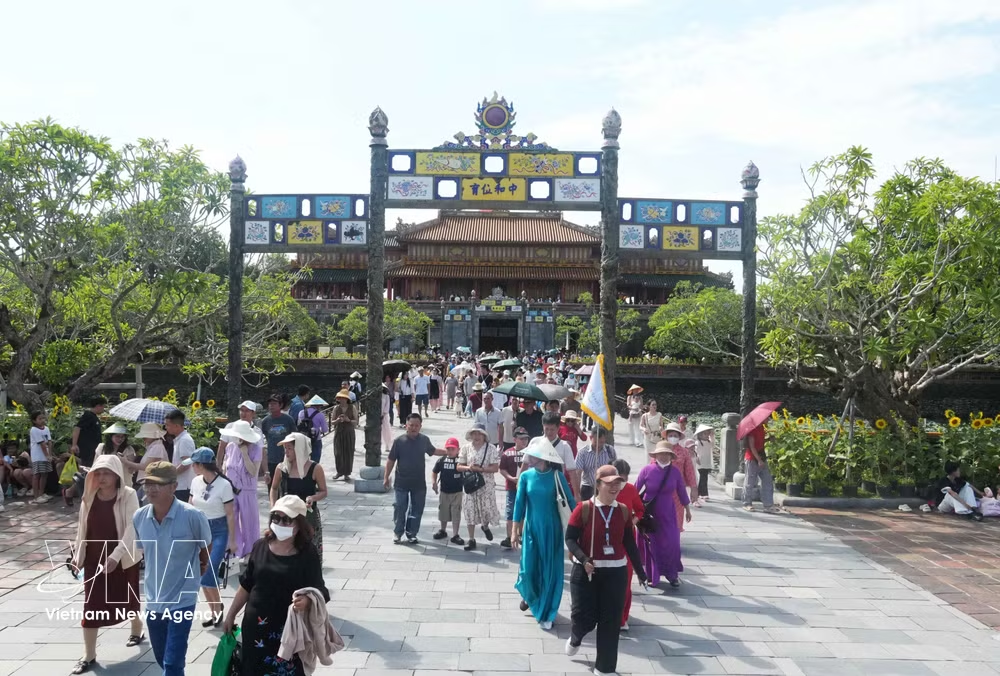
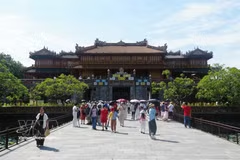
Tourists visit the Hue Imperial City. (Photo: VNA)

Other potential destinations include Chuon Lagoon, Lap An Lagoon, Thuan An Estuary, Bach Ma National Park, and waterfalls such as Mo, Kazan, Phuon and A Don, as well as Anor Waterfall in A Luoi.​

A visitor could begin with the Hue Imperial City, continue with a cruise on the Huong River, cycle through rural villages, enjoy local food, explore Tam Giang-Cau Hai lagoon and finish the day at the beach. Such an itinerary could extend stays and spread tourism spending from the city centre to rural, coastal and community areas.​

For Hue, green tourism is therefore not merely a trend. It is a way to preserve the heritage of the former imperial capital while creating new growth, livelihoods and a greener, more liveable and competitive heritage city./.
VNA

See more

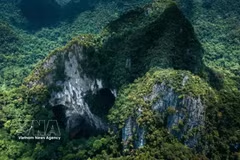
Karst limestone mountains in the Phong Nha - Ke Bang National Park, with large cave entrances opening amid the primeval forest, reflect a geological formation process spanning millions of years. (Photo: VNA)

Phong Nha - Ke Bang named among Vietnam’s 11 most beautiful destinations

According to the magazine, boat trips into Phong Nha Cave and strolls through Paradise Cave (both family-friendly) offer a tantalising glimpse of their astonishing scale, but the real adventure lies deeper within the park, where cavers wade through underground rivers and weave among stalagmites.

The Trang An Festival 2026 opens at Trang An Ecotourism Site in Ninh Binh province on May 3 (Photo: VNA)

Tourism seeks new growth momentum under Resolution 26

Tourism effectiveness should be measured not only by visitor numbers and revenue, but also by spending, length of stay, repeat visits, job quality, visitor satisfaction and environmental carrying capacity, said experts.

Vietnam welcomes nearly 2 million international visitors in August, up 19.7% from July and 18.4% year-on-year. (Illustrative photo: VNA)

Vietnam tourism maintains strong growth, expands international markets

The National Statistics Office under the Ministry of Finance reported that Vietnam welcomed nearly 2 million international visitors in August, up 19.7% from July and 18.4% year-on-year. The figure represented 63.6% of the tourism sector’s full-year target of 25 million arrivals.

News website news.ru reports that the number of Russian visitors to Vietnam could reach a historic record of 1.5 million in 2026. (Photo: VNA)

Russian arrivals to Vietnam forecast to reach record high

Russian arrivals to Vietnam surpassed 1 million in the first eight months of 2026, representing a remarkable 165.7% increase year-on-year. This was the highest growth rate among Vietnam’s major international tourist markets.

Secretary of the Party Central Committee and Deputy Prime Minister Pham Thi Thanh Tra speaks at the conference. (Photo: VNA)

Vietnam moves to make tourism a true new growth driver

Resolution No. 26-NQ/TW, issued on August 22, sets out a new vision, with a focus on fundamentally renewing the mindset, methods and approaches to tourism development and governance, shifting from quantity to quality and increasing the sector’s contribution to the national economy.

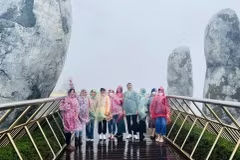
Tourists visit Golden Bridge in Da Nang city in the rainy season. (Photo: hanoimoi.vn)

Turning rainy season into tourism opportunity

Seasonality has long been a challenge for Vietnam’s tourism industry. In many localities, tourism peaks in summer but visitor numbers fall during the rainy months. Destinations are now seeking to restructure their tourism ecosystems and develop products that can operate year-round.

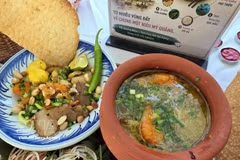
A pot of Mi Quang (Quang noodles). (Photo: VNA)

Da Nang promotes distinctive cuisine as key tourism attraction

As travellers increasingly seek authentic local experiences, the central coastal city of Da Nang is stepping up efforts to integrate cuisine into tourism itineraries, linking culinary promotion with destination branding and cultural preservation.

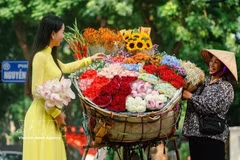
Flower vendors form a distinctive feature of Hanoi’s autumn. (Photo: VNA)

Hanoi builds four-season tourism appeal

Hanoi’s tourism events are increasingly designed to inspire exploration beyond individual festivals. At the Hanoi Tourism Gift Festival, for instance, visitors can make handicrafts with artisans, explore destinations through virtual reality and discover new tours and tourism stimulus programmes.

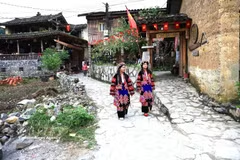
A view of the Lo Lo Chai community tourism village in Tuyen Quang province (Photo: VNA)

Vietnam taps community tourism potential for sustainable development

The tourism market is shifting from sightseeing towards living and connecting with destinations. Visitors increasingly seek authentic and locally rooted experiences, interaction with local people, culture and nature, as well as small-group and personalised trips with limited environmental impact and clear benefits for communities.

International tourists visit Hoi An Ancient Town in Da Nang city. (Photo: VNA)

Tourism ready for National Day holiday, eyes year-end acceleration

A range of cultural and artistic activities will be held during the holiday. In Da Nang, the “Hoi An Memories” show will present its “Flag Hat” version from August 26 to September 2. Phu Quoc will host the “The Memory of Flowers” exhibition, while Thanh Hoa will organise the Sam Son Kite Festival 2026 from August 30 to September 1.