Jakarta (VNA) – Indonesia will maintain coal-fired power in its national energy mix while accelerating the development of compressed natural gas (CNG) as an alternative fuel, aiming to safeguard energy security and reduce reliance on fuel imports.
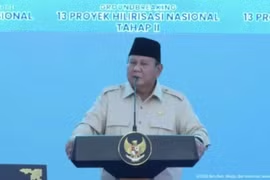
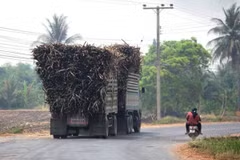
Minister of Energy and Mineral Resources Bahlil Lahadalia noted on May 2 that Indonesia will continue to rely on coal‑fired power plants to ensure energy efficiency and keep electricity prices affordable.
Indonesia’s large coal reserves make the resource essential, particularly amid global energy disruptions linked to rising tensions in the Middle East.
He argued that Indonesia cannot abruptly abandon coal, pointing out that several developed countries are returning to coal to safeguard domestic energy security.
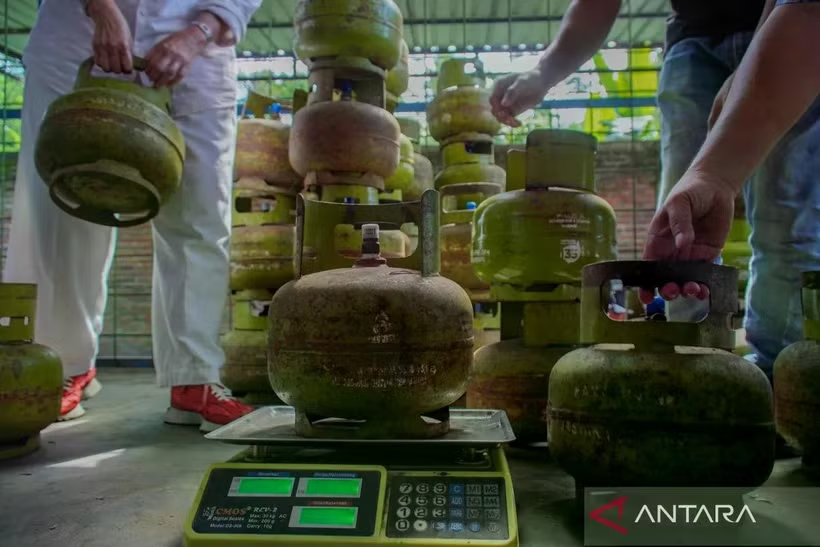
Indonesia is developing CNG in 3kg cylinders, which cost 30–40% less, as an alternative to liquefied petroleum gas (LPG).
Bahlil said CNG is already being used in several hotels, restaurants, and kitchens supporting the government’s free meals programme, with raw materials sourced domestically. The government is now preparing to expand its use to households.
CNG is derived from natural gas, primarily methane (C1) and ethane (C2), which are abundant in Indonesia.
According to the Energy and Mineral Resources Ministry, Indonesia consumes 8.6 million tonnes of LPG annually, but only 1.6–1.7 million tons are produced domestically. The remainder is imported.
Developing CNG is therefore expected to reduce reliance on imported LPG, optimise oil and gas lifting, and diversify national energy sources, the ministry stated.
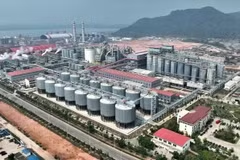
The ministry's data show that Indonesia’s coal production in 2025 reached 790 million tonnes. Of the total, 514 million tonnes (65.1%) were allocated for exports while domestic market obligations (DMO) for electricity and non‑electricity sectors accounted for 254 million tonnes (32%)./.