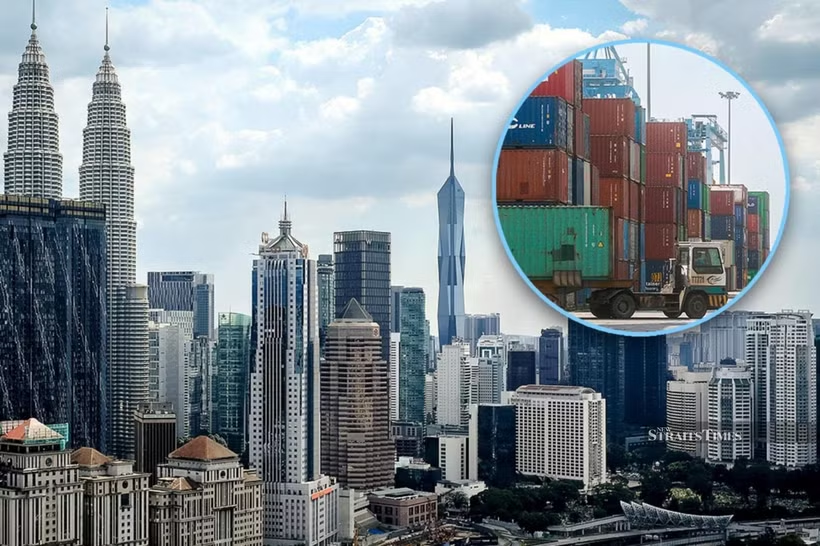
Kuala Lumpur (VNA) – Malaysia is intensifying efforts to strengthen its position as a flexible middle power as the global economy faces shocks from geopolitical tensions and an ongoing energy crisis.
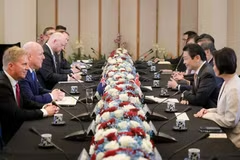
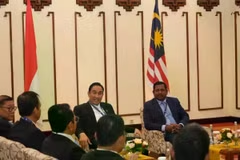
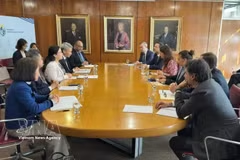
At a strategic dialogue hosted by the Razak School of Government in Putrajaya on May 4, experts outlined a roadmap to help the country not only weather the crisis but also restructure its economy toward greater sustainability and efficiency.
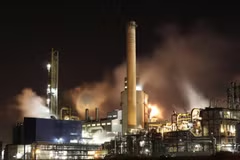
Rising tensions in the Middle East and disruptions around the Strait of Hormuz have driven jet fuel prices up from about 85 USD per barrel to as high as 240 USD. Tony Fernandes, CEO of Capital A, said the situation is even more challenging than the COVID-19 pandemic, as companies must continue operations despite sharply rising costs.
In response, the government led by Prime Minister Anwar Ibrahim has pursued “resource diplomacy,” including securing the safe passage of energy shipments through Hormuz. This reflects Malaysia’s non-aligned approach and growing diplomatic influence.
Experts noted Malaysia’s role as a “chokepoint economy,” given ASEAN’s heavy dependence on Gulf energy supplies, with some countries relying on the region for up to 90% of imports.
Taking a broader view of the region’s rise, Fernandes cited Vietnam as a standout model of strong recovery and rapid expansion, saying it has now become a key economic driver of ASEAN.
Domestically, policymakers are using the crisis to push reforms, including reducing costly subsidies and shifting resources toward high-productivity sectors and long-term energy solutions. Nuclear and renewable energy are being considered under the national transition roadmap, targeting a 20% share by 2050.
Technology is also playing a key role. Fernandes said AirAsia is using AI tools such as Gemini and Claude to optimise operations, cutting fuel costs by 4% and achieving a 92% on-time rate.
Meanwhile, authorities are closely monitoring labour conditions and food prices to protect low-income households, while maintaining that the overall situation remains under control.
Participants agreed the crisis, though expected to last up to 18 months, offers a key opportunity for Malaysia and ASEAN to reshape their economic models through innovation, stronger public-private partnerships, and data-driven governance./.